 Bird Album
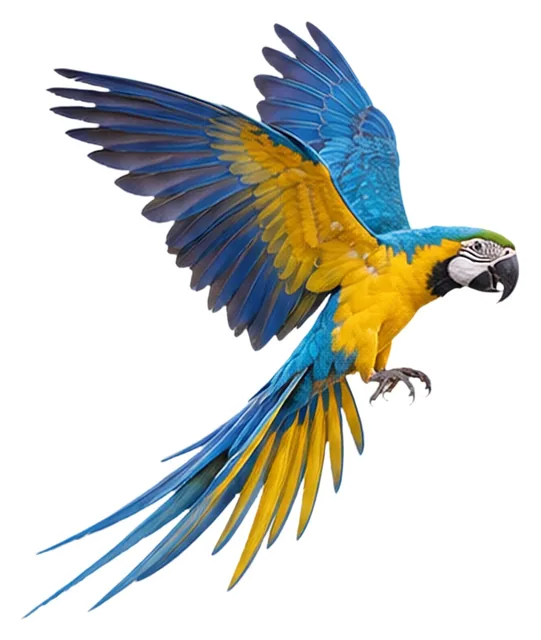
Blue-and-yellow Macaw
Ara ararauna (Linnaeus, 1758)
76–84 cmLength1.1 kgWeight
This large parrot has a blue back and yellow belly, with rows of fine black feathers on its white face.
Most records: Venezuela, Brazil, Peru
How to identify
Field marks
- Bright blue above, with a few green feathers on forehead
- Breast and lower belly yellow; tail blue above and yellow below
- Fine black feathers arranged horizontally on white facial skin
- Bill black, chin feathers also black
Voice
Very noisy calls.
Where and when it's recorded
Most records: Venezuela, Brazil, Peru

Blue-and-yellow Macaw has been recorded at 227 of the 8,276 birding hotspots we track, in 23 countries and regions.
Records by month Southern Hemisphere
Where it's recorded most
- Parque del EsteVenezuela5,423 records
- Parque Los CaobosVenezuela1,752 records
- El MarquésVenezuela1,583 records
More places
- Parque Simon BolivarVenezuela1,403 records
- Sani LodgeEcuador1,185 records
- El Paujil Proaves ReserveColombia1,170 records
- Universidad Central de Venezuela, CaracasVenezuela1,051 records
- Rio Cristalino – listas históricasBrazil1,035 records
- Los Amigos Biological StationPeru977 records
- Aquidauana – Pousada AguapéBrazil875 records
Countries and regions with the most records
eBird records via GBIF up to 2024-12-31. A record means someone listed it; more records partly mean more birders, not more birds.
About
The blue-and-yellow macaw (Ara ararauna), also known as the blue-and-gold macaw, is a large Neotropical parrot with a mostly blue dorsum, light yellow/orange venter, and gradient hues of green on top of its head. It is a member of the large group of neotropical parrots known as macaws. It inhabits forest (especially varzea, but also in open sections of terra firme or unflooded forest), woodland, and savannah of tropical Central and South America, as well as the island of Trinidad in the Caribbean.
Excerpt from Wikipedia, CC BY-SA 4.0 · authors · Read more on Wikipedia
Questions
How big is the Blue-and-yellow Macaw?
The Blue-and-yellow Macaw is about 76–84 cm long and weighs around 1.1 kg.
Where does the Blue-and-yellow Macaw live?
Its breeding range: South America: Amazonia and south-central. It is most often recorded in Venezuela, Brazil and Peru.
Is the Blue-and-yellow Macaw endangered?
The IUCN Red List classifies the Blue-and-yellow Macaw as Least Concern.
What does the Blue-and-yellow Macaw eat?
Main food: Omnivore.
What family is the Blue-and-yellow Macaw in?
It belongs to the family African & New World Parrots (Psittacidae), order Parrot (Psittaciformes).
At a glance
- Length
- 76–84 cm
- Weight
- 1.1 kg
- Habitat
- Forest
- Diet
- Omnivore
- Lifestyle
- Perches in trees
- Migration
- Resident (barely migrates)
- Conservation
- Least Concern
More measurements
- Wing
- 381 mm
- Tail
- 492 mm
- Bill
- 66 mm
- Tarsus
- 32 mm
Averages from the AVONET dataset; length from field guides where available.
Range
South America: Amazonia and south-central
Breeding range, IOC World Bird List 15.2
Classification
- Order
- Parrot Psittaciformes
- Family
- African & New World Parrots Psittacidae
- Genus
- Ara
Other birds in the genus Ara
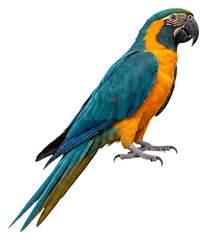 Blue-throated MacawAra glaucogularis
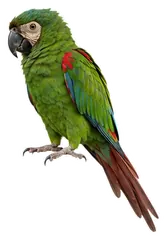 Chestnut-fronted MacawAra severus
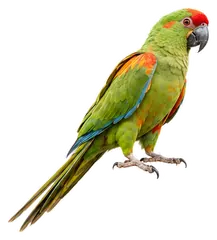 Red-fronted MacawAra rubrogenys
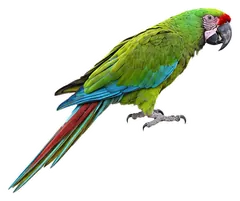 Military MacawAra militaris
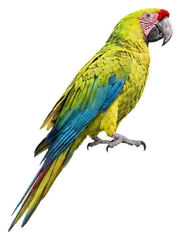 Great Green MacawAra ambiguus
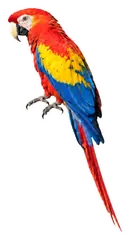 Scarlet MacawAra macao
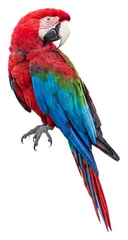 Red-and-green MacawAra chloropterus
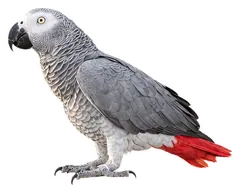 Grey ParrotPsittacus erithacus
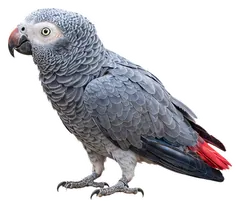 Timneh ParrotPsittacus timneh
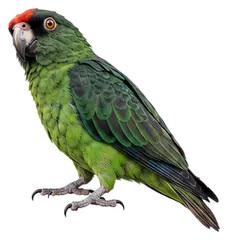 Red-fronted ParrotPoicephalus gulielmi
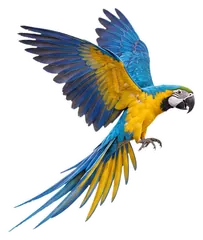
Download illustration
Free to use with credit: “Illustration: Bird Album (birdalbum.com)”. Drawn by AI from a reference photo by Gabriel Augusto Faria. ↗
Heard it but can't see it? Mingji identifies birds by sound and photo, on your phone.