 Bird Album
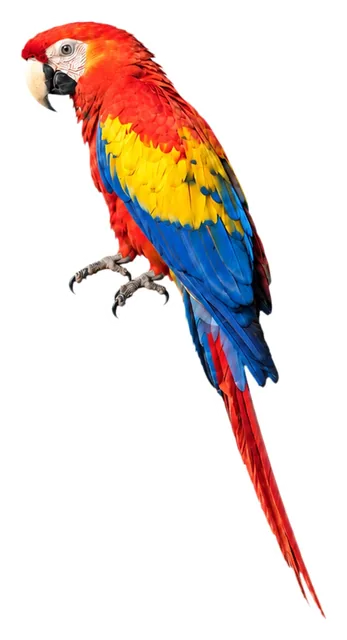
Scarlet Macaw
Ara macao (Linnaeus, 1758)
85 cmLength1 kgWeight
Its plumage is mostly scarlet, with yellow and dark blue on the wings, sometimes with green as well.
Busiest months: February–March · Most records: Costa Rica, Peru, Brazil
How to identify
Field marks
- Plumage mostly scarlet
- Greater coverts on upperwing yellow, flight feathers dark blue above
- White bare skin from around the eye to edge of bill
- Upper mandible mostly pale horn-colored, lower mandible black
Male, female and young
Juveniles have dark eyes; adults have pale yellow eyes.
Voice
Loud, guttural calls, including quacking, squeaking and shrieks.
Where and when it's recorded

Scarlet Macaw has been recorded at 175 of the 8,171 birding hotspots we track, in 13 countries and regions.
Records by month Northern Hemisphere
Where it's recorded most
- PN Carara-Entrada principal [senderos Quebrada Bonita y Universal]Costa Rica5,032 records
- Tárcoles – Tour en BoteCosta Rica3,885 records
- Villa LapasCosta Rica2,977 records
More places
- Cerro LodgeCosta Rica2,721 records
- PN Carara – Sendero La MeandricaCosta Rica1,918 records
- PN Corcovado – Sector SirenaCosta Rica1,287 records
- Rio Rincón bridge & environsCosta Rica1,124 records
- Tambopata Research CenterPeru1,069 records
- Selva Verde LodgeCosta Rica974 records
- Rio Cristalino – listas históricasBrazil805 records
Countries and regions with the most records
eBird records via GBIF up to 2024-12-31. A record means someone listed it; more records partly mean more birders, not more birds.
About
The scarlet macaw (Ara macao) also called the red-and-yellow macaw, red-and-blue macaw or red-breasted macaw, is a large yellow, green, red and blue Neotropical parrot native to humid evergreen forests of the Americas. Its range extends from southeastern Mexico to Peru, Ecuador, Colombia, Bolivia, Venezuela, Honduras, and Brazil in lowlands of 500 m (1,600 ft) (at least formerly) up to 1,000 m (3,300 ft), the Caribbean island of Trinidad, as well as the Pacific island of Coiba. Formerly, the northern extent of its range included southern Tamaulipas.
Excerpt from Wikipedia, CC BY-SA 4.0 · authors · Read more on Wikipedia
Questions
How big is the Scarlet Macaw?
The Scarlet Macaw is about 85 cm long and weighs around 1 kg.
Where does the Scarlet Macaw live?
Its breeding range: Middle America, South America: southeastern Mexico to Colombia and Amazonia. It is most often recorded in Costa Rica, Peru and Brazil.
When is the best time to see the Scarlet Macaw?
At the hotspots we track, it is recorded most in February and March (Northern Hemisphere).
Is the Scarlet Macaw endangered?
The IUCN Red List classifies the Scarlet Macaw as Least Concern.
What does the Scarlet Macaw eat?
Main food: Omnivore.
What family is the Scarlet Macaw in?
It belongs to the family African & New World Parrots (Psittacidae), order Parrot (Psittaciformes).
At a glance
- Length
- 85 cm
- Weight
- 1 kg
- Habitat
- Forest
- Diet
- Omnivore
- Lifestyle
- Perches in trees
- Migration
- Resident (barely migrates)
- Conservation
- Least Concern
More measurements
- Wing
- 394 mm
- Tail
- 554 mm
- Bill
- 67 mm
- Tarsus
- 32 mm
Averages from the AVONET dataset; length from field guides where available.
Range
Middle America, South America: southeastern Mexico to Colombia and Amazonia
Breeding range, IOC World Bird List 15.2
Classification
- Order
- Parrot Psittaciformes
- Family
- African & New World Parrots Psittacidae
- Genus
- Ara
Other birds in the genus Ara
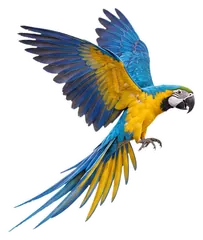 Blue-and-yellow MacawAra ararauna
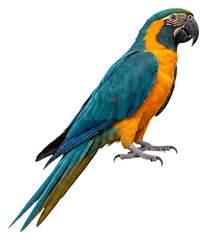 Blue-throated MacawAra glaucogularis
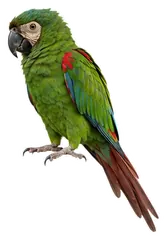 Chestnut-fronted MacawAra severus
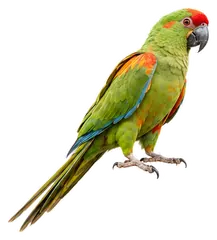 Red-fronted MacawAra rubrogenys
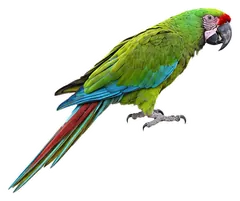 Military MacawAra militaris
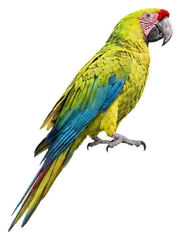 Great Green MacawAra ambiguus
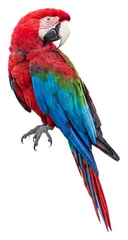 Red-and-green MacawAra chloropterus
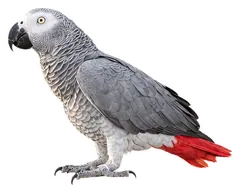 Grey ParrotPsittacus erithacus
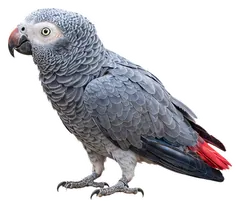 Timneh ParrotPsittacus timneh
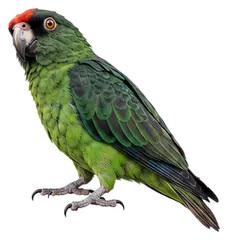 Red-fronted ParrotPoicephalus gulielmi
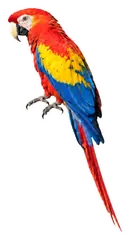
Download illustration
Free to use with credit: “Illustration: Bird Album (birdalbum.com)”. Drawn by AI from a reference photo by José Antonio Linage Espinosa. ↗
Heard it but can't see it? Mingji identifies birds by sound and photo, on your phone.