 Bird Album
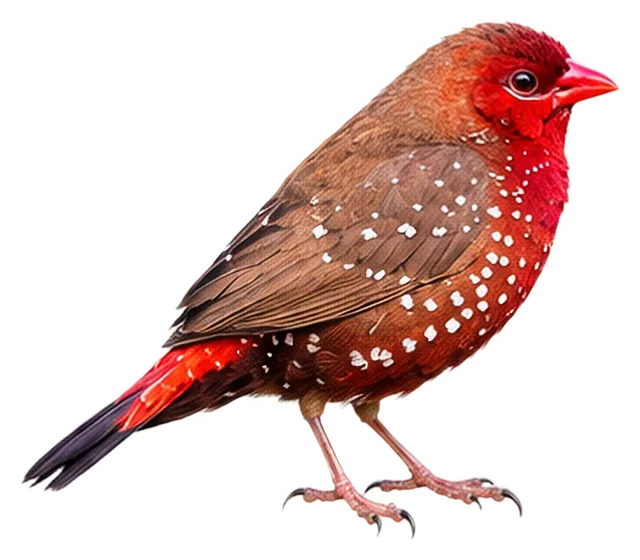
Red Avadavat
Amandava amandava (Linnaeus, 1758)
≈10 cmLength9 gWeight
In the breeding season, most of the male’s upper body is red with white spots.
Busiest months: October–January · Most records: India, Spain, Thailand
How to identify
Field marks
- Tail rounded and black
- Bill turns red seasonally
- Uppertail-coverts red
- White spots on the red body
Male, female and young
The male is duller in the non-breeding season but retains red uppertail-coverts; the female is duller still, with fewer white patches.
Voice
A low, single-note “pseep”, often given in flight; the song is a series of low notes.
Where and when it's recorded

Red Avadavat has been recorded at 404 of the 8,171 birding hotspots we track, in 32 countries and regions.
Records by month Northern Hemisphere
Where it's recorded most
- Viva Wetlands, VirarIndia947 records
- Hoskote / Hosakote KereIndia947 records
- Manjeera Wildlife SanctuaryIndia941 records
More places
- Sultanpur National ParkIndia838 records
- Laguna de GalisteoSpain819 records
- Byatarayana Doddi KereIndia781 records
- Okhla Bird SanctuaryIndia746 records
- Ameenpur Lake, HyderabadIndia744 records
- Budhera Water Treatment PlantIndia734 records
- Sureste PNat – Ruta del Soto GutiérrezSpain698 records
Countries and regions with the most records
eBird records via GBIF up to 2024-12-31. A record means someone listed it; more records partly mean more birders, not more birds.
About
The red avadavat (Amandava amandava), red munia or strawberry finch, is a sparrow-sized bird of the family Estrildidae. It breeds in the Indian subcontinent in the monsoon season. The species name of amandava and the common name of avadavat are derived from the city of Ahmedabad in Gujarat, India, from where these birds were exported into the pet trade in former times.
Excerpt from Wikipedia, CC BY-SA 4.0 · authors · Read more on Wikipedia
Questions
How big is the Red Avadavat?
The Red Avadavat is about ≈10 cm long and weighs around 9 g.
Where does the Red Avadavat live?
Its breeding range: Oriental: Pakistan to Hainan (southeastern China) and Vietnam, Java, Bali, and Lombok to Timor (Lesser Sundas). It is most often recorded in India, Spain and Thailand.
When is the best time to see the Red Avadavat?
At the hotspots we track, it is recorded most in January, October, November and December (Northern Hemisphere).
Is the Red Avadavat endangered?
The IUCN Red List classifies the Red Avadavat as Least Concern.
What does the Red Avadavat eat?
Main food: Seeds.
What family is the Red Avadavat in?
It belongs to the family Waxbills, Munias & Allies (Estrildidae), order Passerines (Passeriformes).
At a glance
- Length
- ≈10 cm
- Weight
- 9 g
- Habitat
- Shrubland
- Diet
- Seeds
- Lifestyle
- Varied
- Migration
- Resident (barely migrates)
- Conservation
- Least Concern
More measurements
- Wing
- 47 mm
- Tail
- 40 mm
- Bill
- 10 mm
- Tarsus
- 13 mm
Averages from the AVONET dataset; length from field guides where available.
Range
Oriental: Pakistan to Hainan (southeastern China) and Vietnam, Java, Bali, and Lombok to Timor (Lesser Sundas)
Breeding range, IOC World Bird List 15.2
Subspecies · 2
- Amandava amandava flavidiventris Myanmar, s China, nw, c Thailand and Lombok to Timor (Lesser Sundas)
- Amandava amandava punicea se Thailand, Cambodia, s Vietnam, Hainan (se China), Java and Bali
Classification
- Order
- Passerines Passeriformes
- Family
- Waxbills, Munias & Allies Estrildidae
- Genus
- Amandava
Other birds in the genus Amandava
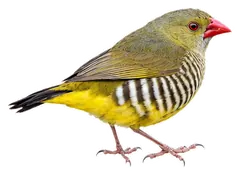 Green AvadavatAmandava formosa
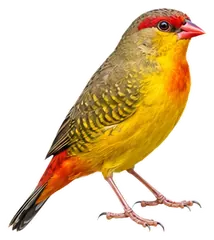 Orange-breasted WaxbillAmandava subflava
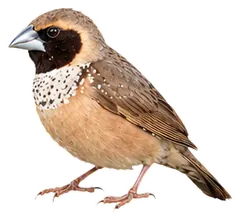 Pictorella MannikinHeteromunia pectoralis
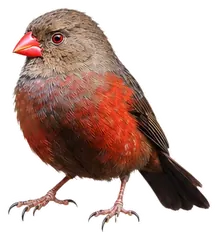 Mountain FiretailOreostruthus fuliginosus
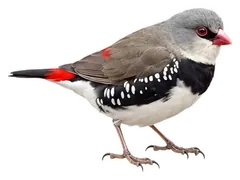 Diamond FiretailStagonopleura guttata
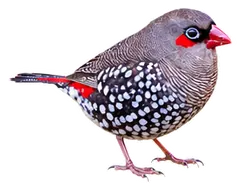 Red-eared FiretailStagonopleura oculata
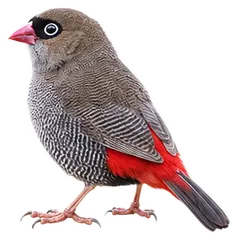 Beautiful FiretailStagonopleura bella
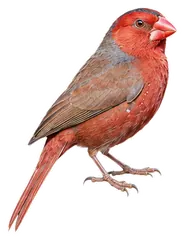 Crimson FinchNeochmia phaeton
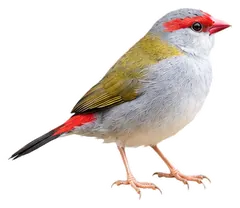 Red-browed FinchNeochmia temporalis
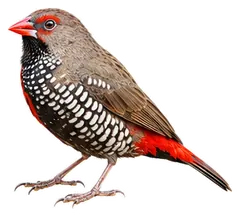 Painted FinchEmblema pictum
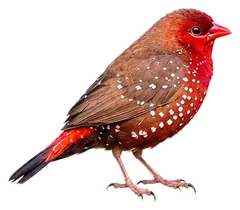
Download illustration
Free to use with credit: “Illustration: Bird Album (birdalbum.com)”. Drawn by AI from a reference photo by Anil Kumar Verma. ↗
Heard it but can't see it? Mingji identifies birds by sound and photo, on your phone.