 Bird Album
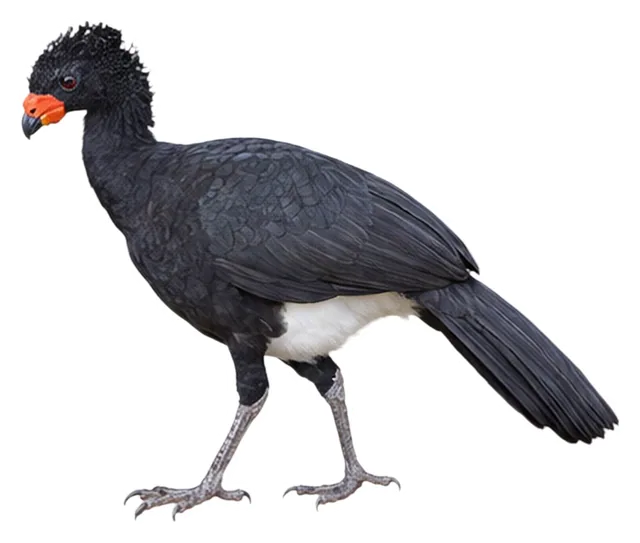
Red-billed Curassow
Crax blumenbachii Spix, 1825
3.5 kgWeight
The red-billed curassow or red-knobbed curassow (Crax blumenbachii) is an endangered species of cracid that is endemic to lowland Atlantic Forest in the states of Espírito Santo, Bahia and Minas Gerais in southeastern Brazil.
Busiest months: October–November · Most records: Brazil
Where and when it's recorded

Red-billed Curassow has been recorded at 4 of the 8,171 birding hotspots we track, in 1 country or region.
Records by month Southern Hemisphere
Where it's recorded most
- Linhares – Reserva Natural da Vale do Rio DoceBrazil556 records
- Reserva Ecológica de GuapiaçuBrazil3 records
- Porto Seguro – RPPN Estação VeracelBrazil2 records
More places
- Reserva Ecológica de Guapiaçu – AlagadosBrazil1 record
Countries and regions with the most records
eBird records via GBIF up to 2024-12-31. A record means someone listed it; more records partly mean more birders, not more birds.
About
The red-billed curassow or red-knobbed curassow (Crax blumenbachii) is an endangered species of cracid that is endemic to lowland Atlantic Forest in the states of Espírito Santo, Bahia and Minas Gerais in southeastern Brazil. Its population is decreasing due to hunting and deforestation, and it has possibly been extirpated from Minas Gerais. It is currently being reintroduced to Rio de Janeiro by means of individuals bred in captivity.
Excerpt from Wikipedia, CC BY-SA 4.0 · authors · Read more on Wikipedia
Questions
How big is the Red-billed Curassow?
The Red-billed Curassow weighs around 3.5 kg.
Where does the Red-billed Curassow live?
Its breeding range: South America: southeastern Brazil. It is most often recorded in Brazil.
When is the best time to see the Red-billed Curassow?
At the hotspots we track, it is recorded most in October and November (Southern Hemisphere).
Is the Red-billed Curassow endangered?
The IUCN Red List classifies the Red-billed Curassow as Endangered.
What does the Red-billed Curassow eat?
Main food: Fruit.
What family is the Red-billed Curassow in?
It belongs to the family Chachalacas, Curassows, Guans (Cracidae), order Galliformes.
At a glance
- Weight
- 3.5 kg
- Habitat
- Forest
- Diet
- Fruit
- Lifestyle
- Active on the ground
- Migration
- Resident (barely migrates)
- Conservation
- Endangered
More measurements
- Wing
- 384 mm
- Tail
- 334 mm
- Bill
- 46 mm
- Tarsus
- 110 mm
Averages from the AVONET dataset; length from field guides where available.
Range
South America: southeastern Brazil
Breeding range, IOC World Bird List 15.2
Classification
- Order
- Galliformes
- Family
- Chachalacas, Curassows, Guans Cracidae
- Genus
- Crax
Other birds in the genus Crax
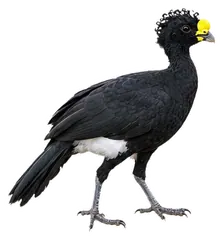 Great CurassowCrax rubra
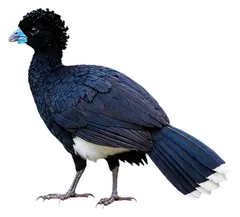 Blue-billed CurassowCrax alberti
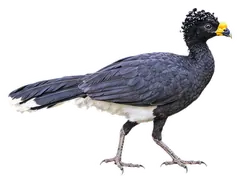 Yellow-knobbed CurassowCrax daubentoni
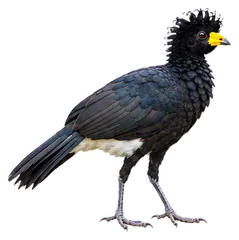 Black CurassowCrax alector
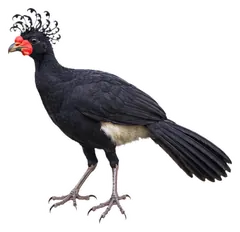 Wattled CurassowCrax globulosa
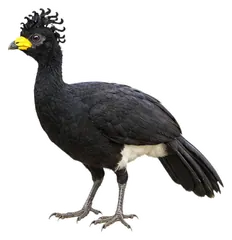 Bare-faced CurassowCrax fasciolata
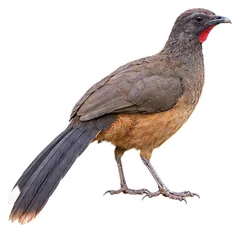 Plain ChachalacaOrtalis vetula
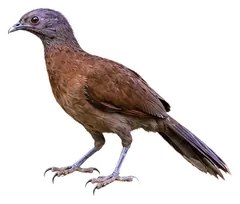 Grey-headed ChachalacaOrtalis cinereiceps
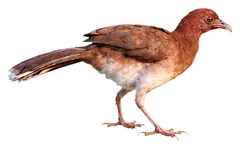 Chestnut-winged ChachalacaOrtalis garrula
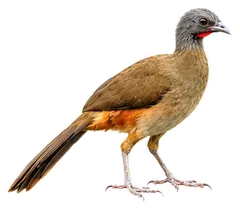 Rufous-vented ChachalacaOrtalis ruficauda
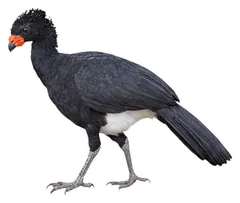
Download illustration
Free to use with credit: “Illustration: Bird Album (birdalbum.com)”. Drawn by AI from a reference photo by Nereston (Nelinho) Camargo. ↗
Heard it but can't see it? Mingji identifies birds by sound and photo, on your phone.
In other languages
- EnglishRed-billed Curassow
- 简体中文红嘴凤冠雉
- 繁體中文紅嘴鳳冠雉
- 日本語アカハシホウカンチョウ
- DeutschRotschnabelhokko
- FrançaisHocco de Blumenbach
- EspañolPavón piquirrojo
- Portuguêsmutum-de-bico-vermelho
- ItalianoHocco beccorosso
- NederlandsRoodsnavelhokko
- РусскийКрасноклювый кракс
- Svenskarödnäbbad hocko
- DanskRødnæbbet Hokko
- Polskiczubacz czerwonodzioby