 Bird Album
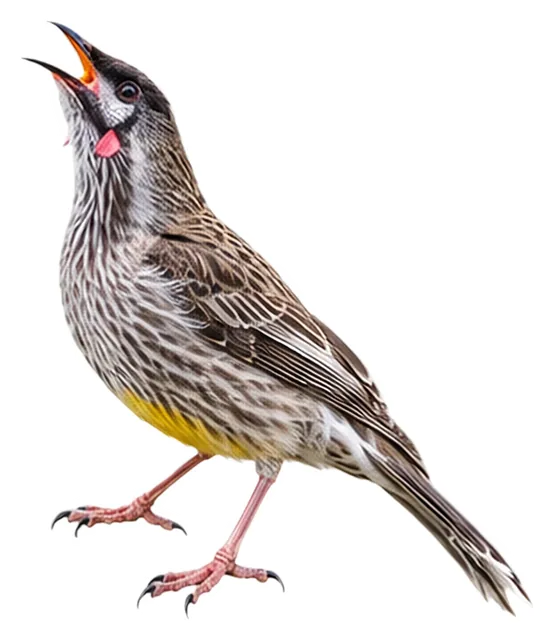
Red Wattlebird
Anthochaera carunculata (Shaw, 1790)
31–39 cmLength106 gWeight
The red wattlebird (Anthochaera carunculata) is a passerine bird native to southern Australia.
Busiest months: September–October · Most records: Australia
Where and when it's recorded

Red Wattlebird has been recorded at 131 of the 8,171 birding hotspots we track, in 1 country or region.
Records by month Southern Hemisphere
Where it's recorded most
- Jerrabomberra Wetlands Nature ReserveAustralia7,947 records
- Royal ParkAustralia4,924 records
- Royal Botanic Gardens MelbourneAustralia4,211 records
More places
- Western Treatment PlantAustralia4,129 records
- Australian National Botanic GardensAustralia3,507 records
- Herdsman LakeAustralia3,425 records
- SpringwoodAustralia3,169 records
- Banyule Flats ReserveAustralia3,076 records
- Albert ParkAustralia2,703 records
- Shepherds BushAustralia2,318 records
Countries and regions with the most records
eBird records via GBIF up to 2024-12-31. A record means someone listed it; more records partly mean more birders, not more birds.
About
The red wattlebird (Anthochaera carunculata) is a passerine bird native to southern Australia. It has mainly grey-brown plumage, with red eyes, distinctive pinkish-red wattles on either side of the neck, white streaks on the chest and a large bright yellow patch on the lower belly. The sexes are similar in plumage.
Excerpt from Wikipedia, CC BY-SA 4.0 · authors · Read more on Wikipedia
Questions
How big is the Red Wattlebird?
The Red Wattlebird is about 31–39 cm long and weighs around 106 g.
Where does the Red Wattlebird live?
Its breeding range: Australasia: southern, southeastern Australia. It is most often recorded in Australia.
When is the best time to see the Red Wattlebird?
At the hotspots we track, it is recorded most in September and October (Southern Hemisphere).
Is the Red Wattlebird endangered?
The IUCN Red List classifies the Red Wattlebird as Least Concern.
What does the Red Wattlebird eat?
Main food: Nectar.
What family is the Red Wattlebird in?
It belongs to the family Honeyeaters (Meliphagidae), order Passerines (Passeriformes).
At a glance
- Length
- 31–39 cm
- Weight
- 106 g
- Habitat
- Forest
- Diet
- Nectar
- Lifestyle
- Perches in trees
- Migration
- Partial migrant
- Conservation
- Least Concern
More measurements
- Wing
- 154 mm
- Tail
- 163 mm
- Bill
- 32 mm
- Tarsus
- 34 mm
Averages from the AVONET dataset; length from field guides where available.
Range
Australasia: southern, southeastern Australia
Breeding range, IOC World Bird List 15.2
Classification
- Order
- Passerines Passeriformes
- Family
- Honeyeaters Meliphagidae
- Genus
- Anthochaera
Other birds in the genus Anthochaera
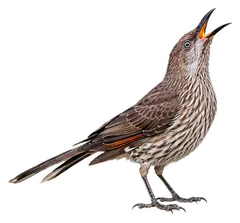 Little WattlebirdAnthochaera chrysoptera
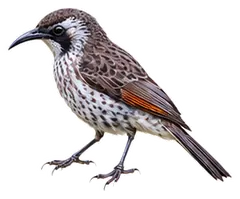 Western WattlebirdAnthochaera lunulata
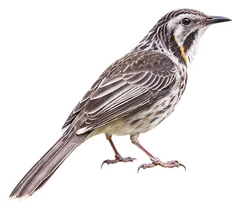 Yellow WattlebirdAnthochaera paradoxa
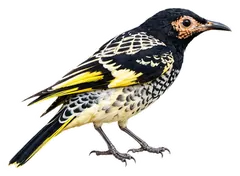 Regent HoneyeaterAnthochaera phrygia
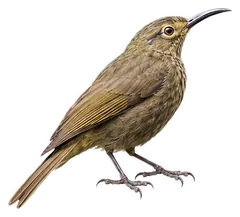 Dark-eared MyzaMyza celebensis
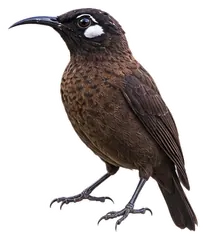 White-eared MyzaMyza sarasinorum
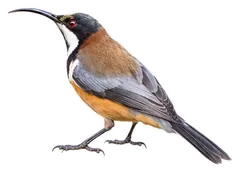 Eastern SpinebillAcanthorhynchus tenuirostris
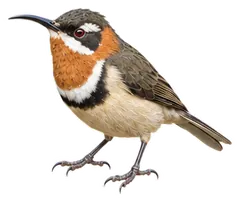 Western SpinebillAcanthorhynchus superciliosus
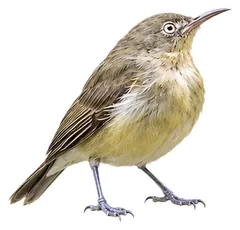 Green-backed HoneyeaterGlycichaera fallax
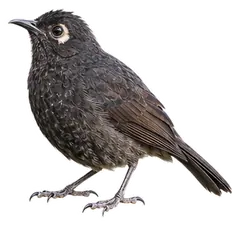 Sooty HoneyeaterMelionyx fuscus
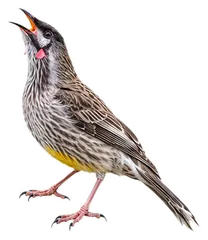
Download illustration
Free to use with credit: “Illustration: Bird Album (birdalbum.com)”. Drawn by AI from a reference photo by Sam Gordon. ↗
Heard it but can't see it? Mingji identifies birds by sound and photo, on your phone.
In other languages
- EnglishRed Wattlebird
- 简体中文红垂蜜鸟
- 繁體中文紅垂蜜鳥
- 日本語アカミミダレミツスイ
- DeutschRotlappen-Honigfresser
- FrançaisMéliphage barbe-rouge
- EspañolMielero carunculado
- Portuguêspapa-mel-de-barbela-vermelha
- ItalianoBargigliuto rosso
- NederlandsRoodlelhoningeter
- РусскийКраснолопастный серёжкоух
- Svenskarödflikig honungsfågel
- DanskRødlappet Honningæder
- Polskikoralicowiec czerwony