 Bird Album
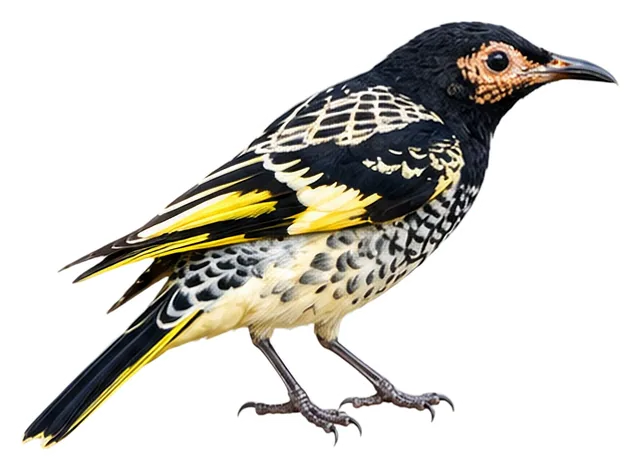
Regent Honeyeater
Anthochaera phrygia (Shaw, 1794)
40 gWeight
The regent honeyeater (Anthochaera phrygia) is a critically endangered bird endemic to southeastern Australia.
Busiest months: June · Most records: Australia
Where and when it's recorded

Regent Honeyeater has been recorded at 9 of the 8,171 birding hotspots we track, in 1 country or region.
Records by month Southern Hemisphere
Where it's recorded most
- Chiltern-Mt Pilot National Park – ChilternAustralia53 records
- Capertee ValleyAustralia7 records
- Chiltern-Mt Pilot National Park – Bartleys BlockAustralia6 records
More places
- Anstead Bushland ReserveAustralia5 records
- Flinders Conservation Estate – Hardings PaddockAustralia3 records
- Blackburn LakeAustralia1 record
- D'Aguilar National Park – Araucaria CircuitAustralia1 record
- O'Reilly's Rainforest RetreatAustralia1 record
- Jerrabomberra Wetlands Nature ReserveAustralia1 record
Countries and regions with the most records
eBird records via GBIF up to 2024-12-31. A record means someone listed it; more records partly mean more birders, not more birds.
About
The regent honeyeater (Anthochaera phrygia) is a critically endangered bird endemic to southeastern Australia. It is commonly considered a flagship species within its range, with the efforts going into its conservation having positive effects on many other species that share its habitat. Recent genetic research suggests it is closely related to the wattlebirds.
Excerpt from Wikipedia, CC BY-SA 4.0 · authors · Read more on Wikipedia
Questions
How big is the Regent Honeyeater?
The Regent Honeyeater weighs around 40 g.
Where does the Regent Honeyeater live?
Its breeding range: Australasia: southeastern Queensland to central Victoria (southeastern Australia). It is most often recorded in Australia.
When is the best time to see the Regent Honeyeater?
At the hotspots we track, it is recorded most in June (Southern Hemisphere).
Is the Regent Honeyeater endangered?
The IUCN Red List classifies the Regent Honeyeater as Critically Endangered.
What does the Regent Honeyeater eat?
Main food: Omnivore.
What family is the Regent Honeyeater in?
It belongs to the family Honeyeaters (Meliphagidae), order Passerines (Passeriformes).
At a glance
- Weight
- 40 g
- Habitat
- Forest
- Diet
- Omnivore
- Lifestyle
- Perches in trees
- Migration
- Partial migrant
- Conservation
- Critically Endangered
More measurements
- Wing
- 110 mm
- Tail
- 97 mm
- Bill
- 22 mm
- Tarsus
- 22 mm
Averages from the AVONET dataset; length from field guides where available.
Range
Australasia: southeastern Queensland to central Victoria (southeastern Australia)
Breeding range, IOC World Bird List 15.2
Classification
- Order
- Passerines Passeriformes
- Family
- Honeyeaters Meliphagidae
- Genus
- Anthochaera
Other birds in the genus Anthochaera
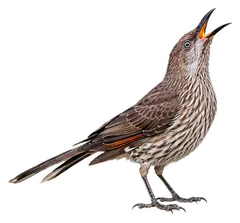 Little WattlebirdAnthochaera chrysoptera
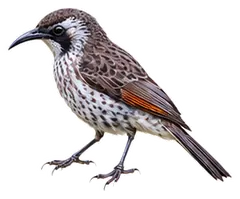 Western WattlebirdAnthochaera lunulata
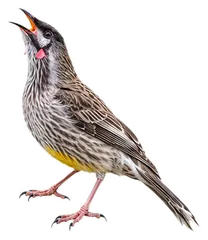 Red WattlebirdAnthochaera carunculata
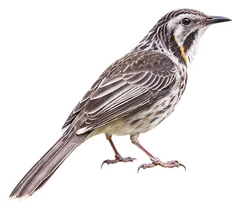 Yellow WattlebirdAnthochaera paradoxa
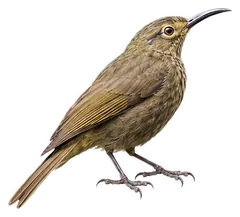 Dark-eared MyzaMyza celebensis
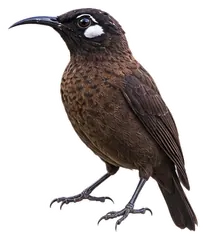 White-eared MyzaMyza sarasinorum
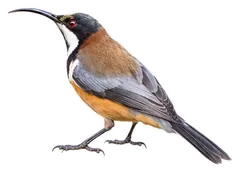 Eastern SpinebillAcanthorhynchus tenuirostris
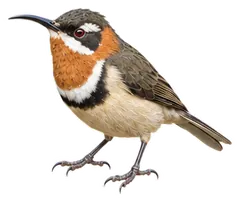 Western SpinebillAcanthorhynchus superciliosus
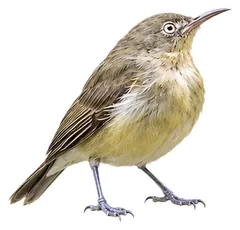 Green-backed HoneyeaterGlycichaera fallax
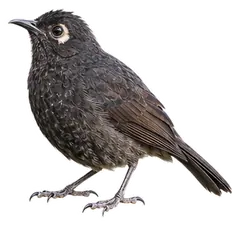 Sooty HoneyeaterMelionyx fuscus
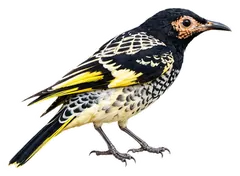
Download illustration
Free to use with credit: “Illustration: Bird Album (birdalbum.com)”. Drawn by AI from a reference photo by Joel Poyitt. ↗
Heard it but can't see it? Mingji identifies birds by sound and photo, on your phone.
In other languages
- EnglishRegent Honeyeater
- 简体中文王吸蜜鸟
- 繁體中文王吸蜜鳥
- 日本語キガオミツスイ
- DeutschWarzenhonigfresser
- FrançaisMéliphage régent
- EspañolMielero regente
- Portuguêspapa-mel-filigrana
- ItalianoSucciamiele del reggente
- NederlandsGeschubde Lelhoningeter
- РусскийЖелтокрылый серёжкоух
- Svenskaregenthonungsfågel
- DanskKongehonningæder
- Polskikoralicowiec królewski