Ross's Gull
Rhodostethia rosea (MacGillivray, W, 1824)
≈34 cmLength87 cmWingspan187 gWeight
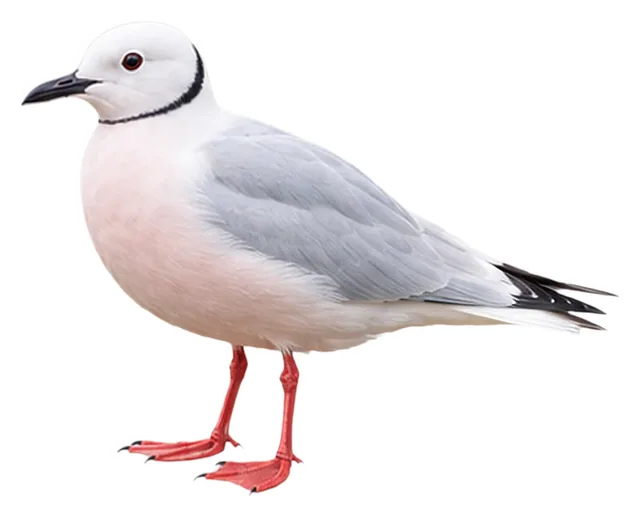
It is a small gull with a pink wash, a black neck ring and a wedge-shaped tail in adult summer plumage.
Busiest months: June · Most records: United States, Canada, Ireland
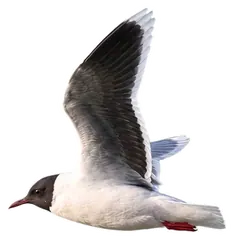
Looks like Little Gull
How to identify
Field marks
- Adult in summer plumage has pale gray upperparts and white underparts, with a pink wash on the body feathers
- Adult in summer plumage has a neat black neck ring
- Tail wedge-shaped; wings more pointed than in Little Gull
- Legs red
Male, female and young
Juvenile resembles winter adult but lacks pink, with a dark “W” on the upperwing in flight; takes two years to acquire adult plumage.
Similar species
Where and when it's recorded
Busiest months: June · Most records: United States, Canada, Ireland

Ross's Gull has been recorded at 54 of the 8,276 birding hotspots we track, in 15 countries and regions.
Records by month Northern Hemisphere
Where it's recorded most
- ChurchillCanada331 records
- GambellUnited States95 records
- Cherry Creek SPUnited States93 records
More places
- St. Paul IslandUnited States91 records
- Pillar Point HarborUnited States57 records
- South Park & Mutton Island CausewayIreland43 records
- Hammonasset Beach SPUnited States40 records
- Nieuwpoort - IJzermondingBelgium30 records
- Nimmos PierIreland29 records
- Riverlands Migratory Bird SanctuaryUnited States29 records
Countries and regions with the most records
eBird records via GBIF up to 2024-12-31. A record means someone listed it; more records partly mean more birders, not more birds.
About
Ross's gull (Rhodostethia rosea) is a small gull, the only species in its genus, although it has been suggested the genus should be merged with the closely related Hydrocoloeus, which otherwise only includes the little gull.
Excerpt from Wikipedia, CC BY-SA 4.0 · authors · Read more on Wikipedia
Questions
How big is the Ross's Gull?
The Ross's Gull is about ≈34 cm long, with a wingspan of 87 cm and weighs around 187 g.
Where does the Ross's Gull live?
Its breeding range: Palearctic, North America: western, eastern Greenland (rare); Arctic northeastern Siberia, locally from Taimyr Peninsula to Kolyma River; Arctic northeastern Canada and formerly Churchill, Manitoba (west-central Hudson Bay, east-central Canada). It is most often recorded in United States, Canada and Ireland.
When is the best time to see the Ross's Gull?
At the hotspots we track, it is recorded most in June (Northern Hemisphere).
Is the Ross's Gull endangered?
The IUCN Red List classifies the Ross's Gull as Least Concern.
What does the Ross's Gull eat?
Main food: Fish, shrimp & shellfish.
What family is the Ross's Gull in?
It belongs to the family Gulls, Terns, Skimmers (Laridae), order Charadriiformes.
At a glance
- Length
- ≈34 cm
- Wingspan
- 87 cm
- Weight
- 187 g
- Habitat
- Coast & tidal flats
- Diet
- Fish, shrimp & shellfish
- Lifestyle
- Feeds in the air
- Migration
- Partial migrant
- Conservation
- Least Concern
More measurements
- Wing
- 251 mm
- Tail
- 107 mm
- Bill
- 26 mm
- Tarsus
- 30 mm
Averages from the AVONET dataset; length from field guides where available.
Range
Palearctic, North America: western, eastern Greenland (rare); Arctic northeastern Siberia, locally from Taimyr Peninsula to Kolyma River; Arctic northeastern Canada and formerly Churchill, Manitoba (west-central Hudson Bay, east-central Canada)
Breeding range, IOC World Bird List 15.2
Classification
- Order
- Charadriiformes
- Family
- Gulls, Terns, Skimmers Laridae
- Genus
- Rhodostethia
More from the family Gulls, Terns, Skimmers
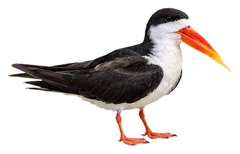 African SkimmerRynchops flavirostris
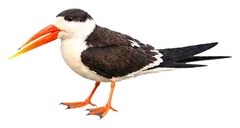 Indian SkimmerRynchops albicollis
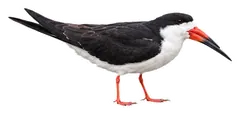 Black SkimmerRynchops niger
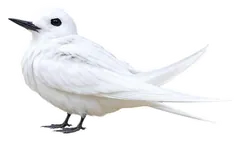 Atlantic White TernGygis alba
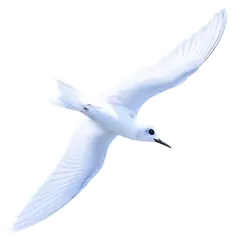 Little White TernGygis microrhyncha
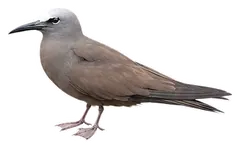 Brown NoddyAnous stolidus
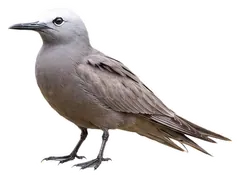 Lesser NoddyAnous tenuirostris
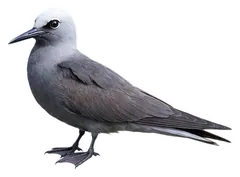 Black NoddyAnous minutus
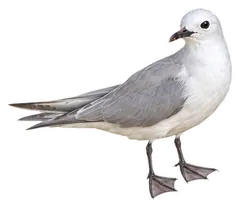 Grey NoddyAnous albivitta
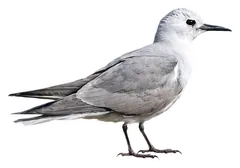 Blue NoddyAnous ceruleus
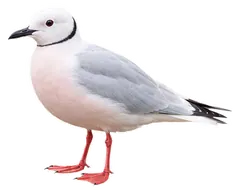
Download illustration
Free to use with credit: “Illustration: Bird Album (birdalbum.com)”. Drawn by AI from a reference photo by Vladimir Yu. Arkhipov. ↗
Heard it but can't see it? Mingji identifies birds by sound and photo, on your phone.