 Bird Album
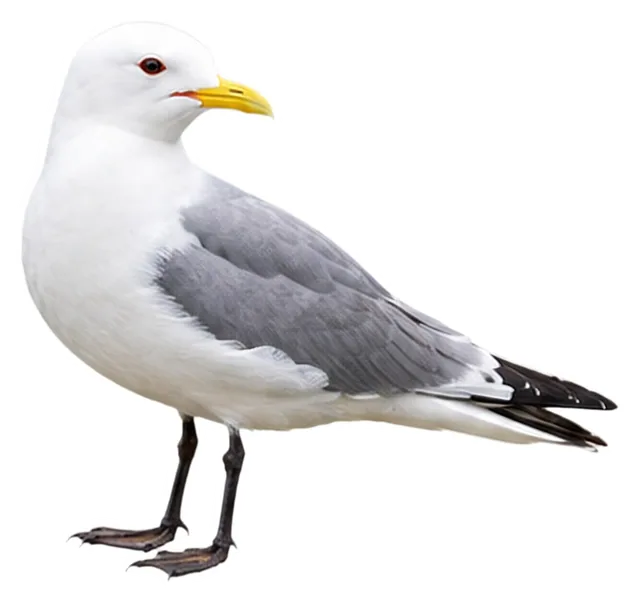
Black-legged Kittiwake
Rissa tridactyla (Linnaeus, 1758)
37–41 cmLength96 cmWingspan416 gWeight
It is a gull with black legs, a yellow bill and all-black wingtips, spending almost all its time at sea outside the breeding season.
Busiest months: May–June · Most records: United States, United Kingdom, Canada
Looks like Little Gull, Sabine's Gull
How to identify
Field marks
- Wings gray with black wingtips
- Legs black; bill yellow
- Head and body white; back gray
- Dark gray patch behind the eye and gray collar on nape in winter plumage
Male, female and young
Juvenile has a black “W” band on the upperwing, a black collar on the nape, a black band at the tail tip and an all-black bill; does not acquire adult feathers until four years old.
Voice
A drawn-out “kit-ti-wake”, from which its English name derives; when a predator appears, the whole colony gives repeated, oohing alarm calls in unison.
Similar species
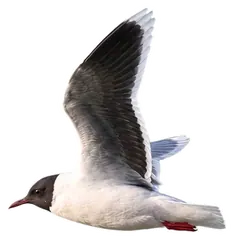
Only juveniles are easily confused: juvenile Black-legged Kittiwake has a broader black “W” on the upperwing and a different pattern on the coverts.
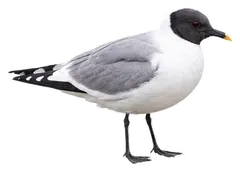
Juvenile Black-legged Kittiwake may be confused with juvenile or adult Sabine's Gull; juvenile Black-legged Kittiwake has a black “W” on the upperwing and a different pattern on the coverts.
Where and when it's recorded
Busiest months: May–June · Most records: United States, United Kingdom, Canada

Black-legged Kittiwake has been recorded at 715 of the 8,276 birding hotspots we track, in 60 countries and regions.
Records by month Northern Hemisphere
To protect this bird from disturbance, we don't list exact sites.
Countries and regions with the most records
eBird records via GBIF up to 2024-12-31. A record means someone listed it; more records partly mean more birders, not more birds.
About
The black-legged kittiwake (Rissa tridactyla) is a seabird species in the gull family Laridae. This species was first described by Carl Linnaeus in his landmark 1758 10th edition of Systema Naturae as Larus tridactylus. The English name is derived from its call, a shrill 'kittee-wa-aaake, kitte-wa-aaake'.
Excerpt from Wikipedia, CC BY-SA 4.0 · authors · Read more on Wikipedia
Questions
How big is the Black-legged Kittiwake?
The Black-legged Kittiwake is about 37–41 cm long, with a wingspan of 96 cm and weighs around 416 g.
Where does the Black-legged Kittiwake live?
Its breeding range: Palearctic, North America: high Arctic to temperate northern coasts, from Greenland, Iceland, western, northwestern Europe, Svalbard (north of Norway), northern Siberian islands to Sakhalin, Kamchatka, Kuril and Commander islands (eastern Russia); Aleutian and Bering Sea islands, western, southwestern Alaska mainland; Canadian high Arctic (northeastern Canada), Gulf of St. Lawrence and Newfoundland (southeastern Canada). It is most often recorded in United States, United Kingdom and Canada.
When is the best time to see the Black-legged Kittiwake?
At the hotspots we track, it is recorded most in May and June (Northern Hemisphere).
Is the Black-legged Kittiwake endangered?
The IUCN Red List classifies the Black-legged Kittiwake as Vulnerable.
What does the Black-legged Kittiwake eat?
Main food: Fish, shrimp & shellfish.
What family is the Black-legged Kittiwake in?
It belongs to the family Gulls, Terns, Skimmers (Laridae), order Charadriiformes.
At a glance
- Length
- 37–41 cm
- Wingspan
- 96 cm
- Weight
- 416 g
- Habitat
- Ocean
- Diet
- Fish, shrimp & shellfish
- Lifestyle
- Feeds in the air
- Migration
- Partial migrant
- Conservation
- Vulnerable
More measurements
- Wing
- 301 mm
- Tail
- 116 mm
- Bill
- 44 mm
- Tarsus
- 34 mm
Averages from the AVONET dataset; length from field guides where available.
Range
Palearctic, North America: high Arctic to temperate northern coasts, from Greenland, Iceland, western, northwestern Europe, Svalbard (north of Norway), northern Siberian islands to Sakhalin, Kamchatka, Kuril and Commander islands (eastern Russia); Aleutian and Bering Sea islands, western, southwestern Alaska mainland; Canadian high Arctic (northeastern Canada), Gulf of St. Lawrence and Newfoundland (southeastern Canada)
Breeding range, IOC World Bird List 15.2
Classification
- Order
- Charadriiformes
- Family
- Gulls, Terns, Skimmers Laridae
- Genus
- Rissa
Other birds in the genus Rissa
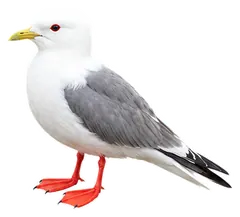 Red-legged KittiwakeRissa brevirostris
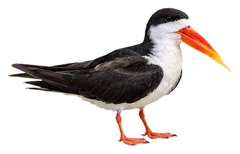 African SkimmerRynchops flavirostris
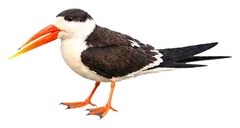 Indian SkimmerRynchops albicollis
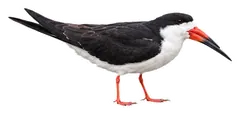 Black SkimmerRynchops niger
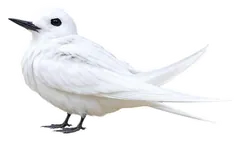 Atlantic White TernGygis alba
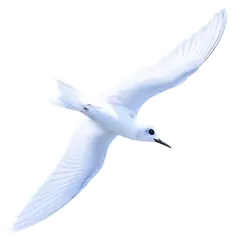 Little White TernGygis microrhyncha
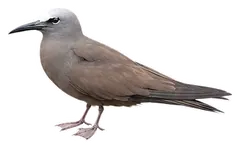 Brown NoddyAnous stolidus
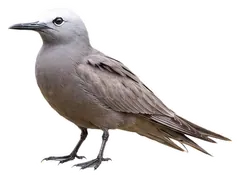 Lesser NoddyAnous tenuirostris
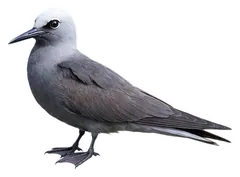 Black NoddyAnous minutus
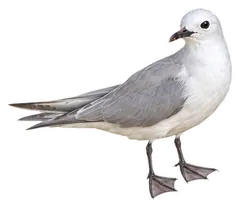 Grey NoddyAnous albivitta
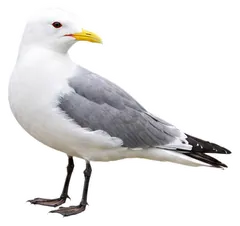
Download illustration
Free to use with credit: “Illustration: Bird Album (birdalbum.com)”. Drawn by AI from a reference photo by Marion Goascoz. ↗
Heard it but can't see it? Mingji identifies birds by sound and photo, on your phone.