 Bird Album
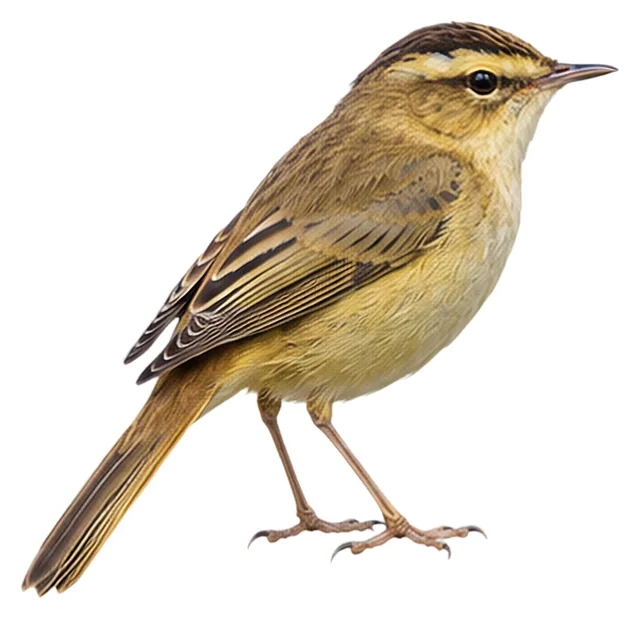
Sedge Warbler
Acrocephalus schoenobaenus (Linnaeus, 1758)
12–13 cmLength19 cmWingspan12 gWeight
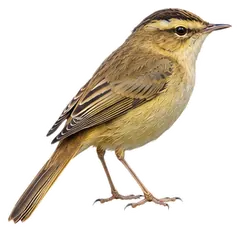
It is a medium-sized reed warbler with a streaked brown back and a striking whitish supercilium.
Busiest months: May · Most records: United Kingdom, Israel, Spain
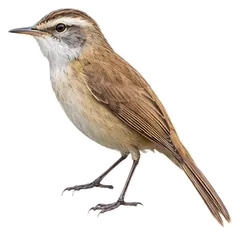
Looks like Moustached Warbler
How to identify
Field marks
- Striking whitish supercilium
- Black streaks on the crown and flat forehead
- Brown back and wings with streaks, and pale underparts
- Warm brown rump without streaks
Male, female and young
Sexes identical in plumage; juvenile has dark spots on the breast.
Voice
Varied, rapid, chattering song includes sweeter short phrases and mimicry; the contact call is “chirr” or “kerr”, becoming a quacking alarm when repeated rapidly.
Similar species
Where and when it's recorded

Sedge Warbler has been recorded at 1,286 of the 8,171 birding hotspots we track, in 103 countries and regions.
Records by month Northern Hemisphere
Where it's recorded most
- International Birding and Research Center Eilat (IBRCE)Israel2,806 records
- Minsmere RSPB ReserveUnited Kingdom2,468 records
- Titchwell Marsh RSPB ReserveUnited Kingdom2,087 records
More places
- Amwell HMWT NRUnited Kingdom2,078 records
- Cley & Salthouse Marshes NWT NR – Cley Marshes including Hides and Visitor CentreUnited Kingdom1,535 records
- Frampton Marsh RSPB ReserveUnited Kingdom1,409 records
- Rainham Marshes RSPB Reserve, SSSI and LNRUnited Kingdom1,263 records
- Spurn Bird Observatory Recording AreaUnited Kingdom1,241 records
- Otmoor RSPB ReserveUnited Kingdom1,237 records
- Lakenheath Fen RSPB ReserveUnited Kingdom1,132 records
Countries and regions with the most records
eBird records via GBIF up to 2024-12-31. A record means someone listed it; more records partly mean more birders, not more birds.
About
The sedge warbler (Acrocephalus schoenobaenus) is an Old World warbler in the genus Acrocephalus. Sedge warblers are migratory, crossing the Sahara to get from their European and Asian breeding grounds to spend winter in Africa. The male's song is composed of random chattering phrases and can include mimicry of other species.
Excerpt from Wikipedia, CC BY-SA 4.0 · authors · Read more on Wikipedia
Questions
How big is the Sedge Warbler?
The Sedge Warbler is about 12–13 cm long, with a wingspan of 19 cm and weighs around 12 g.
Where does the Sedge Warbler live?
Its breeding range: Palearctic: western, northern, central Europe to central Russia. It is most often recorded in United Kingdom, Israel and Spain.
When is the best time to see the Sedge Warbler?
At the hotspots we track, it is recorded most in May (Northern Hemisphere).
Is the Sedge Warbler endangered?
The IUCN Red List classifies the Sedge Warbler as Least Concern.
What does the Sedge Warbler eat?
Main food: Insects & other invertebrates.
What family is the Sedge Warbler in?
It belongs to the family Reed Warblers & Allies (Acrocephalidae), order Passerines (Passeriformes).
At a glance
- Length
- 12–13 cm
- Wingspan
- 19 cm
- Weight
- 12 g
- Habitat
- Wetland
- Diet
- Insects & other invertebrates
- Lifestyle
- Perches in trees
- Migration
- Migratory
- Conservation
- Least Concern
More measurements
- Wing
- 65 mm
- Tail
- 49 mm
- Bill
- 15 mm
- Tarsus
- 21 mm
Averages from the AVONET dataset; length from field guides where available.
Range
Palearctic: western, northern, central Europe to central Russia
Breeding range, IOC World Bird List 15.2
Classification
- Order
- Passerines Passeriformes
- Family
- Reed Warblers & Allies Acrocephalidae
- Genus
- Acrocephalus
Other birds in the genus Acrocephalus
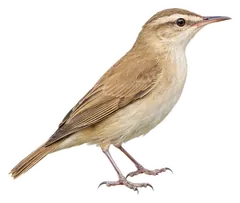 Basra Reed WarblerAcrocephalus griseldis
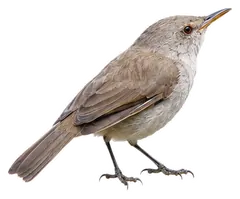 Cape Verde WarblerAcrocephalus brevipennis
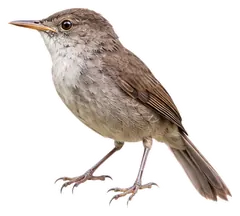 Greater Swamp WarblerAcrocephalus rufescens
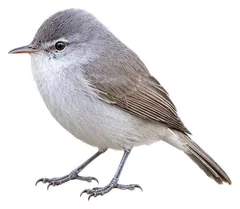 Lesser Swamp WarblerAcrocephalus gracilirostris
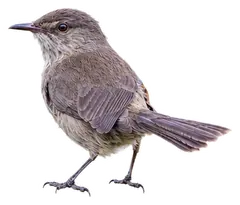 Madagascar Swamp WarblerAcrocephalus newtoni
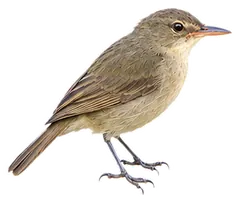 Seychelles WarblerAcrocephalus sechellensis
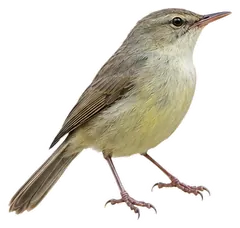 Rodrigues WarblerAcrocephalus rodericanus
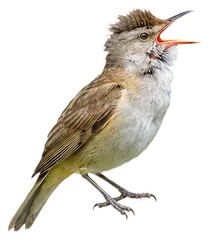 Great Reed WarblerAcrocephalus arundinaceus
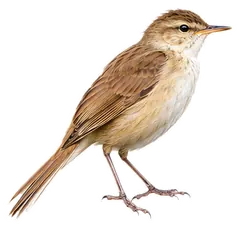 Oriental Reed WarblerAcrocephalus orientalis
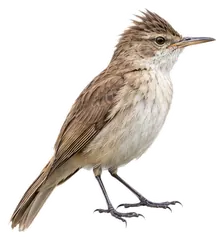 Clamorous Reed WarblerAcrocephalus stentoreus
 Australian Reed WarblerAcrocephalus australis
 MillerbirdAcrocephalus familiaris
Download illustration
Free to use with credit: “Illustration: Bird Album (birdalbum.com)”. Drawn by AI from a reference photo by Ad Konings. ↗
Heard it but can't see it? Mingji identifies birds by sound and photo, on your phone.