Sociable Lapwing
Vanellus gregarius (Pallas, 1771)
27–30 cmLength70 cmWingspan224 gWeight
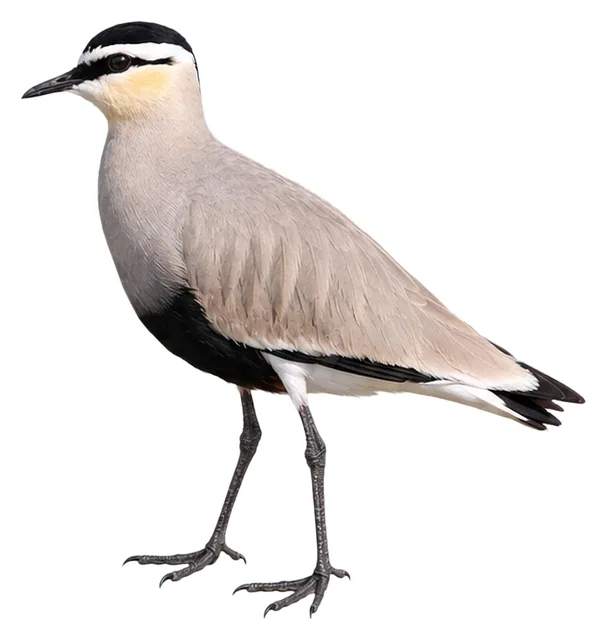
This medium-sized lapwing has a black crown and eyestripe and earthy-yellow cheeks in adult breeding plumage.
Busiest months: November · Most records: United Arab Emirates, Spain, Kuwait
Looks like White-tailed Lapwing
How to identify
Field marks
- Adults have a black crown and a black eyestripe that narrows behind the eye
- Adults in breeding plumage have earthy-yellow cheeks
- Adults have black primaries and white secondaries
- Short black bill; black legs and feet
Male, female and young
Sexes similar, with the female slightly paler on the crown and belly; juveniles have edged back feathers and only traces of the head markings.
Voice
A harsh “kereck”.
Similar species
Where and when it's recorded
Busiest months: November · Most records: United Arab Emirates, Spain, Kuwait

Sociable Lapwing has been recorded at 84 of the 8,276 birding hotspots we track, in 28 countries and regions.
Records by month Northern Hemisphere
To protect this bird from disturbance, we don't list exact sites.
Countries and regions with the most records
eBird records via GBIF up to 2024-12-31. A record means someone listed it; more records partly mean more birders, not more birds.
About
The sociable lapwing (Vanellus gregarius), referred to as the sociable plover in the UK, is a wader in the plover family. It is a fully migratory bird, breeding in Kazakhstan and wintering in the Middle East, Indian subcontinent, and Sudan with a very small wintering population in Iberia. Historical literature referred to this bird as the black-bellied lapwing.
Excerpt from Wikipedia, CC BY-SA 4.0 · authors · Read more on Wikipedia
Questions
How big is the Sociable Lapwing?
The Sociable Lapwing is about 27–30 cm long, with a wingspan of 70 cm and weighs around 224 g.
Where does the Sociable Lapwing live?
Its breeding range: Palearctic: inland northern Kazakhstan and adjacent southern Russia (formerly Ukraine to Xinjiang [northwestern China]). It is most often recorded in United Arab Emirates, Spain and Kuwait.
When is the best time to see the Sociable Lapwing?
At the hotspots we track, it is recorded most in November (Northern Hemisphere).
Is the Sociable Lapwing endangered?
The IUCN Red List classifies the Sociable Lapwing as Critically Endangered.
What does the Sociable Lapwing eat?
Main food: Insects & other invertebrates.
What family is the Sociable Lapwing in?
It belongs to the family Plovers (Charadriidae), order Charadriiformes.
At a glance
- Length
- 27–30 cm
- Wingspan
- 70 cm
- Weight
- 224 g
- Habitat
- Grassland
- Diet
- Insects & other invertebrates
- Lifestyle
- Active on the ground
- Migration
- Migratory
- Conservation
- Critically Endangered
More measurements
- Wing
- 200 mm
- Tail
- 80 mm
- Bill
- 34 mm
- Tarsus
- 61 mm
Averages from the AVONET dataset; length from field guides where available.
Range
Palearctic: inland northern Kazakhstan and adjacent southern Russia (formerly Ukraine to Xinjiang [northwestern China])
Breeding range, IOC World Bird List 15.2
Classification
- Order
- Charadriiformes
- Family
- Plovers Charadriidae
- Genus
- Vanellus
Other birds in the genus Vanellus
 Northern LapwingVanellus vanellus
 Long-toed LapwingVanellus crassirostris
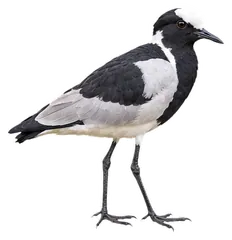 Blacksmith LapwingVanellus armatus
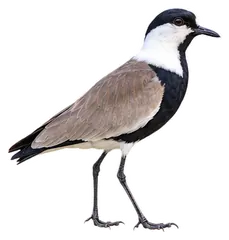 Spur-winged LapwingVanellus spinosus
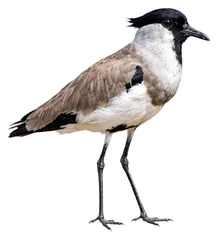 River LapwingVanellus duvaucelii
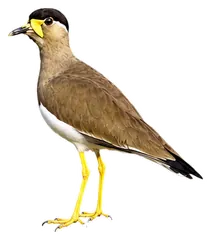 Yellow-wattled LapwingVanellus malabaricus
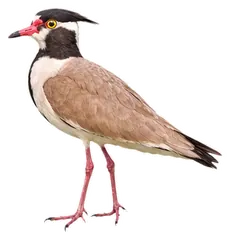 Black-headed LapwingVanellus tectus
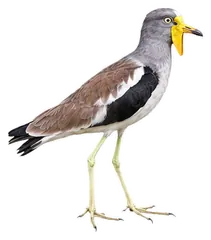 White-crowned LapwingVanellus albiceps
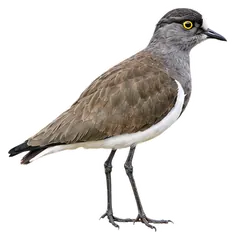 Senegal LapwingVanellus lugubris
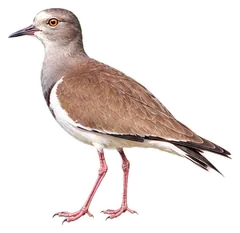 Black-winged LapwingVanellus melanopterus
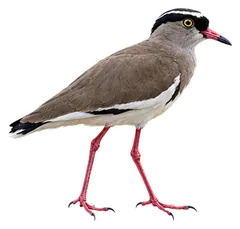 Crowned LapwingVanellus coronatus
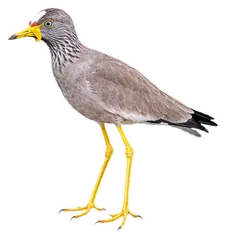 African Wattled LapwingVanellus senegallus
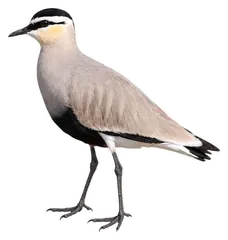
Download illustration
Free to use with credit: “Illustration: Bird Album (birdalbum.com)”. Drawn by AI from a reference photo by Maxim Koshkin. ↗
Heard it but can't see it? Mingji identifies birds by sound and photo, on your phone.