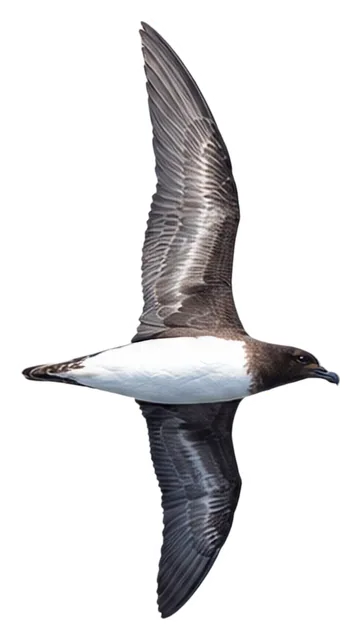
Tahiti Petrel
Pseudobulweria rostrata (Peale, 1849)
38–42 cmLength84 cmWingspan409 gWeight
A medium-sized seabird with a dark brown back and white belly, it holds its narrow wings straight in flight, resembling an albatross.
Busiest months: April–May and September · Most records: French Polynesia, Fiji, New Caledonia
How to identify
Field marks
- Wedge-shaped tail, long wings and neck, small head
- Bill black, stout and bulbous
- Body dark brown, belly white
- A single faint white line on underwing
Male, female and young
Juvenile plumage resembles that of adults; females are usually smaller.
Voice
The nominate subspecies gives a long series of whistles ending in a purr, in flight or at breeding grounds.
Where and when it's recorded
Busiest months: April–May and September · Most records: French Polynesia, Fiji, New Caledonia

Tahiti Petrel has been recorded at 20 of the 8,276 birding hotspots we track, in 7 countries and regions.
Records by month Southern Hemisphere
Where it's recorded most
- TetiaroaFrench Polynesia63 records
- Tahiti to Moorea ferryFrench Polynesia58 records
- Rangiroa – Tiputa PassFrench Polynesia24 records
More places
- NoumeaNew Caledonia4 records
- Bora BoraFrench Polynesia3 records
- Oeno IslandPitcairn Islands2 records
- One Foot IslandCook Islands2 records
- Rangiroa – Blue LagoonFrench Polynesia2 records
- Nuku Hiva – Taiohae BayFrench Polynesia2 records
- Moorea – Opunohu ValleyFrench Polynesia2 records
Countries and regions with the most records
eBird records via GBIF up to 2024-12-31. A record means someone listed it; more records partly mean more birders, not more birds.
About
The Tahiti petrel (Pseudobulweria rostrata) is a medium-sized, dark brown and white seabird found across the Pacific Ocean. The species comprises two subspecies: P. r. rostrata which breeds in the west-central Pacific Ocean, and P. r. trouessarti which breeds in the tropical and subtropical Pacific Ocean. The Tahiti petrel belongs to the Procellariidae family and is the most studied member of the Pseudobulweria genus which comprises three critically endangered species.
Excerpt from Wikipedia, CC BY-SA 4.0 · authors · Read more on Wikipedia
Questions
How big is the Tahiti Petrel?
The Tahiti Petrel is about 38–42 cm long, with a wingspan of 84 cm and weighs around 409 g.
Where does the Tahiti Petrel live?
Its breeding range: Pacific Ocean: Grande Terre (New Caledonia), Gau (Fiji; southwestern Polynesia), American Samoa (central Polynesia), Society, Marquesas and Gambier islands (southeastern Tuamotu Islands; eastern Polynesia). It is most often recorded in French Polynesia, Fiji and New Caledonia.
When is the best time to see the Tahiti Petrel?
At the hotspots we track, it is recorded most in April, May and September (Southern Hemisphere).
Is the Tahiti Petrel endangered?
The IUCN Red List classifies the Tahiti Petrel as Near Threatened.
What does the Tahiti Petrel eat?
Main food: Fish, shrimp & shellfish.
What family is the Tahiti Petrel in?
It belongs to the family Petrels, Shearwaters, Diving Petrels (Procellariidae), order Procellariiformes.
At a glance
- Length
- 38–42 cm
- Wingspan
- 84 cm
- Weight
- 409 g
- Habitat
- Ocean
- Diet
- Fish, shrimp & shellfish
- Lifestyle
- On the water surface
- Migration
- Partial migrant
- Conservation
- Near Threatened
More measurements
- Wing
- 282 mm
- Tail
- 104 mm
- Bill
- 35 mm
- Tarsus
- 45 mm
Averages from the AVONET dataset; length from field guides where available.
Range
Pacific Ocean: Grande Terre (New Caledonia), Gau (Fiji; southwestern Polynesia), American Samoa (central Polynesia), Society, Marquesas and Gambier islands (southeastern Tuamotu Islands; eastern Polynesia)
Breeding range, IOC World Bird List 15.2
Classification
- Order
- Procellariiformes
- Family
- Petrels, Shearwaters, Diving Petrels Procellariidae
- Genus
- Pseudobulweria
Other birds in the genus Pseudobulweria
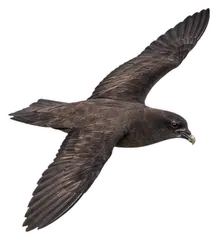 Mascarene PetrelPseudobulweria aterrima
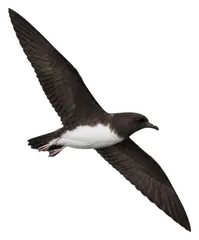 Beck's PetrelPseudobulweria becki
 Fiji PetrelPseudobulweria macgillivrayi
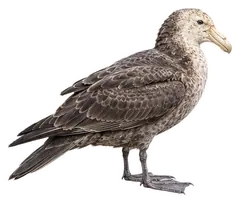 Southern Giant PetrelMacronectes giganteus
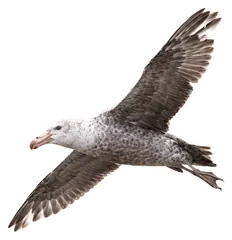 Northern Giant PetrelMacronectes halli
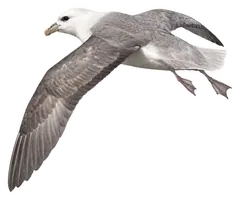 Northern FulmarFulmarus glacialis
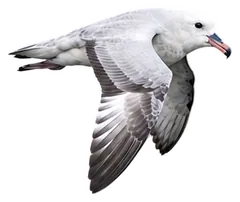 Southern FulmarFulmarus glacialoides
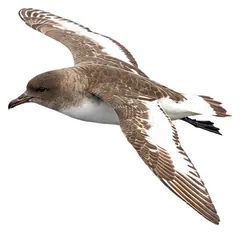 Antarctic PetrelThalassoica antarctica
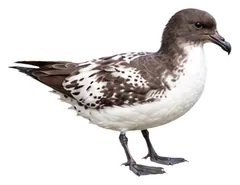 Pintado PetrelDaption capense
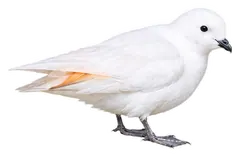 Snow PetrelPagodroma nivea
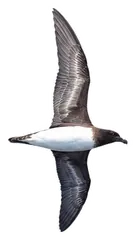
Download illustration
Free to use with credit: “Illustration: Bird Album (birdalbum.com)”. Drawn by AI from a reference photo by Todd Burrows. ↗
Heard it but can't see it? Mingji identifies birds by sound and photo, on your phone.