 Bird Album
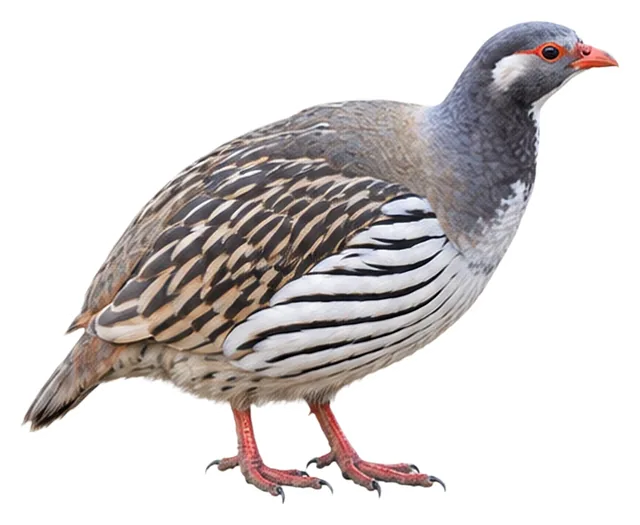
Tibetan Snowcock
Tetraogallus tibetanus Gould, 1854
≈54 cmLength1.5 kgWeight
This snowcock mostly frequents alpine areas of bare rock, scrub and meadows.
Busiest months: May–June · Most records: China
How to identify
Where and when it's recorded

Tibetan Snowcock has been recorded at 43 of the 8,171 birding hotspots we track, in 1 country or region.
Records by month Northern Hemisphere
Where it's recorded most
- Balang Shan [General Area]China131 records
- Balang Shan PassChina114 records
- Shugseb NunneryChina38 records
More places
- Balang Shan – SummitChina30 records
- Balang Shan – Tunnel AreaChina21 records
- GangshikaChina20 records
- Lamaling Mountain PassChina15 records
- E'La Mountain PassChina14 records
- Balang Shan – Main Tunnel NorthChina12 records
- Wolong Giant Panda Museum and ReserveChina10 records
Countries and regions with the most records
eBird records via GBIF up to 2024-12-31. A record means someone listed it; more records partly mean more birders, not more birds.
About
The Tibetan snowcock (Tetraogallus tibetanus) is a bird in the pheasant family Phasianidae of the order Galliformes, gallinaceous birds. This species is found in high-altitude regions of the Western Himalayas and the Tibetan Plateau, where it overlaps in part with the larger Himalayan snowcock.
Excerpt from Wikipedia, CC BY-SA 4.0 · authors · Read more on Wikipedia
Questions
How big is the Tibetan Snowcock?
The Tibetan Snowcock is about ≈54 cm long and weighs around 1.5 kg.
Where does the Tibetan Snowcock live?
Its breeding range: Palearctic: Himalayas. It is most often recorded in China.
When is the best time to see the Tibetan Snowcock?
At the hotspots we track, it is recorded most in May and June (Northern Hemisphere).
Is the Tibetan Snowcock endangered?
The IUCN Red List classifies the Tibetan Snowcock as Least Concern.
What does the Tibetan Snowcock eat?
Main food: Land plants.
What family is the Tibetan Snowcock in?
It belongs to the family Pheasants & Allies (Phasianidae), order Galliformes.
At a glance
- Length
- ≈54 cm
- Weight
- 1.5 kg
- Habitat
- Grassland
- Diet
- Land plants
- Lifestyle
- Active on the ground
- Migration
- Resident (barely migrates)
- Conservation
- Least Concern
More measurements
- Wing
- 263 mm
- Tail
- 146 mm
- Bill
- 33 mm
- Tarsus
- 56 mm
Averages from the AVONET dataset; length from field guides where available.
Range
Palearctic: Himalayas
Breeding range, IOC World Bird List 15.2
Subspecies · 6
- Tetraogallus tibetanus tschimenensis Kun Lun and Altun Shan Mts. (n Tibet, nw China)
- Tetraogallus tibetanus tibetanus e Afghanistan to w Tibetan Plateau and n India
- Tetraogallus tibetanus aquilonifer n Nepal to n Bhutan, ne India and sw China
- Tetraogallus tibetanus yunnanensis n Yunnan (sc China)
- Tetraogallus tibetanus henrici e Xizang and w Sichuan (c China)
- Tetraogallus tibetanus przewalskii Qinghai, n Sichuan and w Gansu (nc China)
Classification
- Order
- Galliformes
- Family
- Pheasants & Allies Phasianidae
- Genus
- Tetraogallus
Other birds in the genus Tetraogallus
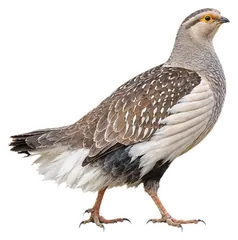 Altai SnowcockTetraogallus altaicus
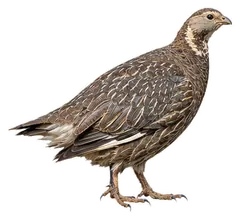 Caucasian SnowcockTetraogallus caucasicus
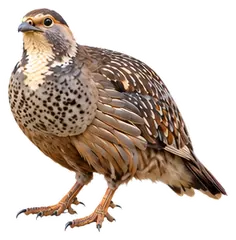 Caspian SnowcockTetraogallus caspius
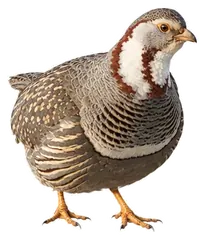 Himalayan SnowcockTetraogallus himalayensis
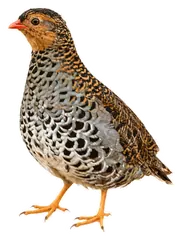 Udzungwa Forest PartridgeXenoperdix udzungwensis
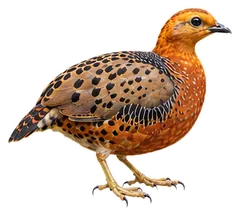 Ferruginous PartridgeCaloperdix oculeus
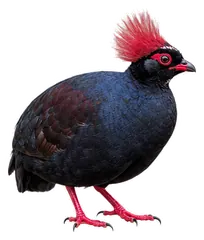 Crested PartridgeRollulus rouloul
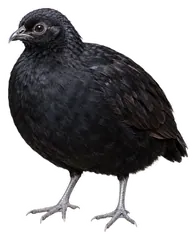 Black PartridgeMelanoperdix niger
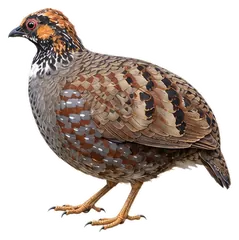 Hill PartridgeArborophila torqueola
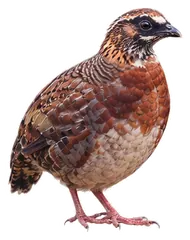 Sichuan PartridgeArborophila rufipectus
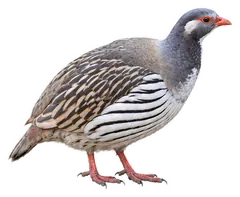
Download illustration
Free to use with credit: “Illustration: Bird Album (birdalbum.com)”. Drawn by AI from a reference photo by Donald Macauley. ↗
Heard it but can't see it? Mingji identifies birds by sound and photo, on your phone.