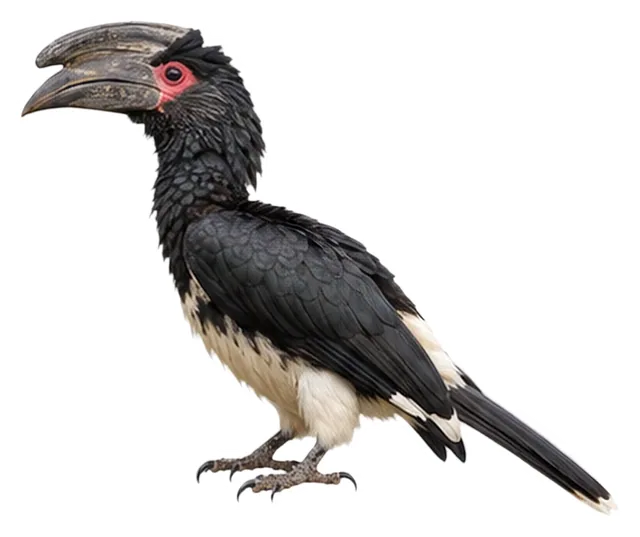
Trumpeter Hornbill
Bycanistes bucinator (Temminck, 1824)
≈66 cmLength639 gWeight
This medium-sized hornbill has a black back, a white belly and a large gray casque on the bill.
Busiest months: October–November · Most records: South Africa, Zambia, Zimbabwe
How to identify
Field marks
- Large gray casque on the bill, smaller in the female
- Entirely black back and white belly
- Red facial skin
- White underwing coverts; white also visible at the wingtips in flight
Male, female and young
The female has a smaller casque than the male.
Where and when it's recorded
Busiest months: October–November · Most records: South Africa, Zambia, Zimbabwe

Trumpeter Hornbill has been recorded at 141 of the 8,276 birding hotspots we track, in 12 countries and regions.
Records by month Southern Hemisphere
Where it's recorded most
- Eshowe – Dlinza ForestSouth Africa708 records
- Zambezi River near Victoria FallsZimbabwe511 records
- Mkhuze GRSouth Africa504 records
More places
- St Lucia – iGwalagwala TrailSouth Africa490 records
- Arabuko-Sokoke Forest NRKenya311 records
- iSimangaliso WP – Eastern ShoresSouth Africa287 records
- Umlalazi NRSouth Africa229 records
- Victoria FallsZambia220 records
- Victoria Falls Rain ForestZimbabwe217 records
- St Lucia – iMfolozi River mouthSouth Africa188 records
Countries and regions with the most records
eBird records via GBIF up to 2024-12-31. A record means someone listed it; more records partly mean more birders, not more birds.
About
The trumpeter hornbill (Bycanistes bucinator) is a medium-sized hornbill, with length between 58 and 65 cm (23 and 26 in), characterized by a large grey casque on the bill, smaller in females. The eyes are brown or red, with pink surrounding skin. Body mass is between 0.45 and 1 kg (0.99 and 2.20 lb).
Excerpt from Wikipedia, CC BY-SA 4.0 · authors · Read more on Wikipedia
Questions
How big is the Trumpeter Hornbill?
The Trumpeter Hornbill is about ≈66 cm long and weighs around 639 g.
Where does the Trumpeter Hornbill live?
Its breeding range: Africa: Angola to Kenya, south to eastern South Africa. It is most often recorded in South Africa, Zambia and Zimbabwe.
When is the best time to see the Trumpeter Hornbill?
At the hotspots we track, it is recorded most in October and November (Southern Hemisphere).
Is the Trumpeter Hornbill endangered?
The IUCN Red List classifies the Trumpeter Hornbill as Least Concern.
What does the Trumpeter Hornbill eat?
Main food: Fruit.
What family is the Trumpeter Hornbill in?
It belongs to the family Hornbills (Bucerotidae), order Bucerotiformes.
At a glance
- Length
- ≈66 cm
- Weight
- 639 g
- Habitat
- Forest
- Diet
- Fruit
- Lifestyle
- Perches in trees
- Migration
- Resident (barely migrates)
- Conservation
- Least Concern
More measurements
- Wing
- 278 mm
- Tail
- 232 mm
- Bill
- 114 mm
- Tarsus
- 49 mm
Averages from the AVONET dataset; length from field guides where available.
Range
Africa: Angola to Kenya, south to eastern South Africa
Breeding range, IOC World Bird List 15.2
Classification
- Order
- Bucerotiformes
- Family
- Hornbills Bucerotidae
- Genus
- Bycanistes
Other birds in the genus Bycanistes
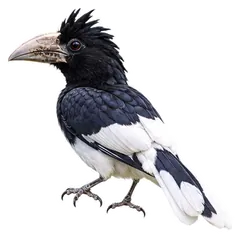 Piping HornbillBycanistes fistulator
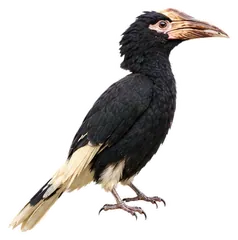 Brown-cheeked HornbillBycanistes cylindricus
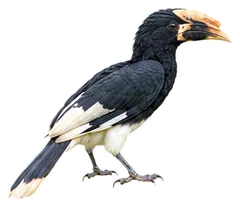 White-thighed HornbillBycanistes albotibialis
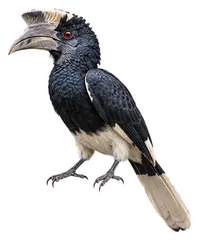 Black-and-white-casqued HornbillBycanistes subcylindricus
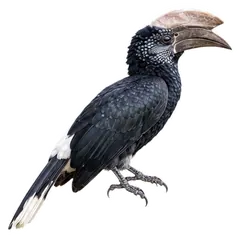 Silvery-cheeked HornbillBycanistes brevis
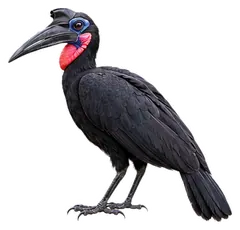 Abyssinian Ground HornbillBucorvus abyssinicus
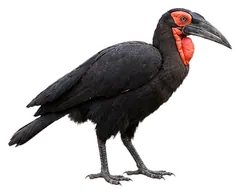 Southern Ground HornbillBucorvus leadbeateri
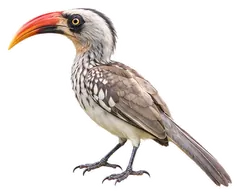 Tanzanian Red-billed HornbillTockus ruahae
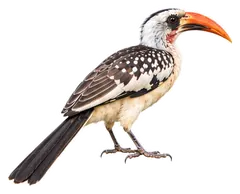 Western Red-billed HornbillTockus kempi
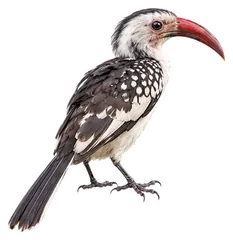 Damara Red-billed HornbillTockus damarensis
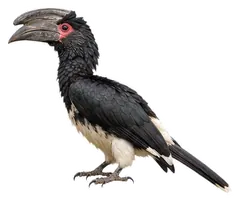
Download illustration
Free to use with credit: “Illustration: Bird Album (birdalbum.com)”. Drawn by AI from a reference photo by Heinrich Human. ↗
Heard it but can't see it? Mingji identifies birds by sound and photo, on your phone.
In other languages
- EnglishTrumpeter Hornbill
- 简体中文噪犀鸟
- 繁體中文噪犀鳥
- 日本語ナキサイチョウ
- DeutschTrompeterhornvogel
- FrançaisCalao trompette
- EspañolCálao trompetero
- Portuguêscalau-trombeteiro
- ItalianoBucero trombettiere
- NederlandsTrompetneushoornvogel
- РусскийШлеморог-трубач
- Svenskatrumpetarnäshornsfågel
- DanskTrompetérhornfugl
- Polskidzioborożec trąbiący