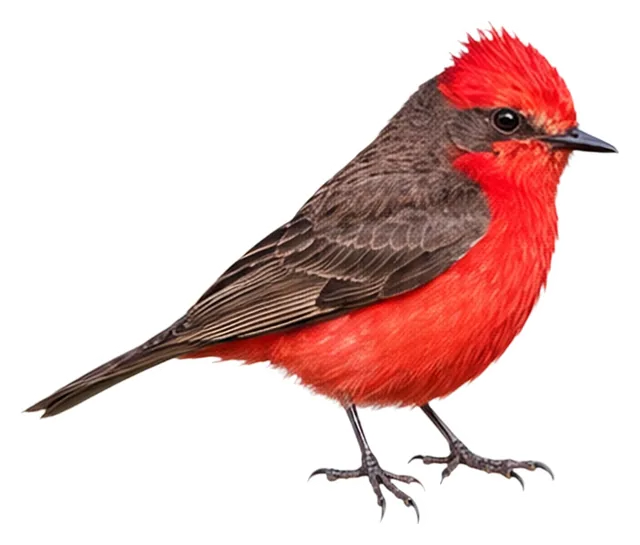
Vermilion Flycatcher
Pyrocephalus rubinus (Boddaert, 1783)
14 cmLength14 gWeight
The scarlet flycatcher or austral vermilion flycatcher (Pyrocephalus rubinus) is a passerine bird in the family Tyrannidae, the tyrant flycatchers.
Busiest months: January, March–April and November · Most records: United States, Mexico, Colombia
Where and when it's recorded
Busiest months: January, March–April and November · Most records: United States, Mexico, Colombia

Vermilion Flycatcher has been recorded at 830 of the 8,276 birding hotspots we track, in 20 countries and regions.
Records by month Northern Hemisphere
Where it's recorded most
- Sweetwater WetlandsUnited States20,217 records
- Canoa Ranch Conservation ParkUnited States12,510 records
- Anza Trail – TubacUnited States8,936 records
More places
- Reid ParkUnited States8,392 records
- Estero Llano Grande SP WBCUnited States7,983 records
- Fort Lowell Park and Pantano WashUnited States6,283 records
- Whitewater Draw Wildlife AreaUnited States6,247 records
- Patagonia Lake SP – Birding TrailUnited States5,627 records
- Big Morongo Canyon Preserve & Covington ParkUnited States5,622 records
- El Rio Open Space PreserveUnited States5,549 records
Countries and regions with the most records
eBird records via GBIF up to 2024-12-31. A record means someone listed it; more records partly mean more birders, not more birds.
About
The scarlet flycatcher or austral vermilion flycatcher (Pyrocephalus rubinus) is a passerine bird in the family Tyrannidae, the tyrant flycatchers. It is found in Argentina, Bolivia, Brazil, Colombia, Ecuador, Paraguay, Peru, and Uruguay.
Excerpt from Wikipedia, CC BY-SA 4.0 · authors · Read more on Wikipedia
Questions
How big is the Vermilion Flycatcher?
The Vermilion Flycatcher is about 14 cm long and weighs around 14 g.
Where does the Vermilion Flycatcher live?
Its breeding range: North America, Middle America, South America: southwestern USA to southeastern Bolivia, Paraguay, southeastern Brazil to Argentina and Uruguay. It is most often recorded in United States, Mexico and Colombia.
When is the best time to see the Vermilion Flycatcher?
At the hotspots we track, it is recorded most in January, March, April and November (Northern Hemisphere).
Is the Vermilion Flycatcher endangered?
The IUCN Red List classifies the Vermilion Flycatcher as Least Concern.
What does the Vermilion Flycatcher eat?
Main food: Insects & other invertebrates.
What family is the Vermilion Flycatcher in?
It belongs to the family Tyrant Flycatchers, Calyptura (Tyrannidae), order Passerines (Passeriformes).
At a glance
- Length
- 14 cm
- Weight
- 14 g
- Habitat
- Woodland
- Diet
- Insects & other invertebrates
- Lifestyle
- Perches in trees
- Migration
- Migratory
- Conservation
- Least Concern
More measurements
- Wing
- 74 mm
- Tail
- 58 mm
- Bill
- 14 mm
- Tarsus
- 17 mm
Averages from the AVONET dataset; length from field guides where available.
Range
North America, Middle America, South America: southwestern USA to southeastern Bolivia, Paraguay, southeastern Brazil to Argentina and Uruguay
Breeding range, IOC World Bird List 15.2
Classification
- Order
- Passerines Passeriformes
- Family
- Tyrant Flycatchers, Calyptura Tyrannidae
- Genus
- Pyrocephalus
Other birds in the genus Pyrocephalus
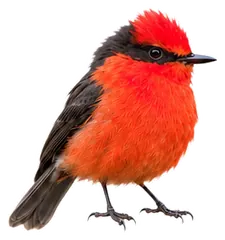 Brujo FlycatcherPyrocephalus nanus
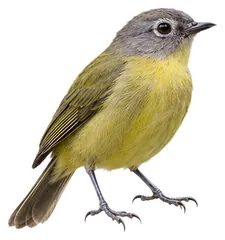 Grey-headed PipritesPiprites griseiceps
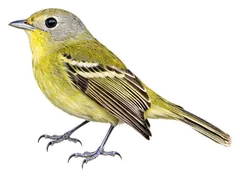 Wing-barred PipritesPiprites chloris
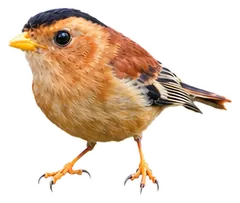 Black-capped PipritesPiprites pileata
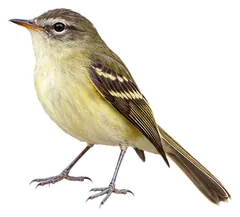 Greenish TyrannuletPhyllomyias virescens
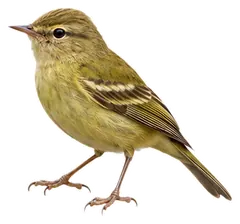 Reiser's TyrannuletPhyllomyias reiseri
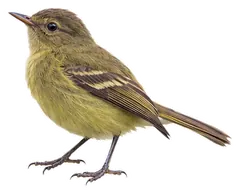 Urich's TyrannuletPhyllomyias urichi
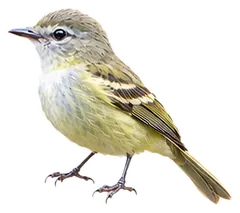 Sclater's TyrannuletPhyllomyias sclateri
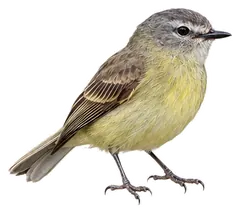 Yungas TyrannuletPhyllomyias weedeni
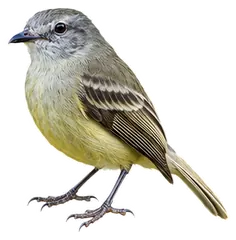 Planalto TyrannuletPhyllomyias fasciatus
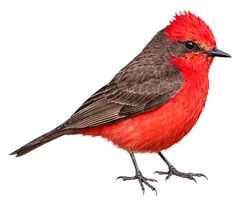
Download illustration
Free to use with credit: “Illustration: Bird Album (birdalbum.com)”. Drawn by AI from a reference photo by davy. ↗
Heard it but can't see it? Mingji identifies birds by sound and photo, on your phone.