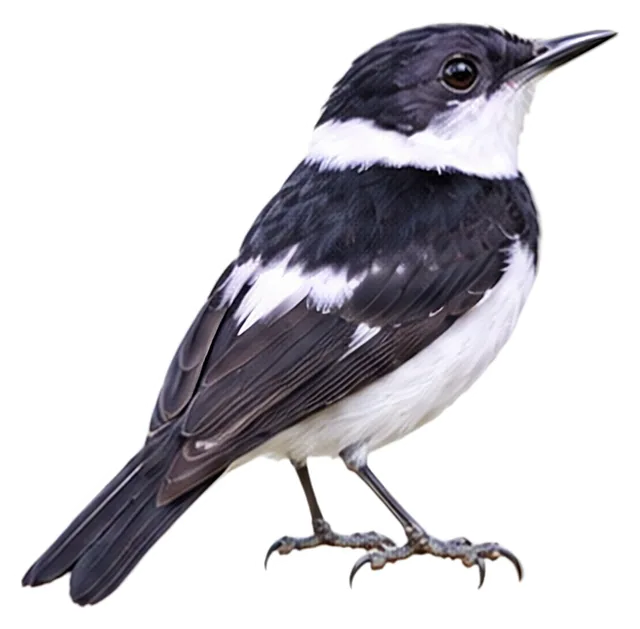
West African Wattle-eye
Dyaphorophyia hormophora Reichenow, 1901
14 gWeight
Busiest months: November · Most records: Ghana, Sierra Leone, Liberia
Where and when it's recorded
Busiest months: November · Most records: Ghana, Sierra Leone, Liberia

West African Wattle-eye has been recorded at 40 of the 8,276 birding hotspots we track, in 4 countries and regions.
Records by month Northern Hemisphere
Where it's recorded most
- Ankasa NPGhana265 records
- Atewa Range – upland forest & ridgeGhana233 records
- Bobiri Butterfly SanctuaryGhana216 records
More places
- Kakum NP – Canopy Walkway & vicinityGhana114 records
- Kakum National ParkGhana105 records
- Ebekawopa (Abrafo) Forest ReserveGhana97 records
- Kakum NP – CanopyGhana92 records
- Atewa – farm scrub and degraded forestGhana67 records
- Ebekawopa (Abrafo) – 'farm scrub' habitatGhana51 records
- Antwikwaa – forest edge & farm scrubGhana49 records
Countries and regions with the most records
eBird records via GBIF up to 2024-12-31. A record means someone listed it; more records partly mean more birders, not more birds.
Questions
How big is the West African Wattle-eye?
The West African Wattle-eye weighs around 14 g.
Where does the West African Wattle-eye live?
Its breeding range: Africa: Sierra Leone to Benin. It is most often recorded in Ghana, Sierra Leone and Liberia.
When is the best time to see the West African Wattle-eye?
At the hotspots we track, it is recorded most in November (Northern Hemisphere).
Is the West African Wattle-eye endangered?
The IUCN Red List classifies the West African Wattle-eye as Least Concern.
What does the West African Wattle-eye eat?
Main food: Insects & other invertebrates.
What family is the West African Wattle-eye in?
It belongs to the family Wattle-eyes, Batises (Platysteiridae), order Passerines (Passeriformes).
At a glance
- Weight
- 14 g
- Habitat
- Forest
- Diet
- Insects & other invertebrates
- Lifestyle
- Perches in trees
- Migration
- Resident (barely migrates)
- Conservation
- Least Concern
More measurements
- Wing
- 60 mm
- Tail
- 26 mm
- Bill
- 16 mm
- Tarsus
- 16 mm
Averages from the AVONET dataset; length from field guides where available.
Range
Africa: Sierra Leone to Benin
Breeding range, IOC World Bird List 15.2
Classification
- Order
- Passerines Passeriformes
- Family
- Wattle-eyes, Batises Platysteiridae
- Genus
- Dyaphorophyia
Other birds in the genus Dyaphorophyia
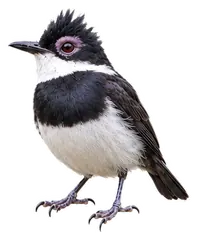 Chestnut Wattle-eyeDyaphorophyia castanea
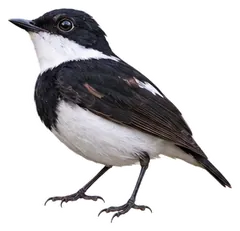 White-spotted Wattle-eyeDyaphorophyia tonsa
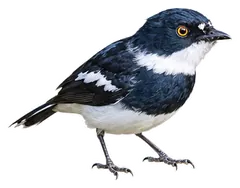 Rwenzori BatisBatis diops
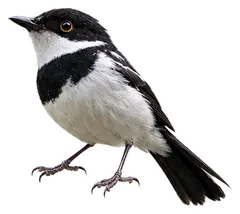 Margaret's BatisBatis margaritae
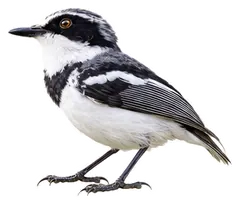 Forest BatisBatis mixta
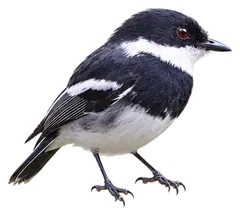 Dark BatisBatis crypta
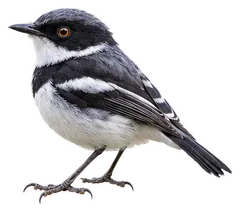 Malawi BatisBatis dimorpha
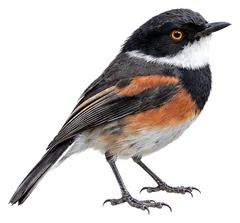 Cape BatisBatis capensis
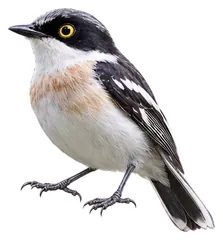 Woodwards' BatisBatis fratrum
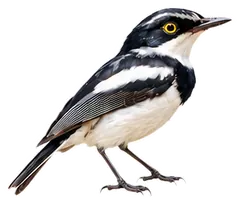 Chinspot BatisBatis molitor
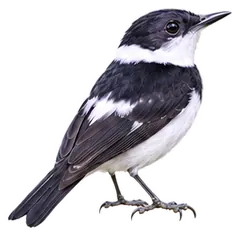
Download illustration
Free to use with credit: “Illustration: Bird Album (birdalbum.com)”. Drawn by AI from a reference photo by samzhang. ↗
Heard it but can't see it? Mingji identifies birds by sound and photo, on your phone.
In other languages
- EnglishWest African Wattle-eye
- 简体中文西非疣眼鹟
- 繁體中文西非眼瘤鶲
- 日本語ニシアフリカメガネヒタキ
- DeutschHalsband-Lappenschnäpper
- FrançaisPririt du Togo
- EspañolBatis carunculado acollarado
- Portuguêsolho-de-carúncula-da-guiné
- NederlandsWitneklelvliegenvanger
- РусскийОшейниковая серёжкоглазка
- Svenskavithalsat fliköga
- DanskSorthvid Lapøje
- Polskikrępaczek naszyjnikowy