 Bird Album
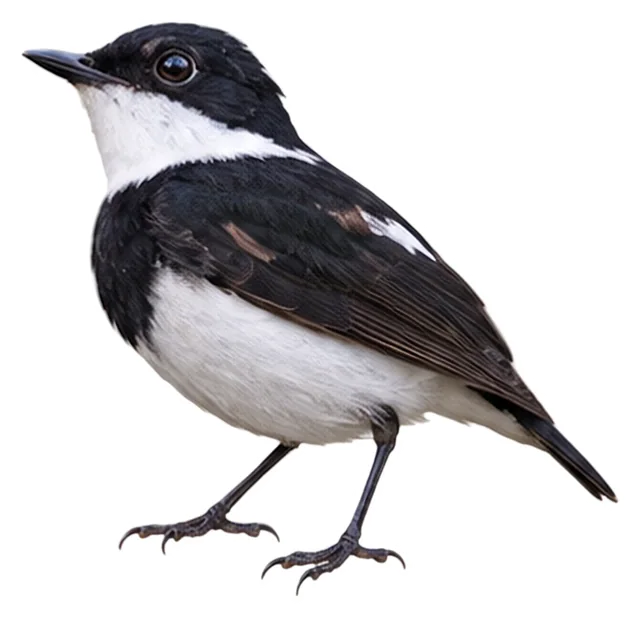
White-spotted Wattle-eye
Dyaphorophyia tonsa Bates, GL, 1911
12 gWeight
Busiest months: January–February · Most records: Gabon, Cameroon, Equatorial Guinea
Where and when it's recorded

White-spotted Wattle-eye has been recorded at 15 of the 8,171 birding hotspots we track, in 6 countries and regions.
Records by month Northern Hemisphere
Where it's recorded most
- Bosque Científica – Selva PrimariaEquatorial Guinea12 records
- Ipassa Makokou Nature ReserveGabon12 records
- Korup NP – Rengo Rock Camp AreaCameroon12 records
More places
- Parc de la LekediGabon7 records
- American University of Central AfricaEquatorial Guinea6 records
- Mt. KupeCameroon4 records
- PN de la LopéGabon3 records
- Ipassa Makokou Strict NR – Ipassa StationGabon2 records
- Bakossi Mountains – Kodmin ForestCameroon2 records
- IITA Forest Reserve and LakeNigeria2 records
Countries and regions with the most records
eBird records via GBIF up to 2024-12-31. A record means someone listed it; more records partly mean more birders, not more birds.
Questions
How big is the White-spotted Wattle-eye?
The White-spotted Wattle-eye weighs around 12 g.
Where does the White-spotted Wattle-eye live?
Its breeding range: Africa: southern Nigeria to Gabon and Congo and east-central DR Congo. It is most often recorded in Gabon, Cameroon and Equatorial Guinea.
When is the best time to see the White-spotted Wattle-eye?
At the hotspots we track, it is recorded most in January and February (Northern Hemisphere).
Is the White-spotted Wattle-eye endangered?
The IUCN Red List classifies the White-spotted Wattle-eye as Least Concern.
What does the White-spotted Wattle-eye eat?
Main food: Insects & other invertebrates.
What family is the White-spotted Wattle-eye in?
It belongs to the family Wattle-eyes, Batises (Platysteiridae), order Passerines (Passeriformes).
At a glance
- Weight
- 12 g
- Habitat
- Forest
- Diet
- Insects & other invertebrates
- Lifestyle
- Perches in trees
- Migration
- Resident (barely migrates)
- Conservation
- Least Concern
More measurements
- Wing
- 54 mm
- Tail
- 24 mm
- Bill
- 14 mm
- Tarsus
- 16 mm
Averages from the AVONET dataset; length from field guides where available.
Range
Africa: southern Nigeria to Gabon and Congo and east-central DR Congo
Breeding range, IOC World Bird List 15.2
Classification
- Order
- Passerines Passeriformes
- Family
- Wattle-eyes, Batises Platysteiridae
- Genus
- Dyaphorophyia
Other birds in the genus Dyaphorophyia
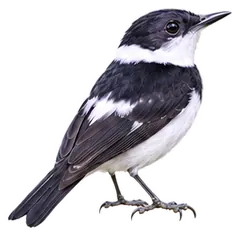 West African Wattle-eyeDyaphorophyia hormophora
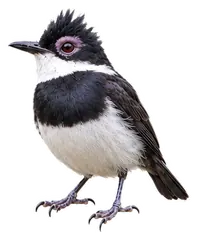 Chestnut Wattle-eyeDyaphorophyia castanea
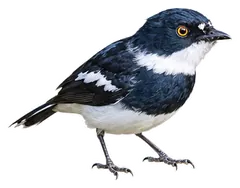 Rwenzori BatisBatis diops
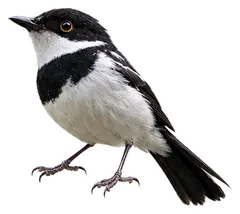 Margaret's BatisBatis margaritae
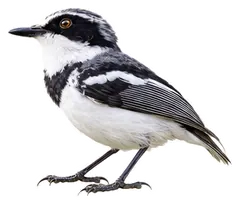 Forest BatisBatis mixta
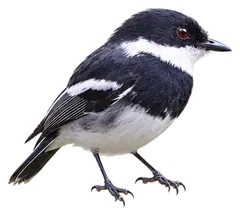 Dark BatisBatis crypta
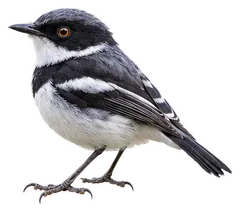 Malawi BatisBatis dimorpha
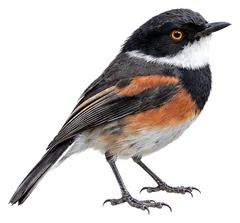 Cape BatisBatis capensis
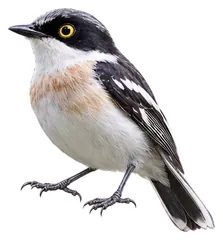 Woodwards' BatisBatis fratrum
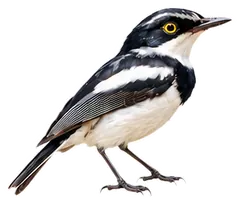 Chinspot BatisBatis molitor
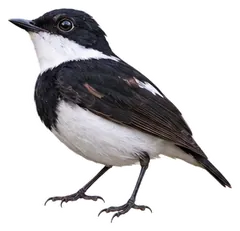
Download illustration
Free to use with credit: “Illustration: Bird Album (birdalbum.com)”. Drawn by AI from a reference photo by Johnny Wilson. ↗
Heard it but can't see it? Mingji identifies birds by sound and photo, on your phone.
In other languages
- EnglishWhite-spotted Wattle-eye
- 简体中文白斑疣眼鹟
- 繁體中文白斑眼瘤鶲
- 日本語コシミノメガネヒタキ
- DeutschWeißbrauen-Lappenschnäpper
- FrançaisPririt à taches blanches
- EspañolBatis carunculado tordo
- Portuguêsolho-de-carúncula-de-pinta-branca
- ItalianoOcchiocarniccio macchiebianche
- NederlandsWitbrauwlelvliegenvanger
- РусскийБелобровая серёжкоглазка
- Svenskavitfläcksfliköga
- DanskHvidplettet Lapøje
- Polskikrępaczek białorzytny