 Bird Album
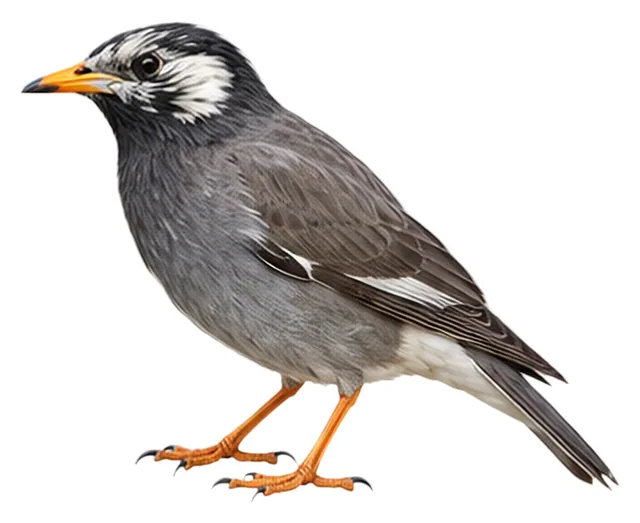
White-cheeked Starling
Spodiopsar cineraceus (Temminck, 1835)
25 cmLength83 gWeight
It has a black head and white cheeks, often runs about foraging on the ground and tends to gather in large flocks.
Busiest months: April–May · Most records: China, Japan, South Korea
How to identify
Field marks
- Black head and neck; slender white patches on both cheeks
- Yellow bill with a black tip
- Gray-brown back and breast; paler belly
- White uppertail-coverts
Male, female and young
Juveniles are brown, with paler cheeks and rump and no black at the bill tip.
Voice
Loud and monotonous, consisting of a noisy series of harsh creaks.
Where and when it's recorded

White-cheeked Starling has been recorded at 1,126 of the 8,171 birding hotspots we track, in 13 countries and regions.
Records by month Northern Hemisphere
Where it's recorded most
- Edogawa Ward – Kasai Rinkai Park / Kasai Kaihin ParkJapan1,798 records
- Nanhui DongtanChina1,234 records
- Taipei – Tianliaoyang WetlandTaiwan (China)1,161 records
More places
- Nerima Ward – Shakujii ParkJapan925 records
- Ota Ward – Tokyo Port Wild Bird Park (including Tidal Pond)Japan856 records
- Hsinchu Coast IBA – GangnanTaiwan (China)753 records
- Mai Po Nature ReserveHong Kong (China)659 records
- Century ParkChina654 records
- Olympic Forest Park SouthChina573 records
- Funabashi – Funabashi Sanbanze Seaside ParkJapan564 records
Countries and regions with the most records
eBird records via GBIF up to 2024-12-31. A record means someone listed it; more records partly mean more birders, not more birds.
About
The white-cheeked starling or grey starling (Spodiopsar cineraceus) is a passerine bird of the starling family. It is native to eastern Asia where it is a common and well-known bird in much of its range.
Excerpt from Wikipedia, CC BY-SA 4.0 · authors · Read more on Wikipedia
Questions
How big is the White-cheeked Starling?
The White-cheeked Starling is about 25 cm long and weighs around 83 g.
Where does the White-cheeked Starling live?
Its breeding range: Palearctic: southeastern Russia and Japan to central China and Korean Peninsula. It is most often recorded in China, Japan and South Korea.
When is the best time to see the White-cheeked Starling?
At the hotspots we track, it is recorded most in April and May (Northern Hemisphere).
Is the White-cheeked Starling endangered?
The IUCN Red List classifies the White-cheeked Starling as Least Concern.
What does the White-cheeked Starling eat?
Main food: Insects & other invertebrates.
What family is the White-cheeked Starling in?
It belongs to the family Starlings, Rhabdornises (Sturnidae), order Passerines (Passeriformes).
At a glance
- Length
- 25 cm
- Weight
- 83 g
- Habitat
- Grassland
- Diet
- Insects & other invertebrates
- Lifestyle
- Active on the ground
- Migration
- Resident (barely migrates)
- Conservation
- Least Concern
More measurements
- Wing
- 128 mm
- Tail
- 64 mm
- Bill
- 29 mm
- Tarsus
- 32 mm
Averages from the AVONET dataset; length from field guides where available.
Range
Palearctic: southeastern Russia and Japan to central China and Korean Peninsula
Breeding range, IOC World Bird List 15.2
Classification
- Order
- Passerines Passeriformes
- Family
- Starlings, Rhabdornises Sturnidae
- Genus
- Spodiopsar
Other birds in the genus Spodiopsar
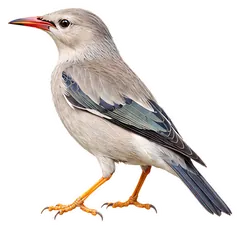 Red-billed StarlingSpodiopsar sericeus
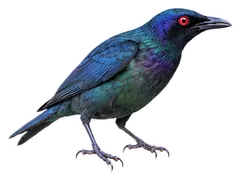 Metallic StarlingAplonis metallica
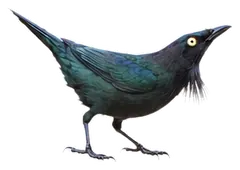 Yellow-eyed StarlingAplonis mystacea
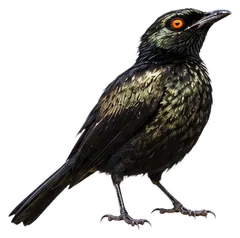 Singing StarlingAplonis cantoroides
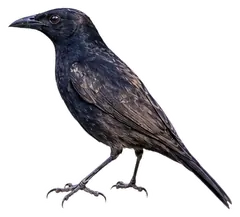 Tanimbar StarlingAplonis crassa
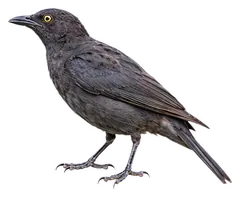 Atoll StarlingAplonis feadensis
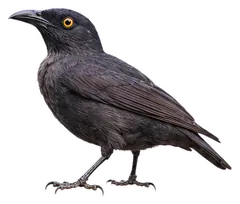 Rennell StarlingAplonis insularis
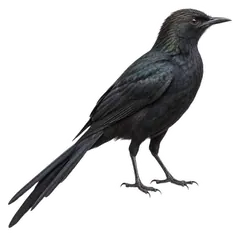 Long-tailed StarlingAplonis magna
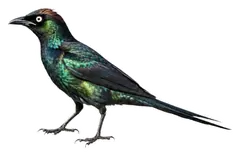 White-eyed StarlingAplonis brunneicapillus
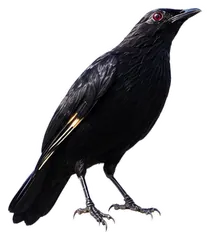 Brown-winged StarlingAplonis grandis
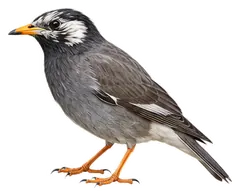
Download illustration
Free to use with credit: “Illustration: Bird Album (birdalbum.com)”. Drawn by AI from a reference photo by Liem Malarney. ↗
Heard it but can't see it? Mingji identifies birds by sound and photo, on your phone.