 Bird Album
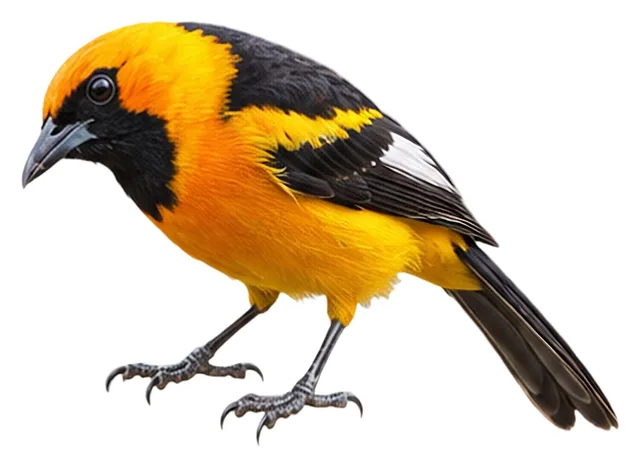
White-edged Oriole
Icterus graceannae Cassin, 1867
19–20 cmLength42 gWeight
The white-edged oriole (Icterus graceannae) is a species of bird in the family Icteridae, the oropendolas, New World orioles, and New World blackbirds.
Busiest months: October–November · Most records: Peru, Ecuador
Where and when it's recorded

White-edged Oriole has been recorded at 15 of the 8,171 birding hotspots we track, in 2 countries and regions.
Records by month Southern Hemisphere
Where it's recorded most
- Reserva Jorupe y Urraca LodgeEcuador698 records
- ACP ChaparríPeru296 records
- ACP Chaparrí – Chaparrí EcolodgePeru264 records
More places
- Santuario Historico Bosque de PómacPeru236 records
- Bosque Protector Cerro BlancoEcuador65 records
- Reservorio de TinajonesPeru29 records
- Ayampe – Ruta del ColibríEcuador16 records
- Universidad Nacional Agraria La MolinaPeru12 records
- Humedal La Segua y alrededoresEcuador7 records
- Ayampe – Estuario del río AyampeEcuador6 records
Countries and regions with the most records
eBird records via GBIF up to 2024-12-31. A record means someone listed it; more records partly mean more birders, not more birds.
About
The white-edged oriole (Icterus graceannae) is a species of bird in the family Icteridae, the oropendolas, New World orioles, and New World blackbirds. It is found in Ecuador and Peru.
Excerpt from Wikipedia, CC BY-SA 4.0 · authors · Read more on Wikipedia
Questions
How big is the White-edged Oriole?
The White-edged Oriole is about 19–20 cm long and weighs around 42 g.
Where does the White-edged Oriole live?
Its breeding range: South America: southwestern Ecuador and northwestern Peru. It is most often recorded in Peru and Ecuador.
When is the best time to see the White-edged Oriole?
At the hotspots we track, it is recorded most in October and November (Southern Hemisphere).
Is the White-edged Oriole endangered?
The IUCN Red List classifies the White-edged Oriole as Least Concern.
What does the White-edged Oriole eat?
Main food: Omnivore.
What family is the White-edged Oriole in?
It belongs to the family Oropendolas, New World Orioles, Blackbirds (Icteridae), order Passerines (Passeriformes).
At a glance
- Length
- 19–20 cm
- Weight
- 42 g
- Habitat
- Woodland
- Diet
- Omnivore
- Lifestyle
- Perches in trees
- Migration
- Resident (barely migrates)
- Conservation
- Least Concern
More measurements
- Wing
- 90 mm
- Tail
- 86 mm
- Bill
- 22 mm
- Tarsus
- 27 mm
Averages from the AVONET dataset; length from field guides where available.
Range
South America: southwestern Ecuador and northwestern Peru
Breeding range, IOC World Bird List 15.2
Classification
- Order
- Passerines Passeriformes
- Family
- Oropendolas, New World Orioles, Blackbirds Icteridae
- Genus
- Icterus
Other birds in the genus Icterus
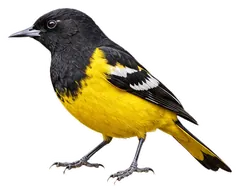 Scott's OrioleIcterus parisorum
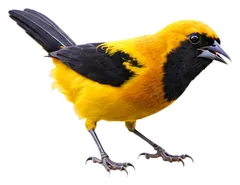 Yellow-backed OrioleIcterus chrysater
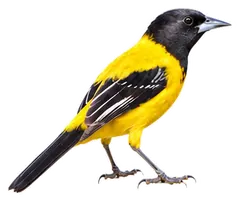 Audubon's OrioleIcterus graduacauda
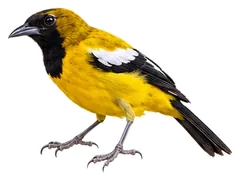 Jamaican OrioleIcterus leucopteryx
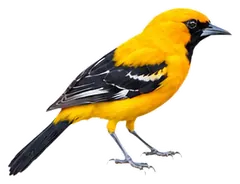 Orange OrioleIcterus auratus
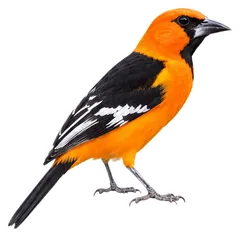 Altamira OrioleIcterus gularis
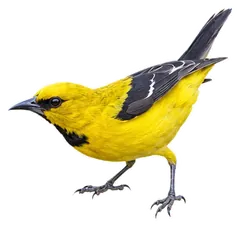 Yellow OrioleIcterus nigrogularis
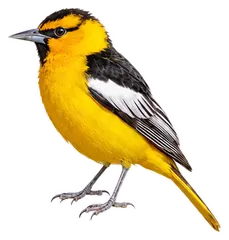 Bullock's OrioleIcterus bullockiorum
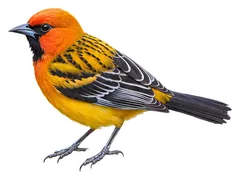 Streak-backed OrioleIcterus pustulatus
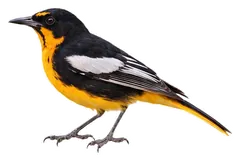 Black-backed OrioleIcterus abeillei
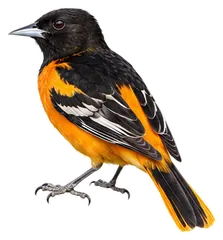 Baltimore OrioleIcterus galbula
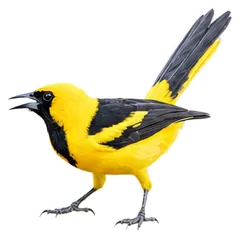 Yellow-tailed OrioleIcterus mesomelas
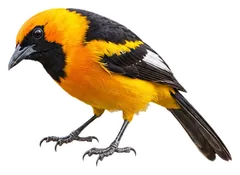
Download illustration
Free to use with credit: “Illustration: Bird Album (birdalbum.com)”. Drawn by AI from a reference photo by photokeen. ↗
Heard it but can't see it? Mingji identifies birds by sound and photo, on your phone.
In other languages
- EnglishWhite-edged Oriole
- 简体中文白翅斑拟鹂
- 繁體中文白邊擬黃鸝
- 日本語サバクムクドリモドキ
- DeutschWeißschwingentrupial
- FrançaisOriole leucoptère
- EspañolTurpial aliblanco
- Portuguêscorrupião-de-tumbes
- ItalianoOriolo alibianche
- NederlandsSpiegeltroepiaal
- РусскийТумбесский трупиал
- Svenskatumbestrupial
- DanskHvidbåndet Trupial
- Polskikacyk białoskrzydły