 Bird Album
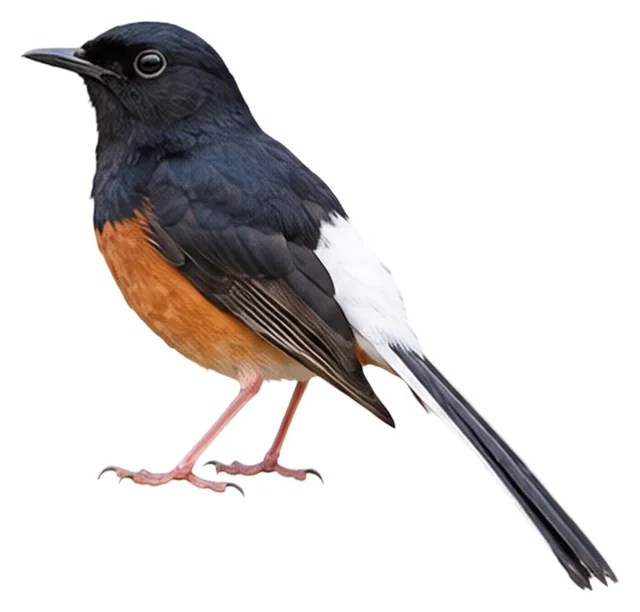
White-rumped Shama
Copsychus malabaricus (Scopoli, 1786)
23–28 cmLength29 gWeight
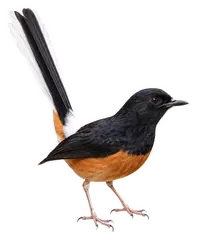
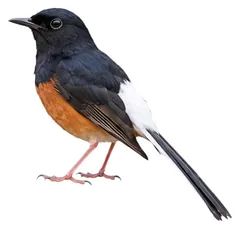
The male is glossy black with a chestnut belly, a white rump, and white outer tail feathers.
Busiest months: February–March · Most records: India, Thailand, China
How to identify
Field marks
- Male has a white rump and white outer tail feathers
- Male is largely glossy black
- Male has a chestnut belly
- Black bill; pink legs and feet
Male, female and young
Female is gray-brown and usually shorter than the male; juvenile is gray-brown like the female, with spots on the breast.
Voice
Loud and clear, with varied phrases, often mimicking other birds; gives a “Tck” when alarmed or foraging.
Where and when it's recorded

White-rumped Shama has been recorded at 425 of the 8,171 birding hotspots we track, in 11 countries and regions.
Records by month Northern Hemisphere
Where it's recorded most
- Kanha NP – Mukki ZoneIndia4,977 records
- Nantou – Jiji Endemic Species Research InstituteTaiwan (China)1,907 records
- Taipei – Taipei Botanical GardenTaiwan (China)1,474 records
More places
- Valley SchoolIndia1,305 records
- Pulau UbinSingapore1,236 records
- Chiayi – NCYU Lantan CampusTaiwan (China)1,113 records
- Kanha NP – Kanha ZoneIndia1,063 records
- Kaeng Krachan NPThailand1,050 records
- Kaeng Krachan NP – Baan Maka Nature LodgeThailand1,045 records
- Taichung – Taichung Metropolitan ParkTaiwan (China)1,024 records
Countries and regions with the most records
eBird records via GBIF up to 2024-12-31. A record means someone listed it; more records partly mean more birders, not more birds.
About
The white-rumped shama (Copsychus malabaricus) is a passerine bird in the Old World flycatcher family Muscicapidae. Native to densely vegetated habitats in the Indian subcontinent and Southeast Asia, its popularity as a cage-bird and songster has led to it being introduced elsewhere.
Excerpt from Wikipedia, CC BY-SA 4.0 · authors · Read more on Wikipedia
Questions
How big is the White-rumped Shama?
The White-rumped Shama is about 23–28 cm long and weighs around 29 g.
Where does the White-rumped Shama live?
Its breeding range: Oriental: India through southern China, Indochina, Greater Sundas and satellites. It is most often recorded in India, Thailand and China.
When is the best time to see the White-rumped Shama?
At the hotspots we track, it is recorded most in February and March (Northern Hemisphere).
Is the White-rumped Shama endangered?
The IUCN Red List classifies the White-rumped Shama as Least Concern.
What does the White-rumped Shama eat?
Main food: Insects & other invertebrates.
What family is the White-rumped Shama in?
It belongs to the family Chats, Old World Flycatchers (Muscicapidae), order Passerines (Passeriformes).
At a glance
- Length
- 23–28 cm
- Weight
- 29 g
- Habitat
- Forest
- Diet
- Insects & other invertebrates
- Lifestyle
- Perches in trees
- Migration
- Resident (barely migrates)
- Conservation
- Least Concern
More measurements
- Wing
- 96 mm
- Tail
- 122 mm
- Bill
- 21 mm
- Tarsus
- 27 mm
Averages from the AVONET dataset; length from field guides where available.
Range
Oriental: India through southern China, Indochina, Greater Sundas and satellites
Breeding range, IOC World Bird List 15.2
Subspecies · 1
- Copsychus malabaricus macrourus Nepal and n India to s China and Indochina including Con Son I. (off s Vietnam)
Classification
- Order
- Passerines Passeriformes
- Family
- Chats, Old World Flycatchers Muscicapidae
- Genus
- Copsychus
Other birds in the genus Copsychus
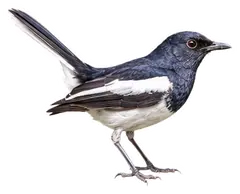 Oriental Magpie-RobinCopsychus saularis
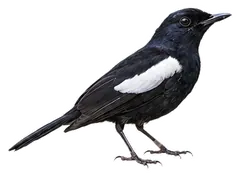 Seychelles Magpie-RobinCopsychus sechellarum
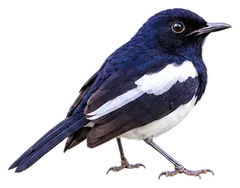 Philippine Magpie-RobinCopsychus mindanensis
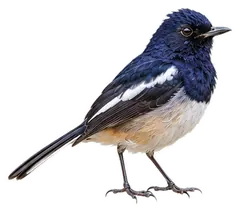 Madagascar Magpie-RobinCopsychus albospecularis
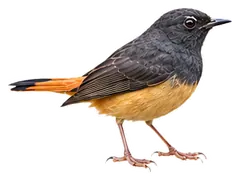 Rufous-tailed ShamaCopsychus pyrropygus
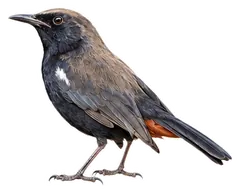 Indian RobinCopsychus fulicatus
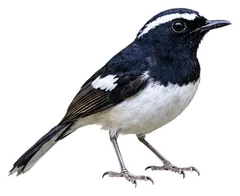 White-browed ShamaCopsychus luzoniensis
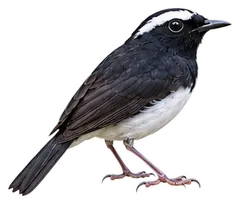 Visayan ShamaCopsychus superciliaris
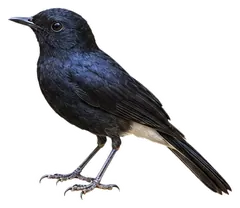 White-vented ShamaCopsychus niger
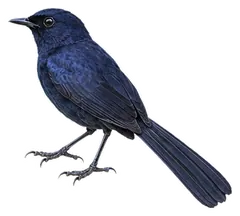 Black ShamaCopsychus cebuensis
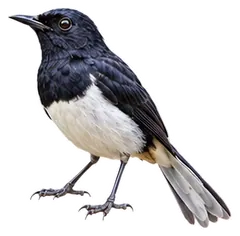 Andaman ShamaCopsychus albiventris
 Larwo ShamaCopsychus omissus
Download illustration
Free to use with credit: “Illustration: Bird Album (birdalbum.com)”. Drawn by AI from a reference photo by Koshy Koshy. ↗

Heard it but can't see it? Mingji identifies birds by sound and photo, on your phone.