Yellow-breasted Bunting
Emberiza aureola Pallas, 1773
14–16 cmLength20 gWeight
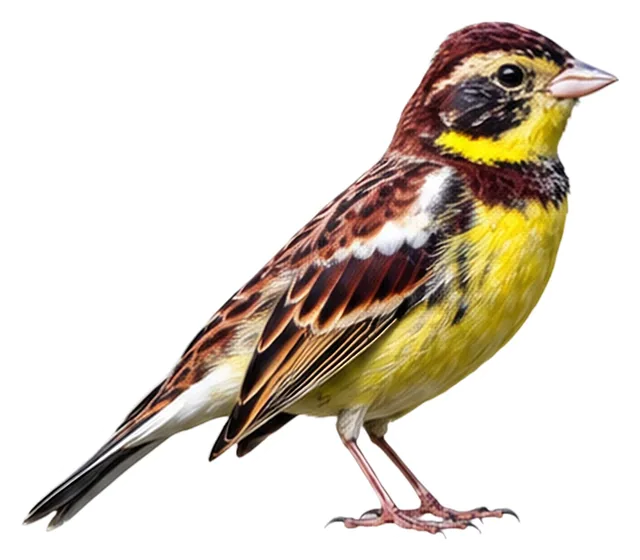
It has bright yellow underparts, the male with a black face and a single chestnut breast-band across the yellow breast.
Busiest months: April and November · Most records: China, Thailand, Nepal
How to identify
Field marks
- Male in breeding plumage has a black face
- Chestnut breast-band separates the yellow ring below the neck from the yellow breast
- Conspicuous white barring on the scapulars
- Rump and uppertail-coverts chestnut
Male, female and young
Females and immatures have a conspicuous buff supercilium, duller yellow underparts and duller white patches on the scapulars and wings.
Voice
A distinctive “zick”; song clear and ringing, like “tru-tru” and “tri-tri”.
Where and when it's recorded
Busiest months: April and November · Most records: China, Thailand, Nepal

Yellow-breasted Bunting has been recorded at 229 of the 8,276 birding hotspots we track, in 24 countries and regions.
Records by month Northern Hemisphere
To protect this bird from disturbance, we don't list exact sites.
Countries and regions with the most records
eBird records via GBIF up to 2024-12-31. A record means someone listed it; more records partly mean more birders, not more birds.
About
The yellow-breasted bunting (Schoeniclus aureolus) is a passerine bird in the Old World bunting family Emberizidae that is found across the Boreal and East Palearctic. The specific aureola is Latin for "golden". The bird's call is a distinctive zick, and the song is a clear tru-tru, tri-tri.
Excerpt from Wikipedia, CC BY-SA 4.0 · authors · Read more on Wikipedia
Questions
How big is the Yellow-breasted Bunting?
The Yellow-breasted Bunting is about 14–16 cm long and weighs around 20 g.
Where does the Yellow-breasted Bunting live?
Its breeding range: Palearctic: subarctic to northern temperate Palearctic bushy areas: Murmansk (far northwestern Russia; formerly eastern Finland) east to southern Chukotka, Kamchatka, Kuril and Commander islands, Sakhalin (eastern Russia); in south to far northern Kazakhstan, far northern Xinjiang (northwestern China), northern, central Mongolia, northern Inner Mongolia and Heilongjiang (northeastern China) and far northern Hokkaido (northern Japan). It is most often recorded in China, Thailand and Nepal.
When is the best time to see the Yellow-breasted Bunting?
At the hotspots we track, it is recorded most in April and November (Northern Hemisphere).
Is the Yellow-breasted Bunting endangered?
The IUCN Red List classifies the Yellow-breasted Bunting as Critically Endangered.
What does the Yellow-breasted Bunting eat?
Main food: Omnivore.
What family is the Yellow-breasted Bunting in?
It belongs to the family Buntings (Emberizidae), order Passerines (Passeriformes).
At a glance
- Length
- 14–16 cm
- Weight
- 20 g
- Habitat
- Shrubland
- Diet
- Omnivore
- Lifestyle
- Varied
- Migration
- Migratory
- Conservation
- Critically Endangered
More measurements
- Wing
- 75 mm
- Tail
- 55 mm
- Bill
- 13 mm
- Tarsus
- 20 mm
Averages from the AVONET dataset; length from field guides where available.
Range
Palearctic: subarctic to northern temperate Palearctic bushy areas: Murmansk (far northwestern Russia; formerly eastern Finland) east to southern Chukotka, Kamchatka, Kuril and Commander islands, Sakhalin (eastern Russia); in south to far northern Kazakhstan, far northern Xinjiang (northwestern China), northern, central Mongolia, northern Inner Mongolia and Heilongjiang (northeastern China) and far northern Hokkaido (northern Japan)
Breeding range, IOC World Bird List 15.2
Subspecies · 1
- Emberiza aureola ornata sc Siberia and ne Mongolia, n Inner Mongolia and Heilongjiang (ne China) and far n Hokkaido (n Japan)
Classification
- Order
- Passerines Passeriformes
- Family
- Buntings Emberizidae
- Genus
- Emberiza
Other birds in the genus Emberiza
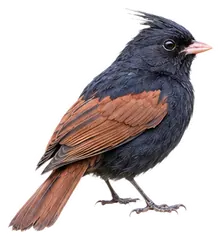 Crested BuntingEmberiza lathami
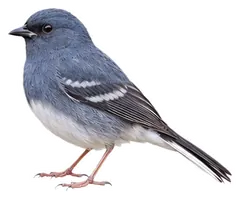 Slaty BuntingEmberiza siemsseni
 Corn BuntingEmberiza calandra
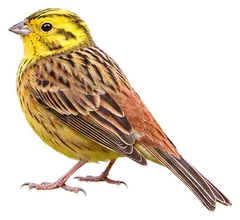 YellowhammerEmberiza citrinella
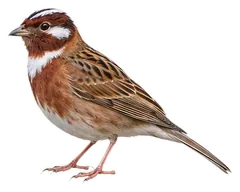 Pine BuntingEmberiza leucocephalos
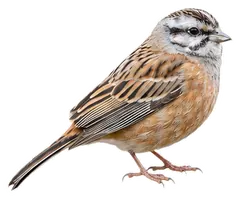 Rock BuntingEmberiza cia
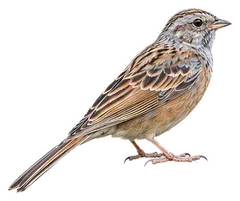 Godlewski's BuntingEmberiza godlewskii
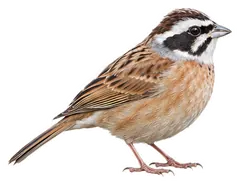 Meadow BuntingEmberiza cioides
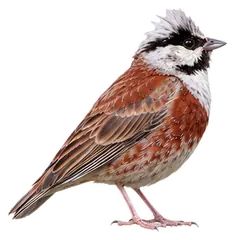 White-capped BuntingEmberiza stewarti
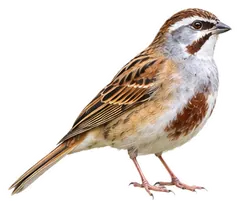 Jankowski's BuntingEmberiza jankowskii
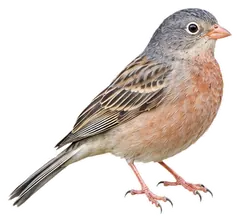 Grey-necked BuntingEmberiza buchanani
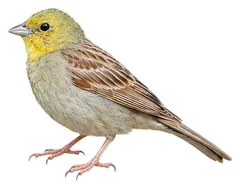 Cinereous BuntingEmberiza cineracea
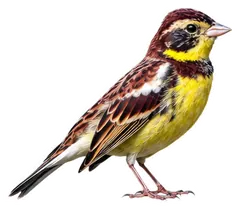
Download illustration
Free to use with credit: “Illustration: Bird Album (birdalbum.com)”. Drawn by AI from a reference photo by Manshanta Ghimire. ↗

Heard it but can't see it? Mingji identifies birds by sound and photo, on your phone.