 Bird Album
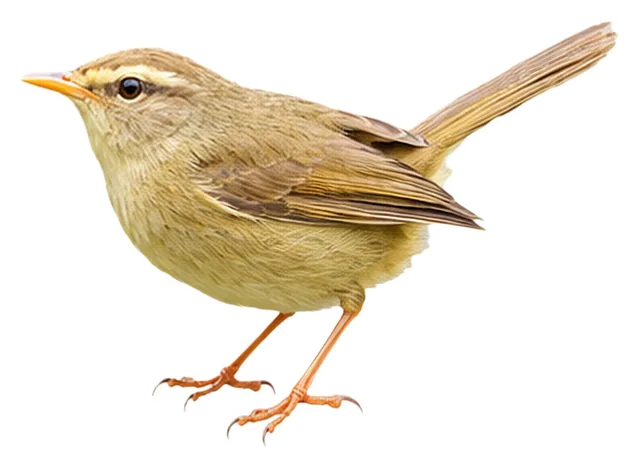
Aberrant Bush Warbler
Horornis flavolivaceus (Blyth, 1845)
≈11 cmLength8 gWeight
This bush warbler has thirteen subspecies and ranges from the Himalayas to the islands of Indonesia.
Busiest months: February–March and May–June · Most records: Malaysia, China, Thailand
How to identify
Where and when it's recorded
Busiest months: February–March and May–June · Most records: Malaysia, China, Thailand

Aberrant Bush Warbler has been recorded at 217 of the 8,276 birding hotspots we track, in 11 countries and regions.
Records by month Northern Hemisphere
Where it's recorded most
- Kinabalu Park – HQ areaMalaysia891 records
- Crocker Range NP – Gunung Alab SubstationMalaysia596 records
- Kinabalu Park – Power Station RoadMalaysia437 records
More places
- Kinabalu Park – Timpohon GateMalaysia422 records
- Doi Pha Hom Pok NP – Doi Lang (W), AKA Doi San JuThailand402 records
- Wawu Mountain – Summit [2800m]China253 records
- Kawah PutihIndonesia208 records
- Ijen – main roadIndonesia156 records
- Wawu Mountain [General Area]China138 records
- Labahe NNRChina135 records
Countries and regions with the most records
eBird records via GBIF up to 2024-12-31. A record means someone listed it; more records partly mean more birders, not more birds.
About
The aberrant bush warbler (Horornis flavolivaceus) is a species in the bush warbler family, Cettiidae. It was formerly included in the "Old World warbler" assemblage.
Excerpt from Wikipedia, CC BY-SA 4.0 · authors · Read more on Wikipedia
Questions
How big is the Aberrant Bush Warbler?
The Aberrant Bush Warbler is about ≈11 cm long and weighs around 8 g.
Where does the Aberrant Bush Warbler live?
Its breeding range: Oriental: Himalayas to northern Vietnam and central China and montane Greater and Lesser Sundas and Palawan (southwestern Philippines). It is most often recorded in Malaysia, China and Thailand.
When is the best time to see the Aberrant Bush Warbler?
At the hotspots we track, it is recorded most in February, March, May and June (Northern Hemisphere).
Is the Aberrant Bush Warbler endangered?
The IUCN Red List classifies the Aberrant Bush Warbler as Least Concern.
What does the Aberrant Bush Warbler eat?
Main food: Insects & other invertebrates.
What family is the Aberrant Bush Warbler in?
It belongs to the family Cettia Bush Warblers & Allies (Cettiidae), order Passerines (Passeriformes).
At a glance
- Length
- ≈11 cm
- Weight
- 8 g
- Habitat
- Shrubland
- Diet
- Insects & other invertebrates
- Lifestyle
- Varied
- Migration
- Partial migrant
- Conservation
- Least Concern
More measurements
- Wing
- 54 mm
- Tail
- 49 mm
- Bill
- 13 mm
- Tarsus
- 21 mm
Averages from the AVONET dataset; length from field guides where available.
Range
Oriental: Himalayas to northern Vietnam and central China and montane Greater and Lesser Sundas and Palawan (southwestern Philippines)
Breeding range, IOC World Bird List 15.2
Subspecies · 1
- Horornis flavolivaceus intricatus n, e Myanmar to s China
Classification
- Order
- Passerines Passeriformes
- Family
- Cettia Bush Warblers & Allies Cettiidae
- Genus
- Horornis
Other birds in the genus Horornis
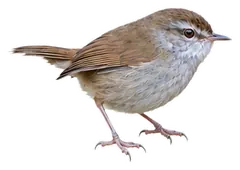 Philippine Bush WarblerHorornis seebohmi
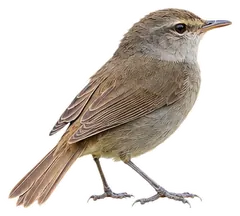 Japanese Bush WarblerHorornis diphone
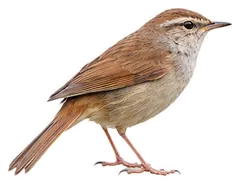 Manchurian Bush WarblerHorornis canturians
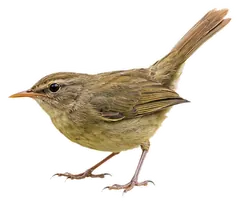 Palau Bush WarblerHorornis annae
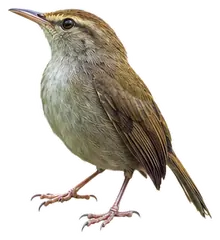 Tanimbar Bush WarblerHorornis carolinae
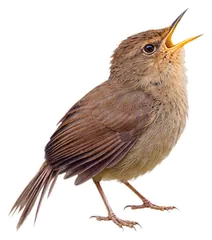 Shade Bush WarblerHorornis parens
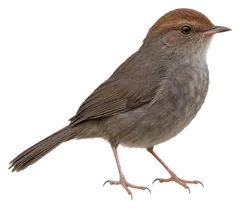 Bougainville Bush WarblerHorornis haddeni
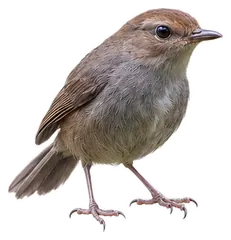 Fiji Bush WarblerHorornis ruficapilla
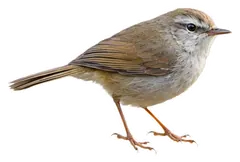 Brown-flanked Bush WarblerHorornis fortipes
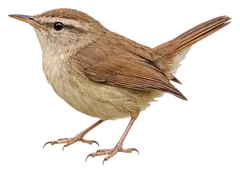 Hume's Bush WarblerHorornis brunnescens
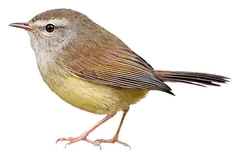 Yellow-bellied Bush WarblerHorornis acanthizoides
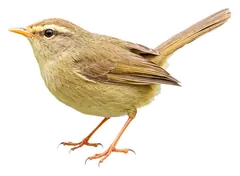
Download illustration
Free to use with credit: “Illustration: Bird Album (birdalbum.com)”. Drawn by AI from a reference photo by photokeen. ↗
Heard it but can't see it? Mingji identifies birds by sound and photo, on your phone.
In other languages
- EnglishAberrant Bush Warbler
- 简体中文异色树莺
- 繁體中文異色樹鶯
- 日本語キバラウグイス
- DeutschOlivseidensänger
- FrançaisBouscarle jaune et vert
- EspañolCetia verdiamarilla
- Portuguêsrouxinol-bravo-esverdeado
- ItalianoCettia aberrante
- NederlandsGroene Struikzanger
- РусскийОливковая широкохвостка
- Svenskabuskcettia
- DanskOlivenbrun Busksanger
- Polskiwierzbownik żółtawy