 Bird Album
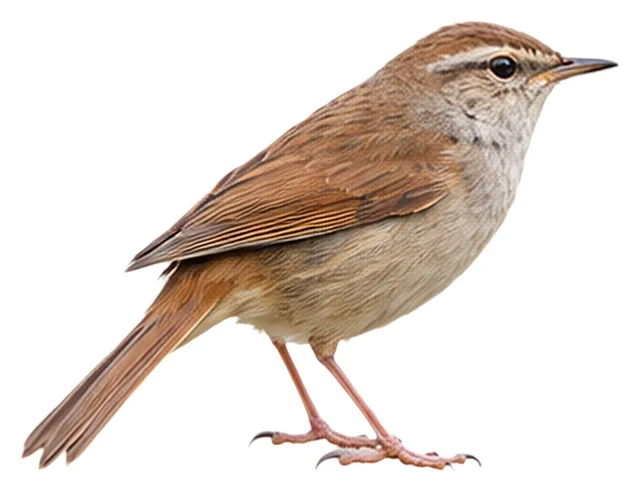
Manchurian Bush Warbler
Horornis canturians (Swinhoe, 1860)
≈16 cmLength22 gWeight
It rarely leaves dense scrub and is usually detected by a long whistle followed by a rapid trill.
Busiest months: April · Most records: China, South Korea, Vietnam
Looks like Japanese Bush Warbler
How to identify
Field marks
- More rufous overall than Japanese Bush Warbler
- Pale supercilium
- Rufous-tinged crown
- Flanks and undertail-coverts washed dark yellowish-brown
Voice
A long, mournful whistle followed by a series of rapid, full bubbling notes.
Similar species
Where and when it's recorded

Manchurian Bush Warbler has been recorded at 505 of the 8,171 birding hotspots we track, in 8 countries and regions.
Records by month Northern Hemisphere
Where it's recorded most
- Taipei – Tianliaoyang WetlandTaiwan (China)721 records
- Nanhui DongtanChina701 records
- Yeliu IBATaiwan (China)478 records
More places
- Taipei – National Taiwan University Main CampusTaiwan (China)445 records
- Mai Po Nature ReserveHong Kong (China)369 records
- Po ToiHong Kong (China)358 records
- Yilan – Dingliao Ecological ParkTaiwan (China)354 records
- Taipei – Gongliao Dexin TempleTaiwan (China)344 records
- Jinshan – Jinshan Youth Activity CenterTaiwan (China)333 records
- Matsu – Dongyin Vegetable FarmChina320 records
Countries and regions with the most records
eBird records via GBIF up to 2024-12-31. A record means someone listed it; more records partly mean more birders, not more birds.
About
The Manchurian bush warbler (Horornis canturians), also known as Korean bush warbler, is a bird in the family Cettiidae. The species was first described by Robert Swinhoe in 1860. It is found and known to breed in northeastern China.
Excerpt from Wikipedia, CC BY-SA 4.0 · authors · Read more on Wikipedia
Questions
How big is the Manchurian Bush Warbler?
The Manchurian Bush Warbler is about ≈16 cm long and weighs around 22 g.
Where does the Manchurian Bush Warbler live?
Its breeding range: Palearctic: central, eastern China, southeastern Siberia and Korean Peninsula. It is most often recorded in China, South Korea and Vietnam.
When is the best time to see the Manchurian Bush Warbler?
At the hotspots we track, it is recorded most in April (Northern Hemisphere).
Is the Manchurian Bush Warbler endangered?
The IUCN Red List classifies the Manchurian Bush Warbler as Least Concern.
What does the Manchurian Bush Warbler eat?
Main food: Insects & other invertebrates.
What family is the Manchurian Bush Warbler in?
It belongs to the family Cettia Bush Warblers & Allies (Cettiidae), order Passerines (Passeriformes).
At a glance
- Length
- ≈16 cm
- Weight
- 22 g
- Habitat
- Shrubland
- Diet
- Insects & other invertebrates
- Lifestyle
- Varied
- Migration
- Partial migrant
- Conservation
- Least Concern
More measurements
- Wing
- 72 mm
- Tail
- 71 mm
- Bill
- 17 mm
- Tarsus
- 27 mm
Averages from the AVONET dataset; length from field guides where available.
Range
Palearctic: central, eastern China, southeastern Siberia and Korean Peninsula
Breeding range, IOC World Bird List 15.2
Subspecies · 2
- Horornis canturians canturians c, e China | non-breeding: to s China and se Asia
- Horornis canturians borealis ne China, se Siberia and Korean Pen. | non-breeding: Taiwan (China) and n Philippines (vagrant)
Classification
- Order
- Passerines Passeriformes
- Family
- Cettia Bush Warblers & Allies Cettiidae
- Genus
- Horornis
Other birds in the genus Horornis
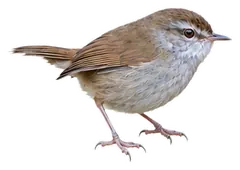 Philippine Bush WarblerHorornis seebohmi
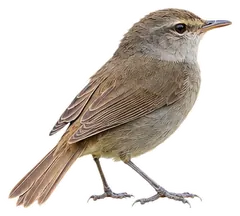 Japanese Bush WarblerHorornis diphone
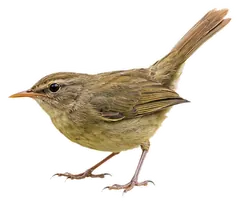 Palau Bush WarblerHorornis annae
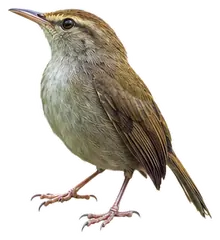 Tanimbar Bush WarblerHorornis carolinae
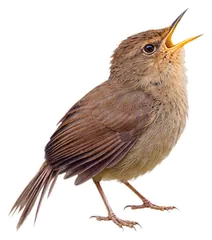 Shade Bush WarblerHorornis parens
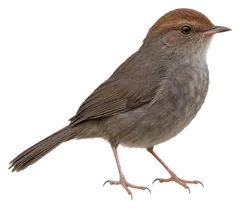 Bougainville Bush WarblerHorornis haddeni
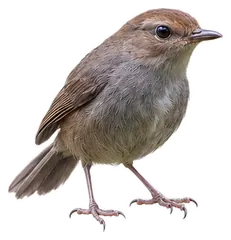 Fiji Bush WarblerHorornis ruficapilla
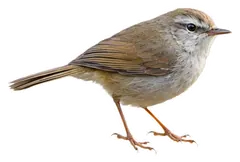 Brown-flanked Bush WarblerHorornis fortipes
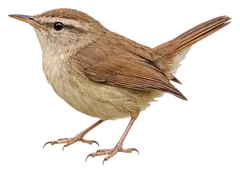 Hume's Bush WarblerHorornis brunnescens
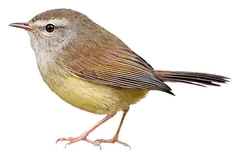 Yellow-bellied Bush WarblerHorornis acanthizoides
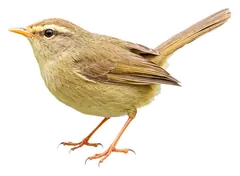 Aberrant Bush WarblerHorornis flavolivaceus
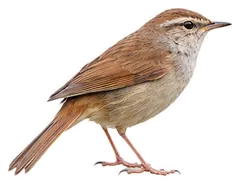
Download illustration
Free to use with credit: “Illustration: Bird Album (birdalbum.com)”. Drawn by AI from a reference photo by Ron Knight. ↗

Heard it but can't see it? Mingji identifies birds by sound and photo, on your phone.
In other languages
- EnglishManchurian Bush Warbler
- 简体中文远东树莺
- 繁體中文遠東樹鶯
- 日本語チョウセンウグイス
- DeutschMandschurenseidensänger
- FrançaisBouscarle mandchoue
- EspañolCetia coreana
- Portuguêsrouxinol-bravo-da-manchúria
- ItalianoCettia della Manciuria
- NederlandsMantsjoerijse Struikzanger
- РусскийКороткокрылая широкохвостка
- Svenskagulahavscettia
- DanskManchurer Busksanger
- Polskiwierzbownik duży