 Bird Album
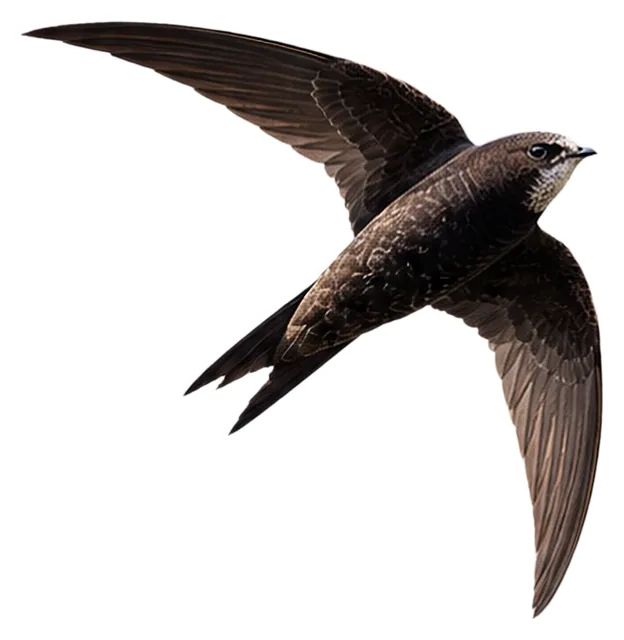
African Black Swift
Apus barbatus (Sclater, PL, 1866)
16–18 cmLength43 gWeight
The African black swift (Apus barbatus), also known as the African swift or black swift, is a medium-sized bird in the swift family.
Busiest months: November · Most records: South Africa, Kenya, Tanzania
Where and when it's recorded

African Black Swift has been recorded at 268 of the 8,171 birding hotspots we track, in 18 countries and regions.
Records by month Southern Hemisphere
Where it's recorded most
- Strandfontein WTPSouth Africa275 records
- Kirstenbosch Botanical GardenSouth Africa271 records
- Rooi-ElsSouth Africa242 records
More places
- Rondevlei NRSouth Africa200 records
- De Hoop Nature ReserveSouth Africa161 records
- Walter Sisulu National Botanical GardenSouth Africa152 records
- Lake Nakuru NPKenya135 records
- Zambezi River near Victoria FallsZimbabwe123 records
- Rietvlei Wetlands ReserveSouth Africa111 records
- West Coast NPSouth Africa100 records
Countries and regions with the most records
eBird records via GBIF up to 2024-12-31. A record means someone listed it; more records partly mean more birders, not more birds.
About
The African black swift (Apus barbatus), also known as the African swift or black swift, is a medium-sized bird in the swift family. It breeds in Africa discontinuously from Liberia, Cameroon, Zaire, Uganda and Kenya southwards to South Africa. The "black swifts" of Madagascar and the Comoros are either taken as two subspecies of the African black swift, or otherwise deemed a full species, the Malagasy black swift.
Excerpt from Wikipedia, CC BY-SA 4.0 · authors · Read more on Wikipedia
Questions
How big is the African Black Swift?
The African Black Swift is about 16–18 cm long and weighs around 43 g.
Where does the African Black Swift live?
Its breeding range: Africa: southern, eastern. It is most often recorded in South Africa, Kenya and Tanzania.
When is the best time to see the African Black Swift?
At the hotspots we track, it is recorded most in November (Southern Hemisphere).
Is the African Black Swift endangered?
The IUCN Red List classifies the African Black Swift as Least Concern.
What does the African Black Swift eat?
Main food: Insects & other invertebrates.
What family is the African Black Swift in?
It belongs to the family Swifts (Apodidae), order Apodiformes.
At a glance
- Length
- 16–18 cm
- Weight
- 43 g
- Habitat
- Rocky terrain
- Diet
- Insects & other invertebrates
- Lifestyle
- Feeds in the air
- Migration
- Partial migrant
- Conservation
- Least Concern
More measurements
- Wing
- 174 mm
- Tail
- 77 mm
- Bill
- 12 mm
- Tarsus
- 13 mm
Averages from the AVONET dataset; length from field guides where available.
Range
Africa: southern, eastern
Breeding range, IOC World Bird List 15.2
Classification
- Order
- Apodiformes
- Family
- Swifts Apodidae
- Genus
- Apus
Other birds in the genus Apus
 Cape Verde SwiftApus alexandri
 Common SwiftApus apus
 Plain SwiftApus unicolor
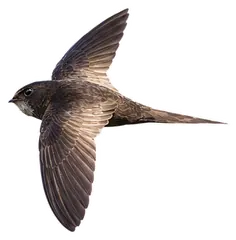 Nyanza SwiftApus niansae
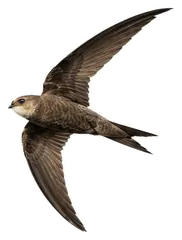 Pallid SwiftApus pallidus
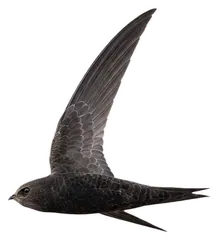 Malagasy Black SwiftApus balstoni
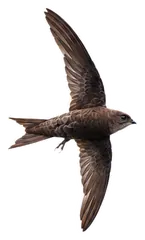 Forbes-Watson's SwiftApus berliozi
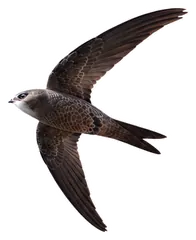 Bradfield's SwiftApus bradfieldi
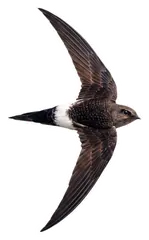 Pacific SwiftApus pacificus
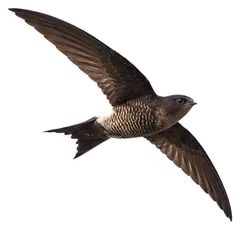 Blyth's SwiftApus leuconyx
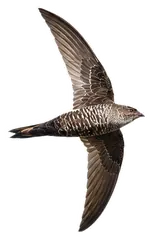 Cook's SwiftApus cooki
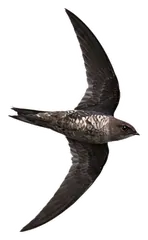 Dark-rumped SwiftApus acuticauda
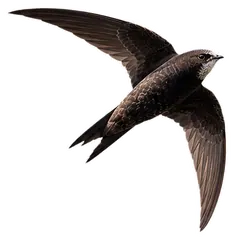
Download illustration
Free to use with credit: “Illustration: Bird Album (birdalbum.com)”. Drawn by AI from a reference photo by Adam Welz. ↗
Heard it but can't see it? Mingji identifies birds by sound and photo, on your phone.