 Bird Album
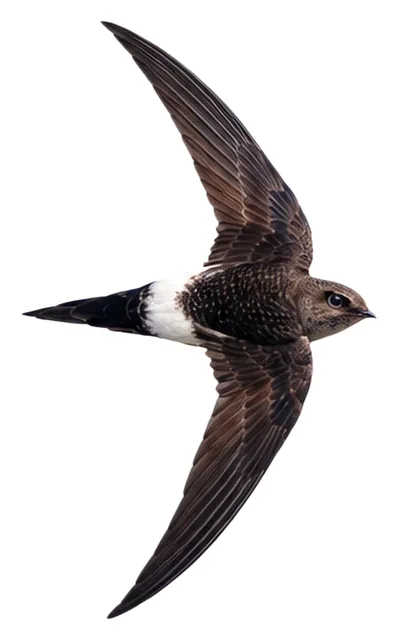
Pacific Swift
Apus pacificus (Latham, 1801)
17–18 cmLength43–54 cmWingspan39 gWeight
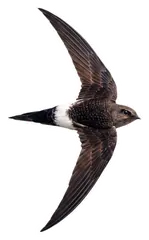
This black swift has long wings, a deeply forked tail and a single white patch across the rump.
Busiest months: April–May and October · Most records: China, Singapore, Thailand
Looks like Common Swift, Cook's Swift, Blyth's Swift
How to identify
Field marks
- A single white marking across the rump
- Long, pointed wings and a rather deeply forked tail
- White feather edges on the belly give a scaled appearance from below
- Short black bill; extremely short-legged
Male, female and young
Sexes similar; juveniles have white feather edges, especially conspicuous on the wings.
Voice
Often gives trills or grating hissing calls near breeding sites.
Similar species
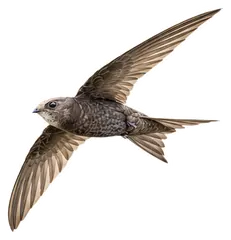
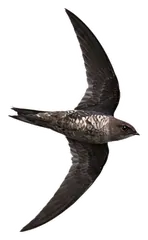
Pacific Swift has a white rump patch, slightly longer wings, a more projecting head and a more deeply forked tail than Common Swift.
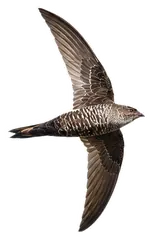
Cook's Swift has a more shallowly forked tail and a green metallic gloss, and breeds in limestone caves in northern Southeast Asia; field identification requires close scrutiny.
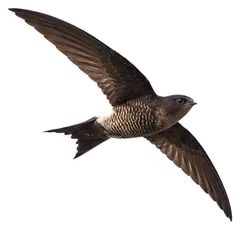
Blyth's Swift is smaller, has a narrower white rump patch and occurs in the Himalayas.
Where and when it's recorded

Pacific Swift has been recorded at 1,376 of the 8,171 birding hotspots we track, in 30 countries and regions.
Records by month Northern Hemisphere
Where it's recorded most
- Kenting NP – Sheding Lingxiao Pavilion (Raptors Observation Spot)Taiwan (China)958 records
- Taipei – Tianliaoyang WetlandTaiwan (China)660 records
- Khao Dinsor (Khao Dinso) / Chumphon Raptor CenterThailand648 records
More places
- Po ToiHong Kong (China)619 records
- Henderson WavesSingapore427 records
- Mount Faber ParkSingapore414 records
- Matsu – DongyinChina309 records
- Yeliu IBATaiwan (China)276 records
- Bukit Timah Nature ReserveSingapore268 records
- Mai Po Nature ReserveHong Kong (China)256 records
Countries and regions with the most records
eBird records via GBIF up to 2024-12-31. A record means someone listed it; more records partly mean more birders, not more birds.
About
The Pacific swift (Apus pacificus) is a species of bird that is part of the Swift family. It breeds in eastern Asia. It is strongly migratory, spending the northern hemisphere's winter in Southeast Asia and Australia.
Excerpt from Wikipedia, CC BY-SA 4.0 · authors · Read more on Wikipedia
Questions
How big is the Pacific Swift?
The Pacific Swift is about 17–18 cm long, with a wingspan of 43–54 cm and weighs around 39 g.
Where does the Pacific Swift live?
Its breeding range: Palearctic: central Siberia and Mongolia through Kamchatka (southeastern Russia) and Japan, and south to eastern Tibetan Plateau and adjacent western Sichuan. It is most often recorded in China, Singapore and Thailand.
When is the best time to see the Pacific Swift?
At the hotspots we track, it is recorded most in April, May and October (Northern Hemisphere).
Is the Pacific Swift endangered?
The IUCN Red List classifies the Pacific Swift as Least Concern.
What does the Pacific Swift eat?
Main food: Insects & other invertebrates.
What family is the Pacific Swift in?
It belongs to the family Swifts (Apodidae), order Apodiformes.
At a glance
- Length
- 17–18 cm
- Wingspan
- 43–54 cm
- Weight
- 39 g
- Habitat
- Woodland
- Diet
- Insects & other invertebrates
- Lifestyle
- Feeds in the air
- Migration
- Partial migrant
- Conservation
- Least Concern
More measurements
- Wing
- 173 mm
- Tail
- 72 mm
- Bill
- 8 mm
- Tarsus
- 13 mm
Averages from the AVONET dataset; length from field guides where available.
Range
Palearctic: central Siberia and Mongolia through Kamchatka (southeastern Russia) and Japan, and south to eastern Tibetan Plateau and adjacent western Sichuan
Breeding range, IOC World Bird List 15.2
Subspecies · 3
- Apus pacificus pacificus Siberia to Kamchatka (e Russia), n China and Japan to Amami Is. (s Japan) | non-breeding: to Indonesian Arch., New Guinea, Australia and Melanesia
- Apus pacificus kanoi se Tibet to e China, Taiwan (China) and far n Philippines | non-breeding: to Malaysia, Indonesian Arch. and Philippines
- Apus pacificus salimalii e Tibetan Plateau and adjacent w Sichuan
Classification
- Order
- Apodiformes
- Family
- Swifts Apodidae
- Genus
- Apus
Other birds in the genus Apus
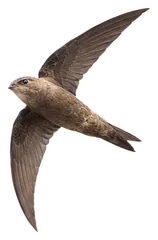 Cape Verde SwiftApus alexandriCommon SwiftApus apus
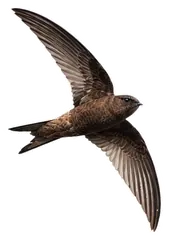 Plain SwiftApus unicolor
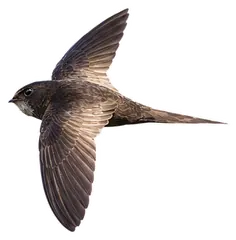 Nyanza SwiftApus niansae
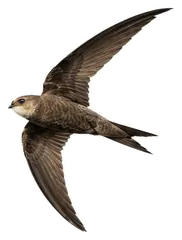 Pallid SwiftApus pallidus
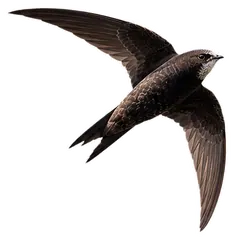 African Black SwiftApus barbatus
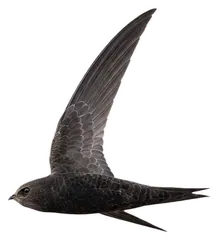 Malagasy Black SwiftApus balstoni
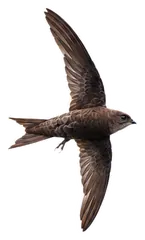 Forbes-Watson's SwiftApus berliozi
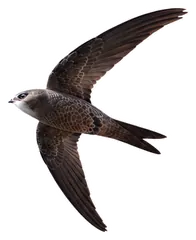 Bradfield's SwiftApus bradfieldiBlyth's SwiftApus leuconyxCook's SwiftApus cooki
 Dark-rumped SwiftApus acuticauda
Download illustration
Free to use with credit: “Illustration: Bird Album (birdalbum.com)”. Drawn by AI from a reference photo by Stuart Price. ↗

Heard it but can't see it? Mingji identifies birds by sound and photo, on your phone.