 Bird Album
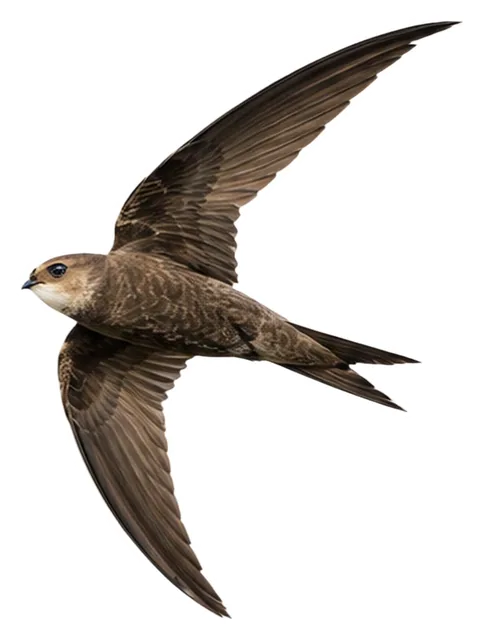
Pallid Swift
Apus pallidus (Shelley, 1870)
16–17 cmLength42 gWeight
The pallid swift (Apus pallidus) is a swift (order Apodiformes).
Busiest months: April–May · Most records: Portugal, Spain, United Arab Emirates
Where and when it's recorded
Busiest months: April–May · Most records: Portugal, Spain, United Arab Emirates

Pallid Swift has been recorded at 526 of the 8,276 birding hotspots we track, in 59 countries and regions.
Records by month Northern Hemisphere
Where it's recorded most
- International Birding and Research Center Eilat (IBRCE)Israel1,648 records
- Private estate near Green MubazzarahUnited Arab Emirates1,369 records
- Costa da Caparica – área nortePortugal1,298 records
More places
- Mushrif Palace GardensUnited Arab Emirates1,277 records
- Desembocadura del Guadalhorce – ÁreaSpain1,248 records
- Abu Dhabi Golf and Equestrian ClubUnited Arab Emirates1,216 records
- Al Jahra Reserve (Restricted access)Kuwait932 records
- Casares – CastilloSpain887 records
- Validebağ Korusu – Genel AlanTürkiye784 records
- Barrinha de EsmorizPortugal689 records
Countries and regions with the most records
eBird records via GBIF up to 2024-12-31. A record means someone listed it; more records partly mean more birders, not more birds.
About
The pallid swift (Apus pallidus) is a swift (order Apodiformes). Swifts have very short legs which they use only for clinging to vertical surfaces. The genus name Apus is Latin for a swift, thought by the ancients to be a type of swallow with no feet (from Ancient Greek α, a, "without", and πούς, pous, "foot"), and pallidus is Latin for "pale".
Excerpt from Wikipedia, CC BY-SA 4.0 · authors · Read more on Wikipedia
Questions
How big is the Pallid Swift?
The Pallid Swift is about 16–17 cm long and weighs around 42 g.
Where does the Pallid Swift live?
Its breeding range: Palearctic, Africa: southern Europe, Arabian Peninsula and northern Africa. It is most often recorded in Portugal, Spain and United Arab Emirates.
When is the best time to see the Pallid Swift?
At the hotspots we track, it is recorded most in April and May (Northern Hemisphere).
Is the Pallid Swift endangered?
The IUCN Red List classifies the Pallid Swift as Least Concern.
What does the Pallid Swift eat?
Main food: Insects & other invertebrates.
What family is the Pallid Swift in?
It belongs to the family Swifts (Apodidae), order Apodiformes.
At a glance
- Length
- 16–17 cm
- Weight
- 42 g
- Habitat
- Rocky terrain
- Diet
- Insects & other invertebrates
- Lifestyle
- Feeds in the air
- Migration
- Migratory
- Conservation
- Least Concern
More measurements
- Wing
- 167 mm
- Tail
- 72 mm
- Bill
- 11 mm
- Tarsus
- 11 mm
Averages from the AVONET dataset; length from field guides where available.
Range
Palearctic, Africa: southern Europe, Arabian Peninsula and northern Africa
Breeding range, IOC World Bird List 15.2
Classification
- Order
- Apodiformes
- Family
- Swifts Apodidae
- Genus
- Apus
Other birds in the genus Apus
 Cape Verde SwiftApus alexandri
 Common SwiftApus apus
 Plain SwiftApus unicolor
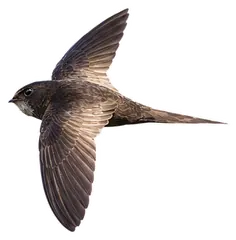 Nyanza SwiftApus niansae
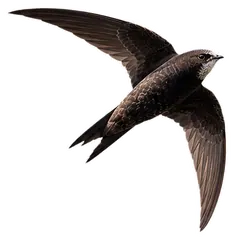 African Black SwiftApus barbatus
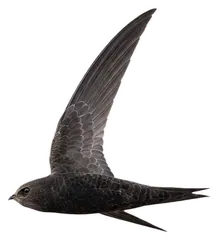 Malagasy Black SwiftApus balstoni
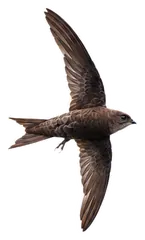 Forbes-Watson's SwiftApus berliozi
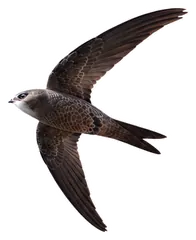 Bradfield's SwiftApus bradfieldi
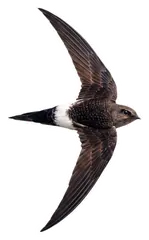 Pacific SwiftApus pacificus
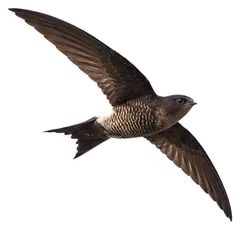 Blyth's SwiftApus leuconyx
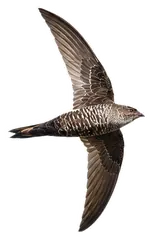 Cook's SwiftApus cooki
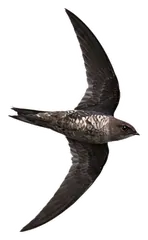 Dark-rumped SwiftApus acuticauda
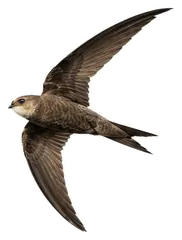
Download illustration
Free to use with credit: “Illustration: Bird Album (birdalbum.com)”. Drawn by AI from a reference photo by cog2022. ↗
Heard it but can't see it? Mingji identifies birds by sound and photo, on your phone.