 Bird Album
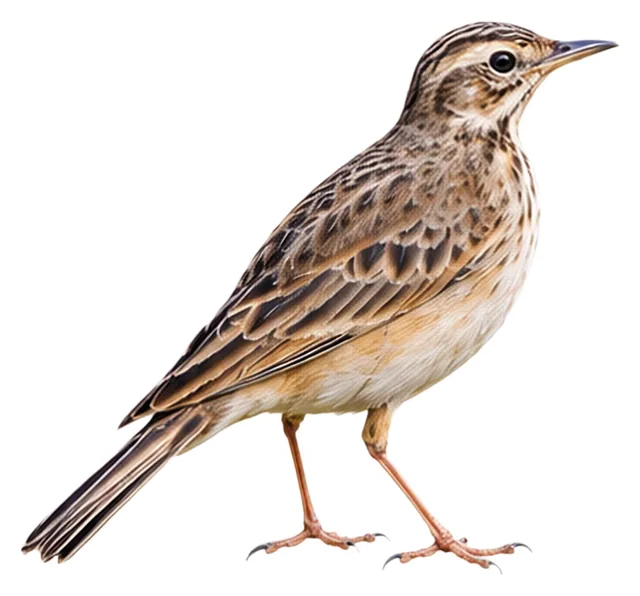
African Pipit
Anthus cinnamomeus Rüppell, 1840
15–17 cmLength32 gWeight
The African pipit (Anthus cinnamomeus) is a fairly small passerine bird belonging to the pipit genus Anthus in the family Motacillidae.
Busiest months: November · Most records: South Africa, Kenya, Tanzania
Where and when it's recorded

African Pipit has been recorded at 392 of the 8,171 birding hotspots we track, in 21 countries and regions.
Records by month Southern Hemisphere
Where it's recorded most
- Nairobi NPKenya1,101 records
- Strandfontein WTPSouth Africa814 records
- Amboseli NPKenya751 records
More places
- Rietvlei NRSouth Africa636 records
- Ngorongoro Conservation Area – Ngorongoro CraterTanzania623 records
- Macaneta – Wetland, dune forests and coastMozambique554 records
- Marievale Bird SanctuarySouth Africa412 records
- Lake Nakuru NPKenya355 records
- Avis DamNamibia328 records
- Maasai Mara NR – Mara TriangleKenya319 records
Countries and regions with the most records
eBird records via GBIF up to 2024-12-31. A record means someone listed it; more records partly mean more birders, not more birds.
About
The African pipit (Anthus cinnamomeus) is a fairly small passerine bird belonging to the pipit genus Anthus in the family Motacillidae. It is also known as the grassveld pipit or grassland pipit. It was formerly lumped together with the Richard's, Australian, mountain and paddyfield pipits in a single species, Richard's pipit (Anthus novaeseelandiae), but is now often treated as a species in its own right.
Excerpt from Wikipedia, CC BY-SA 4.0 · authors · Read more on Wikipedia
Questions
How big is the African Pipit?
The African Pipit is about 15–17 cm long and weighs around 32 g.
Where does the African Pipit live?
Its breeding range: Africa: eastern, central, southern. It is most often recorded in South Africa, Kenya and Tanzania.
When is the best time to see the African Pipit?
At the hotspots we track, it is recorded most in November (Southern Hemisphere).
Is the African Pipit endangered?
The IUCN Red List classifies the African Pipit as Least Concern.
What does the African Pipit eat?
Main food: Insects & other invertebrates.
What family is the African Pipit in?
It belongs to the family Wagtails, Pipits (Motacillidae), order Passerines (Passeriformes).
At a glance
- Length
- 15–17 cm
- Weight
- 32 g
- Habitat
- Grassland
- Diet
- Insects & other invertebrates
- Lifestyle
- Active on the ground
- Migration
- Migratory
- Conservation
- Least Concern
More measurements
- Wing
- 87 mm
- Tail
- 66 mm
- Bill
- 16 mm
- Tarsus
- 26 mm
Averages from the AVONET dataset; length from field guides where available.
Range
Africa: eastern, central, southern
Breeding range, IOC World Bird List 15.2
Classification
- Order
- Passerines Passeriformes
- Family
- Wagtails, Pipits Motacillidae
- Genus
- Anthus
Other birds in the genus Anthus
 Richard's PipitAnthus richardi
 Paddyfield PipitAnthus rufulus
 Australian PipitAnthus australis
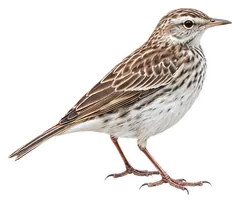 New Zealand PipitAnthus novaeseelandiae
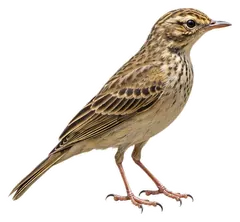 Mountain PipitAnthus hoeschi
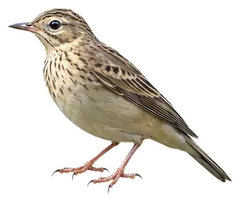 Blyth's PipitAnthus godlewskii
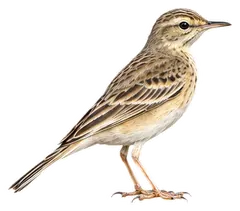 Tawny PipitAnthus campestris
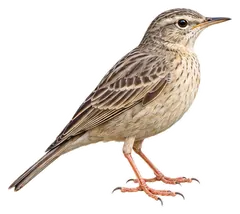 Long-billed PipitAnthus similis
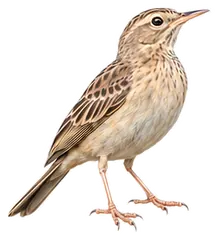 Nicholson's PipitAnthus nicholsoni
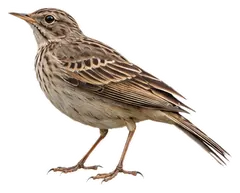 Wood PipitAnthus nyassae
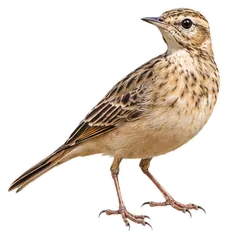 Buffy PipitAnthus vaalensis
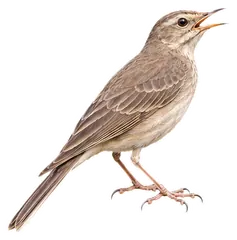 Plain-backed PipitAnthus leucophrys
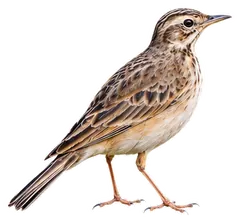
Download illustration
Free to use with credit: “Illustration: Bird Album (birdalbum.com)”. Drawn by AI from reference photos. ↗
Heard it but can't see it? Mingji identifies birds by sound and photo, on your phone.