 Bird Album
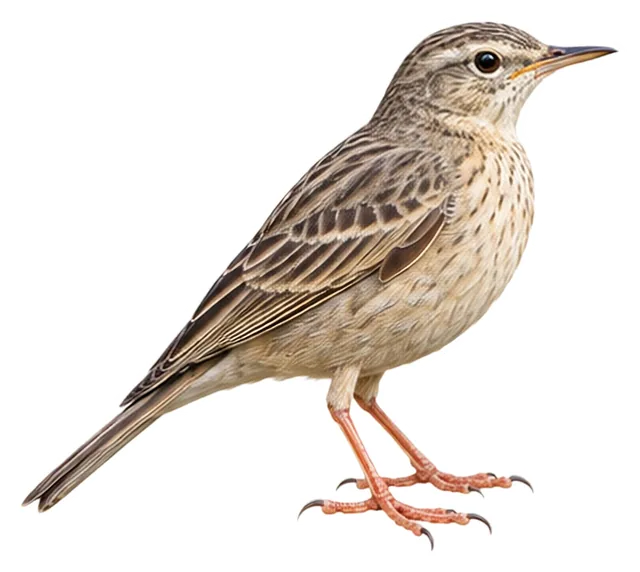
Long-billed Pipit
Anthus similis (Jerdon, 1840)
16–18 cmLength25 gWeight
The long-billed pipit or brown rock pipit (Anthus similis) is a passerine bird which has a wide distribution.
Busiest months: November–December · Most records: India, Kenya, United Arab Emirates
Where and when it's recorded

Long-billed Pipit has been recorded at 187 of the 8,171 birding hotspots we track, in 30 countries and regions.
Records by month Northern Hemisphere
Where it's recorded most
- Wamm FarmsUnited Arab Emirates613 records
- Tal Chhapar SanctuaryIndia565 records
- Kfar AdumimPalestinian Territories309 records
More places
- Mt. KabirPalestinian Territories304 records
- Nairobi NPKenya297 records
- Ayn HamranOman203 records
- Nalsarovar OutskirtsIndia193 records
- Asola Wildlife SanctuaryIndia123 records
- Sultanpur National ParkIndia115 records
- Arusha NPTanzania104 records
Countries and regions with the most records
eBird records via GBIF up to 2024-12-31. A record means someone listed it; more records partly mean more birders, not more birds.
About
The long-billed pipit or brown rock pipit (Anthus similis) is a passerine bird which has a wide distribution. A number of subspecies have been created for the populations in Africa, through the Arabian Peninsula and South Asia. The systematics of this complex is yet to be clarified.
Excerpt from Wikipedia, CC BY-SA 4.0 · authors · Read more on Wikipedia
Questions
How big is the Long-billed Pipit?
The Long-billed Pipit is about 16–18 cm long and weighs around 25 g.
Where does the Long-billed Pipit live?
Its breeding range: Africa, Oriental: widespread, also south-central Asia. It is most often recorded in India, Kenya and United Arab Emirates.
When is the best time to see the Long-billed Pipit?
At the hotspots we track, it is recorded most in November and December (Northern Hemisphere).
Is the Long-billed Pipit endangered?
The IUCN Red List classifies the Long-billed Pipit as Least Concern.
What does the Long-billed Pipit eat?
Main food: Insects & other invertebrates.
What family is the Long-billed Pipit in?
It belongs to the family Wagtails, Pipits (Motacillidae), order Passerines (Passeriformes).
At a glance
- Length
- 16–18 cm
- Weight
- 25 g
- Habitat
- Grassland
- Diet
- Insects & other invertebrates
- Lifestyle
- Active on the ground
- Migration
- Resident (barely migrates)
- Conservation
- Least Concern
More measurements
- Wing
- 90 mm
- Tail
- 70 mm
- Bill
- 20 mm
- Tarsus
- 26 mm
Averages from the AVONET dataset; length from field guides where available.
Range
Africa, Oriental: widespread, also south-central Asia
Breeding range, IOC World Bird List 15.2
Classification
- Order
- Passerines Passeriformes
- Family
- Wagtails, Pipits Motacillidae
- Genus
- Anthus
Other birds in the genus Anthus
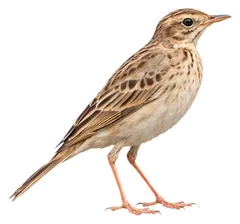 Richard's PipitAnthus richardi
 Paddyfield PipitAnthus rufulus
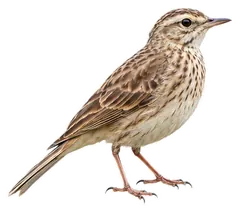 Australian PipitAnthus australis
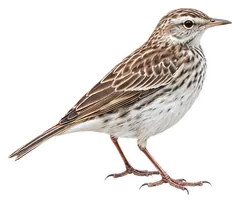 New Zealand PipitAnthus novaeseelandiae
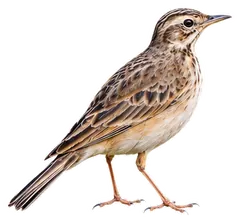 African PipitAnthus cinnamomeus
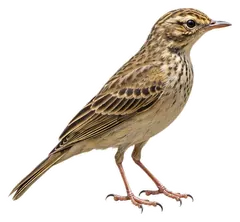 Mountain PipitAnthus hoeschi
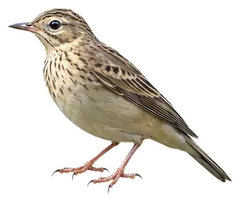 Blyth's PipitAnthus godlewskii
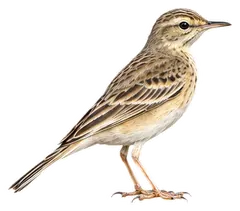 Tawny PipitAnthus campestris
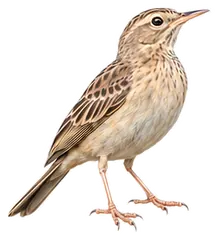 Nicholson's PipitAnthus nicholsoni
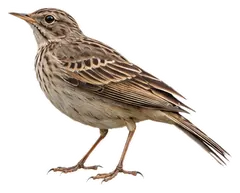 Wood PipitAnthus nyassae
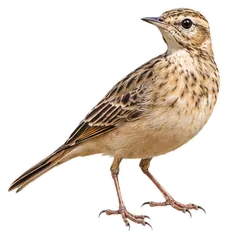 Buffy PipitAnthus vaalensis
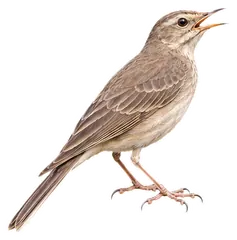 Plain-backed PipitAnthus leucophrys
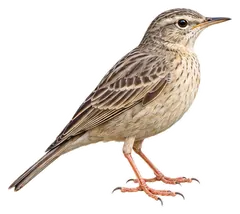
Download illustration
Free to use with credit: “Illustration: Bird Album (birdalbum.com)”. Drawn by AI from reference photos. ↗
Heard it but can't see it? Mingji identifies birds by sound and photo, on your phone.
In other languages
- EnglishLong-billed Pipit
- 简体中文长嘴鹨
- 繁體中文長嘴鷚
- 日本語ハシナガビンズイ
- DeutschLangschnabelpieper
- FrançaisPipit à long bec
- EspañolBisbita piquilargo
- Portuguêspetinha-de-bico-comprido
- ItalianoCalandro beccolungo
- NederlandsLangsnavelpieper
- РусскийДлинноклювый конёк
- Svenskalångnäbbad piplärka
- DanskLangnæbbet Piber
- Polskiświergotek długodzioby