 Bird Album
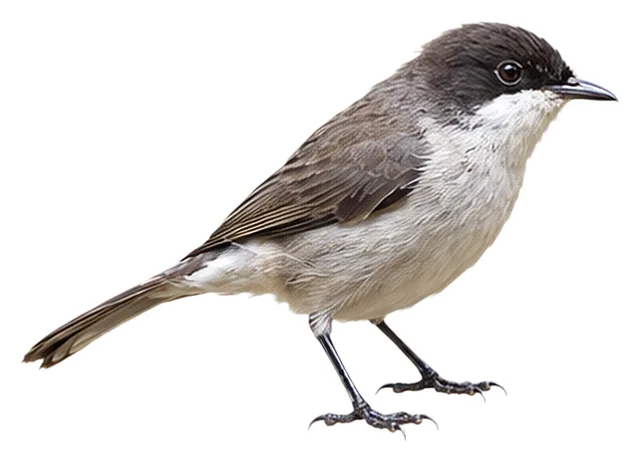
Arabian Warbler
Curruca leucomelaena Hemprich & Ehrenberg, 1833
14 cmLength14 gWeight
The Arabian warbler (Curruca leucomelaena), also known as Red Sea warbler or Blandford's warbler, is a species of Old World warbler in the family Sylviidae.
Busiest months: November · Most records: Oman, Jordan, Saudi Arabia
Where and when it's recorded
Busiest months: November · Most records: Oman, Jordan, Saudi Arabia

Arabian Warbler has been recorded at 11 of the 8,276 birding hotspots we track, in 5 countries and regions.
Records by month Northern Hemisphere
Where it's recorded most
- Ayn HamranOman384 records
- Khawr RawriOman24 records
- PetraJordan14 records
More places
- Khor AmbadoDjibouti10 records
- Al Sadd LakeSaudi Arabia9 records
- Azraq Wetland ReserveJordan4 records
- South CornicheSaudi Arabia2 records
- Las Geel Rock DrawingsSomalia1 record
- Plage de GhoubetDjibouti1 record
- Decan Wildlife RefugeDjibouti1 record
Countries and regions with the most records
eBird records via GBIF up to 2024-12-31. A record means someone listed it; more records partly mean more birders, not more birds.
About
The Arabian warbler (Curruca leucomelaena), also known as Red Sea warbler or Blandford's warbler, is a species of Old World warbler in the family Sylviidae.
Excerpt from Wikipedia, CC BY-SA 4.0 · authors · Read more on Wikipedia
Questions
How big is the Arabian Warbler?
The Arabian Warbler is about 14 cm long and weighs around 14 g.
Where does the Arabian Warbler live?
Its breeding range: Africa: disjunctly from southeastern Egypt and northeastern Sudan to western, southern Arabian Peninsula. It is most often recorded in Oman, Jordan and Saudi Arabia.
When is the best time to see the Arabian Warbler?
At the hotspots we track, it is recorded most in November (Northern Hemisphere).
Is the Arabian Warbler endangered?
The IUCN Red List classifies the Arabian Warbler as Least Concern.
What does the Arabian Warbler eat?
Main food: Insects & other invertebrates.
What family is the Arabian Warbler in?
It belongs to the family Sylviid Babblers (Sylviidae), order Passerines (Passeriformes).
At a glance
- Length
- 14 cm
- Weight
- 14 g
- Habitat
- Woodland
- Diet
- Insects & other invertebrates
- Lifestyle
- Perches in trees
- Migration
- Resident (barely migrates)
- Conservation
- Least Concern
More measurements
- Wing
- 69 mm
- Tail
- 72 mm
- Bill
- 14 mm
- Tarsus
- 20 mm
Averages from the AVONET dataset; length from field guides where available.
Range
Africa: disjunctly from southeastern Egypt and northeastern Sudan to western, southern Arabian Peninsula
Breeding range, IOC World Bird List 15.2
Classification
- Order
- Passerines Passeriformes
- Family
- Sylviid Babblers Sylviidae
- Genus
- Curruca
Other birds in the genus Curruca
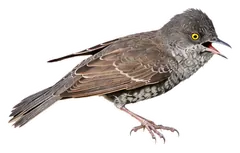 Barred WarblerCurruca nisoria
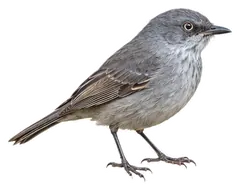 Layard's WarblerCurruca layardi
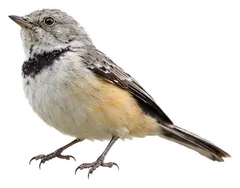 Banded ParisomaCurruca boehmi
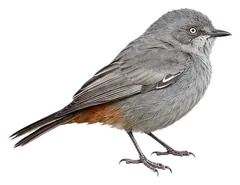 Chestnut-vented WarblerCurruca subcoerulea
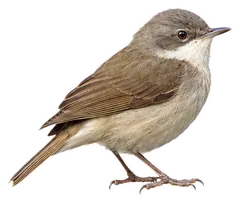 Lesser WhitethroatCurruca curruca
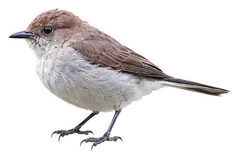 Brown ParisomaCurruca lugens
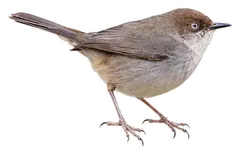 Yemen WarblerCurruca buryi
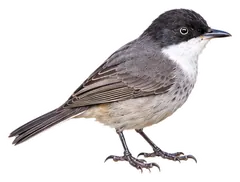 Western Orphean WarblerCurruca hortensis
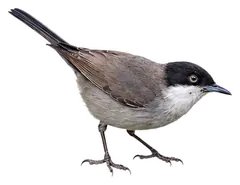 Eastern Orphean WarblerCurruca crassirostris
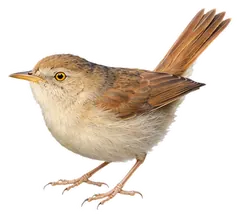 African Desert WarblerCurruca deserti
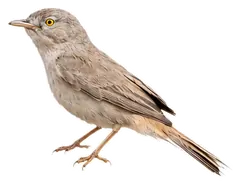 Asian Desert WarblerCurruca nana
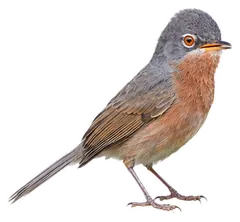 Tristram's WarblerCurruca deserticola
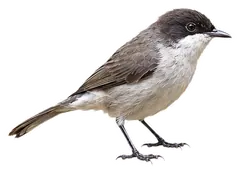
Download illustration
Free to use with credit: “Illustration: Bird Album (birdalbum.com)”. Drawn by AI from a reference photo by James Bailey. ↗
Heard it but can't see it? Mingji identifies birds by sound and photo, on your phone.