 Bird Album
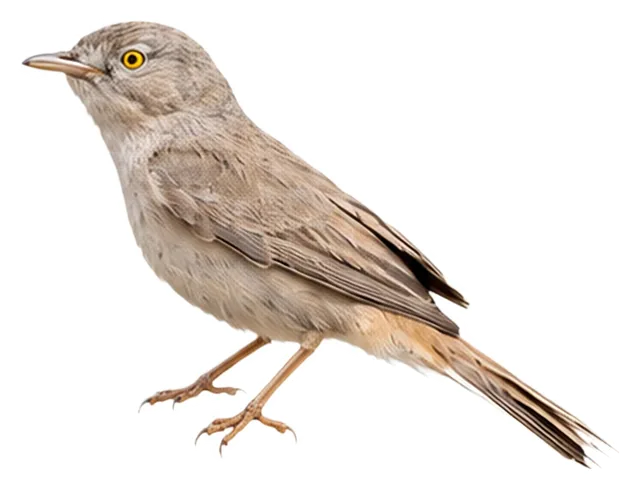
Asian Desert Warbler
Curruca nana Hemprich & Ehrenberg, 1833
≈11 cmLength8.7 gWeight
This small, pale gray-brown desert bird often forages on the ground.
Busiest months: October · Most records: United Arab Emirates, Kuwait, Kazakhstan
How to identify
Field marks
- Pale gray-brown upperparts; browner wings and tail
- Whitish underparts
- Pale yellow bill, legs and feet
- Yellow iris
Male, female and young
Sexes almost identical in plumage.
Voice
The song is a series of “jingling” sounds mixing clear and harsh notes, often delivered in display flight.
Where and when it's recorded

Asian Desert Warbler has been recorded at 74 of the 8,171 birding hotspots we track, in 22 countries and regions.
Records by month Northern Hemisphere
Where it's recorded most
- Green MubazzarahUnited Arab Emirates137 records
- Khongorin ElsMongolia75 records
- Abraq Al-HabariKuwait74 records
More places
- Sogeti Valley – Drinking Pool and Surrounding PlainsKazakhstan69 records
- Zakher LakeUnited Arab Emirates64 records
- Jahra East Outfall ( al Jodailyat)Kuwait42 records
- Al Jahra Reserve (Restricted access)Kuwait37 records
- Flamborough HeadUnited Kingdom35 records
- Irakhiya FarmQatar34 records
- Al Wathba Wetland ReserveUnited Arab Emirates33 records
Countries and regions with the most records
eBird records via GBIF up to 2024-12-31. A record means someone listed it; more records partly mean more birders, not more birds.
About
The Asian desert warbler (Curruca nana) is an Old World warbler which breeds in the deserts of central and western Asia and the extreme east of Europe (Volga Delta area east to western Inner Mongolia in China), and migrating to similar habitats in southwestern Asia (Arabia to northwestern India) and the far northeast of Africa (Red Sea coastal regions) in winter. Until recently it was considered conspecific with the African desert warbler (and called just "desert warbler"), but is now given specific status.
Excerpt from Wikipedia, CC BY-SA 4.0 · authors · Read more on Wikipedia
Questions
How big is the Asian Desert Warbler?
The Asian Desert Warbler is about ≈11 cm long and weighs around 8.7 g.
Where does the Asian Desert Warbler live?
Its breeding range: Palearctic: northern Iran to Mongolia and northwestern China. It is most often recorded in United Arab Emirates, Kuwait and Kazakhstan.
When is the best time to see the Asian Desert Warbler?
At the hotspots we track, it is recorded most in October (Northern Hemisphere).
Is the Asian Desert Warbler endangered?
The IUCN Red List classifies the Asian Desert Warbler as Least Concern.
What does the Asian Desert Warbler eat?
Main food: Insects & other invertebrates.
What family is the Asian Desert Warbler in?
It belongs to the family Sylviid Babblers (Sylviidae), order Passerines (Passeriformes).
At a glance
- Length
- ≈11 cm
- Weight
- 8.7 g
- Habitat
- Desert
- Diet
- Insects & other invertebrates
- Lifestyle
- Perches in trees
- Migration
- Resident (barely migrates)
- Conservation
- Least Concern
More measurements
- Wing
- 56 mm
- Tail
- 50 mm
- Bill
- 10 mm
- Tarsus
- 18 mm
Averages from the AVONET dataset; length from field guides where available.
Range
Palearctic: northern Iran to Mongolia and northwestern China
Breeding range, IOC World Bird List 15.2
Classification
- Order
- Passerines Passeriformes
- Family
- Sylviid Babblers Sylviidae
- Genus
- Curruca
Other birds in the genus Curruca
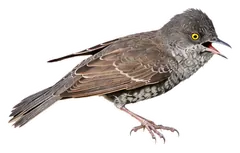 Barred WarblerCurruca nisoria
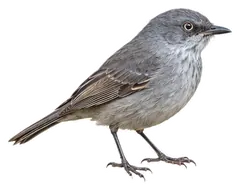 Layard's WarblerCurruca layardi
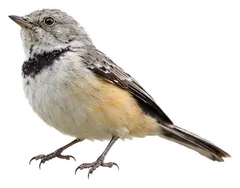 Banded ParisomaCurruca boehmi
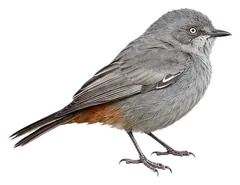 Chestnut-vented WarblerCurruca subcoerulea
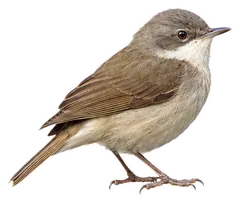 Lesser WhitethroatCurruca curruca
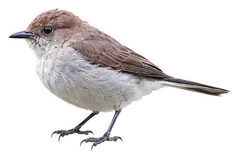 Brown ParisomaCurruca lugens
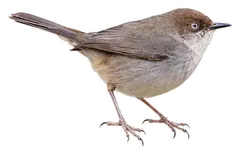 Yemen WarblerCurruca buryi
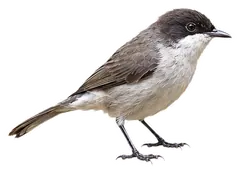 Arabian WarblerCurruca leucomelaena
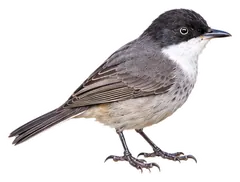 Western Orphean WarblerCurruca hortensis
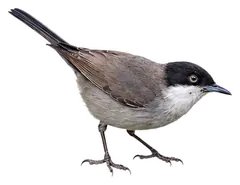 Eastern Orphean WarblerCurruca crassirostris
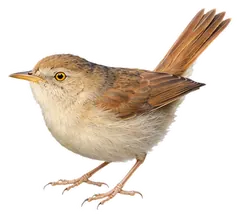 African Desert WarblerCurruca deserti
 Tristram's WarblerCurruca deserticola
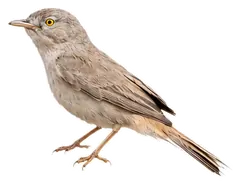
Download illustration
Free to use with credit: “Illustration: Bird Album (birdalbum.com)”. Drawn by AI from a reference photo by Pavel Shukov. ↗
Heard it but can't see it? Mingji identifies birds by sound and photo, on your phone.