 Bird Album
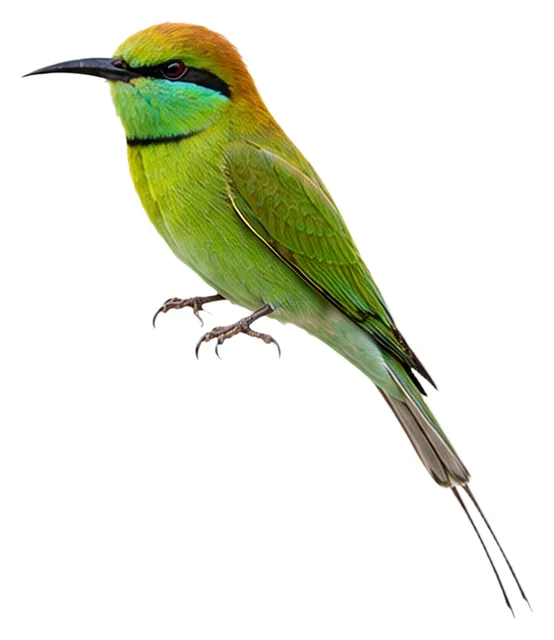
Asian Green Bee-eater
Merops orientalis Latham, 1801
≈19 cmLength23 cmWingspan15 gWeight
It is bright green overall, with a single black crescent across the breast.
Busiest months: February · Most records: India, Thailand, Sri Lanka
How to identify
Field marks
- Fine black eyestripe extends in front of and behind eye
- Black crescent on upper breast
- Central tail feathers long and slender
- Bill black; legs and feet dark gray
Male, female and young
Sexes similar; juvenile is duller and lacks the long central tail feathers and black breast crescent.
Voice
Often gives a nasal, quavering “tree-tree-tree-tree” in flight.
Where and when it's recorded
Busiest months: February · Most records: India, Thailand, Sri Lanka

Asian Green Bee-eater has been recorded at 524 of the 8,276 birding hotspots we track, in 13 countries and regions.
Records by month Northern Hemisphere
Where it's recorded most
- GKVK CampusIndia7,824 records
- Fergusson College CampusIndia4,491 records
- Saul Kere / Sowl KereIndia3,634 records
More places
- Vetal Tekdi/HillIndia3,578 records
- Kanha NP – Mukki ZoneIndia2,621 records
- Salim Ali Centre for Ornithology and Natural HistoryIndia2,568 records
- Valley SchoolIndia2,489 records
- Thrissur Government Medical CollegeIndia2,247 records
- Bharatpur – Keoladeo Ghana NPIndia2,166 records
- Hoskote / Hosakote KereIndia2,050 records
Countries and regions with the most records
eBird records via GBIF up to 2024-12-31. A record means someone listed it; more records partly mean more birders, not more birds.
About
The Asian green bee-eater (Merops orientalis), also known as the little green bee-eater, and just green bee-eater, is a bird species in the bee-eater family. It is resident or with short-distance seasonal movements, and is found widely distributed across Asia from coastal southern Iran east through the Indian subcontinent to Vietnam. Populations in Africa and the Arabian Peninsula that were formerly assigned to this species (under the name green bee-eater) are now considered to be distinct species, the African green bee-eater and the Arabian green bee-eater.
Excerpt from Wikipedia, CC BY-SA 4.0 · authors · Read more on Wikipedia
Questions
How big is the Asian Green Bee-eater?
The Asian Green Bee-eater is about ≈19 cm long, with a wingspan of 23 cm and weighs around 15 g.
Where does the Asian Green Bee-eater live?
Its breeding range: Palearctic, Oriental: southern Iran and South Asia to south-central China and Southeast Asia. It is most often recorded in India, Thailand and Sri Lanka.
When is the best time to see the Asian Green Bee-eater?
At the hotspots we track, it is recorded most in February (Northern Hemisphere).
Is the Asian Green Bee-eater endangered?
The IUCN Red List classifies the Asian Green Bee-eater as Least Concern.
What does the Asian Green Bee-eater eat?
Main food: Insects & other invertebrates.
What family is the Asian Green Bee-eater in?
It belongs to the family Bee-eaters (Meropidae), order Coraciiformes.
At a glance
- Length
- ≈19 cm
- Wingspan
- 23 cm
- Weight
- 15 g
- Habitat
- Shrubland
- Diet
- Insects & other invertebrates
- Lifestyle
- Perches in trees
- Migration
- Resident (barely migrates)
- Conservation
- Least Concern
More measurements
- Wing
- 91 mm
- Tail
- 103 mm
- Bill
- 31 mm
- Tarsus
- 10 mm
Averages from the AVONET dataset; length from field guides where available.
Range
Palearctic, Oriental: southern Iran and South Asia to south-central China and Southeast Asia
Breeding range, IOC World Bird List 15.2
Subspecies · 1
- Merops orientalis ferrugeiceps ne India to sc China and Indochina
Classification
- Order
- Coraciiformes
- Family
- Bee-eaters Meropidae
- Genus
- Merops
Other birds in the genus Merops
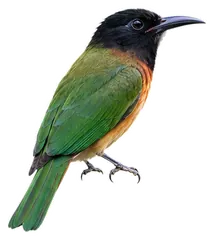 Black-headed Bee-eaterMerops breweri
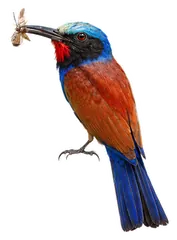 Blue-headed Bee-eaterMerops muelleri
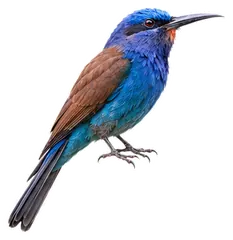 Blue-moustached Bee-eaterMerops mentalis
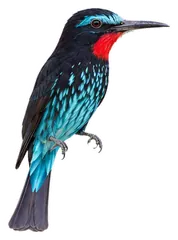 Black Bee-eaterMerops gularis
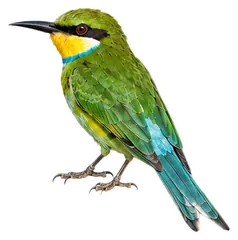 Swallow-tailed Bee-eaterMerops hirundineus
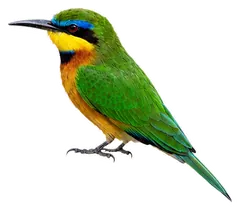 Little Bee-eaterMerops pusillus
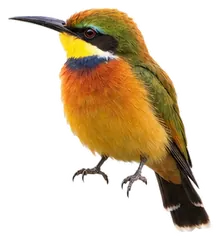 Blue-breasted Bee-eaterMerops variegatus
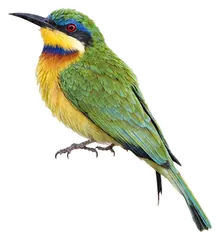 Ethiopian Bee-eaterMerops lafresnayii
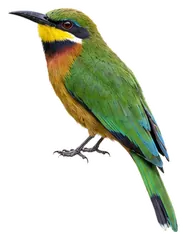 Cinnamon-chested Bee-eaterMerops oreobates
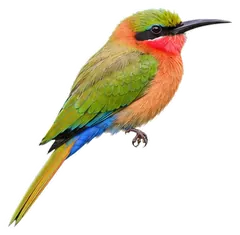 Red-throated Bee-eaterMerops bulocki
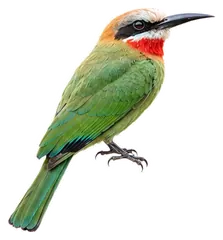 White-fronted Bee-eaterMerops bullockoides
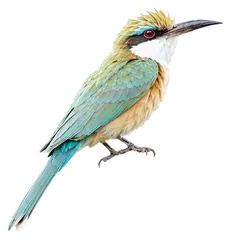 Somali Bee-eaterMerops revoilii
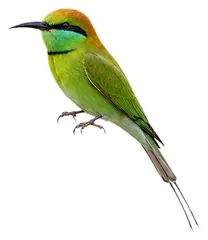
Download illustration
Free to use with credit: “Illustration: Bird Album (birdalbum.com)”. Drawn by AI from a reference photo by Shreybae. ↗
Heard it but can't see it? Mingji identifies birds by sound and photo, on your phone.
In other languages
- EnglishAsian Green Bee-eater
- 简体中文绿喉蜂虎
- 繁體中文綠喉蜂虎
- 日本語ミドリハチクイ
- DeutschBronzescheitel-Smaragdspint
- FrançaisGuêpier d’Orient
- EspañolAbejaruco esmeralda oriental
- Portuguêsabelharuco-verde-asiático
- ItalianoGruccione verde piccolo
- NederlandsAziatische Kleine Groene Bijeneter
- РусскийИзумрудная щурка
- Svenskaorientbiätare
- DanskLille Grøn Biæder
- Polskiżołna wschodnia