 Bird Album
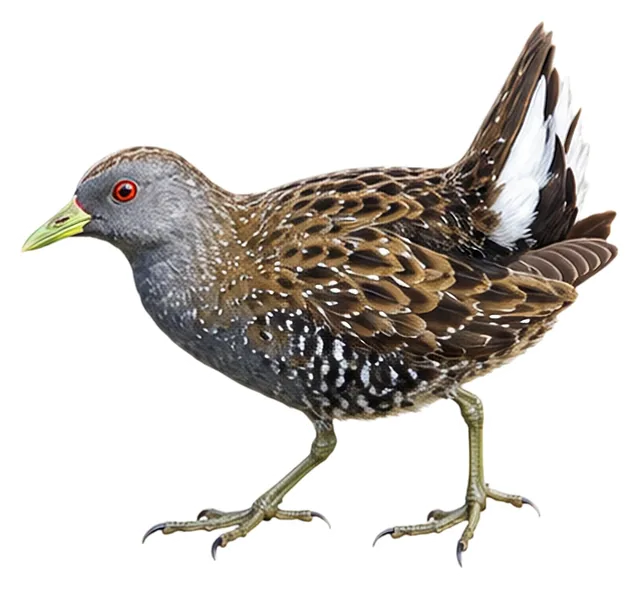
Australian Crake
Porzana fluminea Gould, 1843
61 gWeight
The Australian crake (Porzana fluminea), also known as Australian spotted crake, or spotted crake is a species of bird in the family Rallidae.
Busiest months: January · Most records: Australia
Where and when it's recorded

Australian Crake has been recorded at 111 of the 8,171 birding hotspots we track, in 1 country or region.
Records by month Southern Hemisphere
Where it's recorded most
- Western Treatment PlantAustralia4,160 records
- Jerrabomberra Wetlands Nature ReserveAustralia1,316 records
- Western Treatment Plant – T Section PondsAustralia1,183 records
More places
- Laratinga WetlandsAustralia994 records
- Fivebough WetlandsAustralia411 records
- Lake Cargelligo Wastewater Treatment PlantAustralia378 records
- Alice Springs Sewage PondsAustralia345 records
- Jawbone Flora and Fauna ReserveAustralia325 records
- Western Treatment Plant – Western LagoonsAustralia283 records
- Goulds Lagoon Wildlife SanctuaryAustralia242 records
Countries and regions with the most records
eBird records via GBIF up to 2024-12-31. A record means someone listed it; more records partly mean more birders, not more birds.
About
The Australian crake (Porzana fluminea), also known as Australian spotted crake, or spotted crake is a species of bird in the family Rallidae. It is the only species of Australian crake in the genus Porzana.
Excerpt from Wikipedia, CC BY-SA 4.0 · authors · Read more on Wikipedia
Questions
How big is the Australian Crake?
The Australian Crake weighs around 61 g.
Where does the Australian Crake live?
Its breeding range: Australasia: Australia (except northern, south-central). It is most often recorded in Australia.
When is the best time to see the Australian Crake?
At the hotspots we track, it is recorded most in January (Southern Hemisphere).
Is the Australian Crake endangered?
The IUCN Red List classifies the Australian Crake as Least Concern.
What does the Australian Crake eat?
Main food: Fish, shrimp & shellfish.
What family is the Australian Crake in?
It belongs to the family Rails, Crakes & Coots (Rallidae), order Gruiformes.
At a glance
- Weight
- 61 g
- Habitat
- Wetland
- Diet
- Fish, shrimp & shellfish
- Lifestyle
- Active on the ground
- Migration
- Partial migrant
- Conservation
- Least Concern
More measurements
- Wing
- 97 mm
- Tail
- 48 mm
- Bill
- 21 mm
- Tarsus
- 27 mm
Averages from the AVONET dataset; length from field guides where available.
Range
Australasia: Australia (except northern, south-central)
Breeding range, IOC World Bird List 15.2
Classification
- Order
- Gruiformes
- Family
- Rails, Crakes & Coots Rallidae
- Genus
- Porzana
Other birds in the genus Porzana
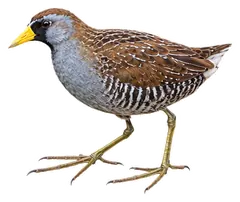 SoraPorzana carolina
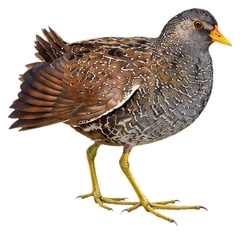 Spotted CrakePorzana porzana
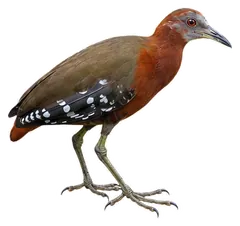 Grey-throated RailCanirallus oculeus
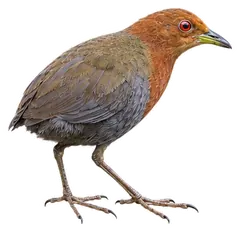 Chestnut-headed CrakeAnurolimnas castaneiceps
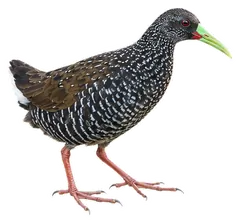 Spotted RailPardirallus maculatus
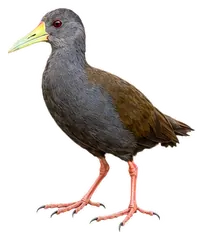 Blackish RailPardirallus nigricans
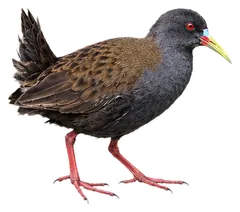 Plumbeous RailPardirallus sanguinolentus
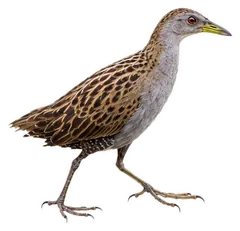 Ash-throated CrakeMustelirallus albicollis
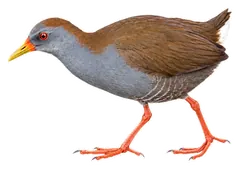 Zapata RailMustelirallus cerverai
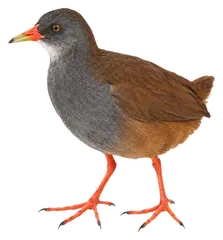 Colombian CrakeMustelirallus colombianus
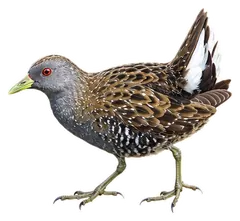
Download illustration
Free to use with credit: “Illustration: Bird Album (birdalbum.com)”. Drawn by AI from a reference photo by cinclosoma. ↗
Heard it but can't see it? Mingji identifies birds by sound and photo, on your phone.
In other languages
- EnglishAustralian Crake
- 简体中文斑田鸡
- 繁體中文點斑田雞
- 日本語ミナミヒメクイナ
- DeutschFlusssumpfhuhn
- FrançaisMarouette d’Australie
- EspañolPolluela australiana
- Portuguêsfranga-de-água-australiana
- ItalianoSchiribilla australiana
- NederlandsAustralisch Porseleinhoen
- РусскийАвстралийский погоныш
- Svenskaaustralisk sumphöna
- DanskAustralsk Rørvagtel
- Polskikureczka australijska