 Bird Album
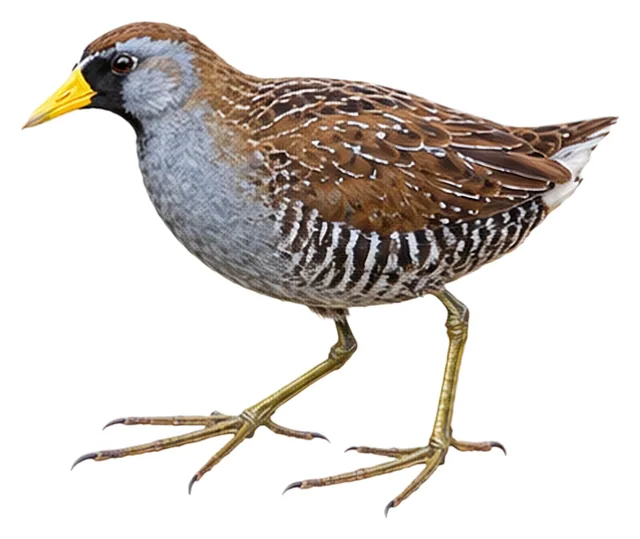
Sora
Porzana carolina (Linnaeus, 1758)
19–30 cmLength75 gWeight
The sora, sora rail or Carolina crake (Porzana carolina) is a small waterbird of the rail family Rallidae, sometimes also referred to as the sora rail or sora crake, that occurs throughout much of North America.
Busiest months: April–May · Most records: United States, Canada, Mexico
Where and when it's recorded

Sora has been recorded at 1,002 of the 8,171 birding hotspots we track, in 48 countries and regions.
Records by month Northern Hemisphere
Where it's recorded most
- Sweetwater WetlandsUnited States16,233 records
- Estero Llano Grande SP WBCUnited States11,066 records
- Sweetwater Wetlands ParkUnited States6,135 records
More places
- Leonabelle Turnbull Birding Ctr.United States5,651 records
- South Padre Is. – WBC/Conv. Center/Laguna Madre TrailUnited States5,249 records
- Piute PondsUnited States4,527 records
- The Celery FieldsUnited States4,431 records
- Green Cay Wetlands & Nature CenterUnited States4,310 records
- Las Gallinas Valley Sanitary DistrictUnited States4,080 records
- Santa Ana NWRUnited States3,910 records
Countries and regions with the most records
eBird records via GBIF up to 2024-12-31. A record means someone listed it; more records partly mean more birders, not more birds.
About
The sora, sora rail or Carolina crake (Porzana carolina) is a small waterbird of the rail family Rallidae, sometimes also referred to as the sora rail or sora crake, that occurs throughout much of North America. The genus name Porzana is derived from Venetian terms for small rails, and the specific carolina refers to the Carolina Colony. The common name "Sora" is probably derived from a Native American language.
Excerpt from Wikipedia, CC BY-SA 4.0 · authors · Read more on Wikipedia
Questions
How big is the Sora?
The Sora is about 19–30 cm long and weighs around 75 g.
Where does the Sora live?
Its breeding range: North America: widespread. It is most often recorded in United States, Canada and Mexico.
When is the best time to see the Sora?
At the hotspots we track, it is recorded most in April and May (Northern Hemisphere).
Is the Sora endangered?
The IUCN Red List classifies the Sora as Least Concern.
What does the Sora eat?
Main food: Omnivore.
What family is the Sora in?
It belongs to the family Rails, Crakes & Coots (Rallidae), order Gruiformes.
At a glance
- Length
- 19–30 cm
- Weight
- 75 g
- Habitat
- Wetland
- Diet
- Omnivore
- Lifestyle
- Active on the ground
- Migration
- Migratory
- Conservation
- Least Concern
More measurements
- Wing
- 102 mm
- Tail
- 51 mm
- Bill
- 20 mm
- Tarsus
- 30 mm
Averages from the AVONET dataset; length from field guides where available.
Range
North America: widespread
Breeding range, IOC World Bird List 15.2
Classification
- Order
- Gruiformes
- Family
- Rails, Crakes & Coots Rallidae
- Genus
- Porzana
Other birds in the genus Porzana
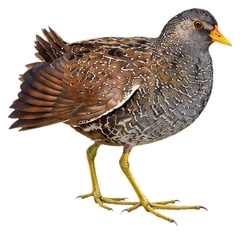 Spotted CrakePorzana porzana
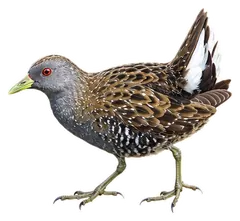 Australian CrakePorzana fluminea
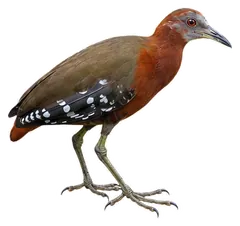 Grey-throated RailCanirallus oculeus
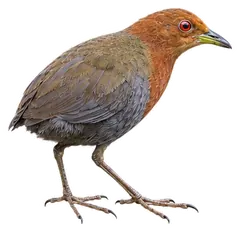 Chestnut-headed CrakeAnurolimnas castaneiceps
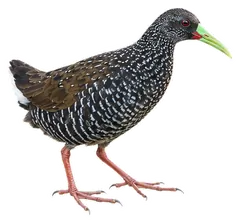 Spotted RailPardirallus maculatus
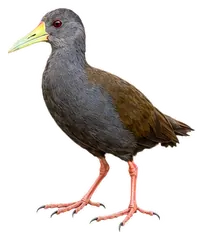 Blackish RailPardirallus nigricans
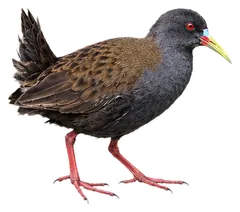 Plumbeous RailPardirallus sanguinolentus
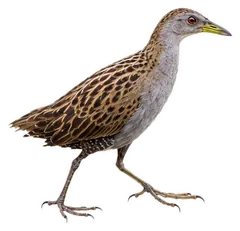 Ash-throated CrakeMustelirallus albicollis
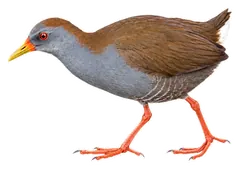 Zapata RailMustelirallus cerverai
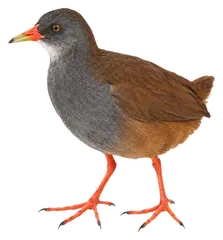 Colombian CrakeMustelirallus colombianus
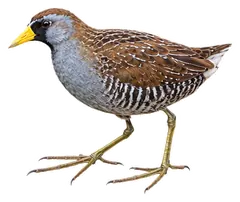
Download illustration
Free to use with credit: “Illustration: Bird Album (birdalbum.com)”. Drawn by AI from a reference photo by BJ Stacey. ↗
Heard it but can't see it? Mingji identifies birds by sound and photo, on your phone.