 Bird Album
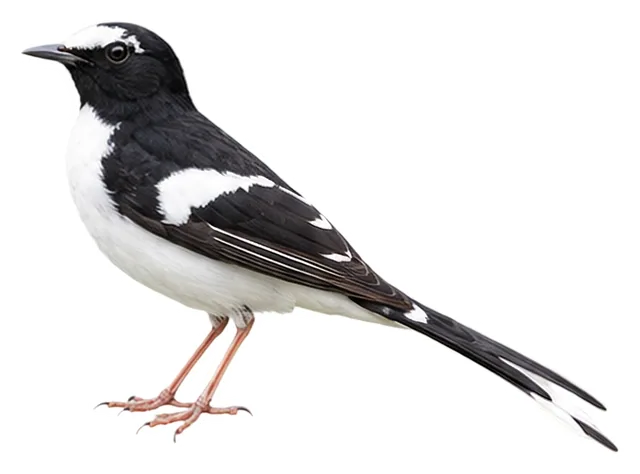
Black-backed Forktail
Enicurus immaculatus (Hodgson, 1836)
20–23 cmLength26 gWeight
It has a white stripe across the forehead and a long black-and-white tail that opens and closes like scissors.
Busiest months: December–February · Most records: India, Thailand, Nepal
How to identify
Field marks
- A single broad white stripe across the forehead
- Black crown and back; white underparts
- A single broad white wing-bar
- Long, deeply forked tail, black-and-white
Male, female and young
Sexes are identical in appearance; juvenile lacks the conspicuous white forehead stripe, and areas that are black in the adult are smoky-brown or dusky in the juvenile.
Voice
Short whistles, like “tseep-dew” or “hurt-zeee”.
Where and when it's recorded

Black-backed Forktail has been recorded at 101 of the 8,276 birding hotspots we track, in 7 countries and regions.
Records by month Northern Hemisphere
Where it's recorded most
- Dihing Patkai NP – SoraipungIndia532 records
- Dihing Patkai NP – SoraipungIndia456 records
- Garbhanga Reserve ForestIndia216 records
More places
- Doi Inthanon NP – Mueang Ang (Km 13) rd.Thailand187 records
- Doi Inthanon NPThailand141 records
- Nameri National Park & SurroundingsIndia98 records
- Hazarikhil WSBangladesh81 records
- Chitwan National ParkNepal77 records
- Manas NP – BanasbariIndia77 records
- Muraichara - Sagarnal Road TrailBangladesh58 records
Countries and regions with the most records
eBird records via GBIF up to 2024-12-31. A record means someone listed it; more records partly mean more birders, not more birds.
About
The black-backed forktail (Enicurus immaculatus), occasionally referred to as the black-throated forktail, is a forktail species in the family Muscicapidae. The species was described in 1836, from a specimen collected in Nepal. It is a medium-sized forktail, weighing between 25 and 29 grams, with a length of 20.5 to 23 centimetres (8+1⁄8 to 9 in).
Excerpt from Wikipedia, CC BY-SA 4.0 · authors · Read more on Wikipedia
Questions
How big is the Black-backed Forktail?
The Black-backed Forktail is about 20–23 cm long and weighs around 26 g.
Where does the Black-backed Forktail live?
Its breeding range: Oriental: Himalayas to northwestern Thailand. It is most often recorded in India, Thailand and Nepal.
When is the best time to see the Black-backed Forktail?
At the hotspots we track, it is recorded most in January, February and December (Northern Hemisphere).
Is the Black-backed Forktail endangered?
The IUCN Red List classifies the Black-backed Forktail as Least Concern.
What does the Black-backed Forktail eat?
Main food: Fish, shrimp & shellfish.
What family is the Black-backed Forktail in?
It belongs to the family Chats, Old World Flycatchers (Muscicapidae), order Passerines (Passeriformes).
At a glance
- Length
- 20–23 cm
- Weight
- 26 g
- Habitat
- Rivers & streams
- Diet
- Fish, shrimp & shellfish
- Lifestyle
- Active on the ground
- Migration
- Partial migrant
- Conservation
- Least Concern
More measurements
- Wing
- 90 mm
- Tail
- 114 mm
- Bill
- 19 mm
- Tarsus
- 26 mm
Averages from the AVONET dataset; length from field guides where available.
Range
Oriental: Himalayas to northwestern Thailand
Breeding range, IOC World Bird List 15.2
Classification
- Order
- Passerines Passeriformes
- Family
- Chats, Old World Flycatchers Muscicapidae
- Genus
- Enicurus
Other birds in the genus Enicurus
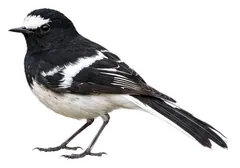 Little ForktailEnicurus scouleri
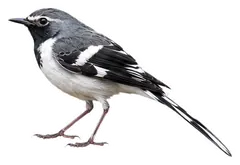 Slaty-backed ForktailEnicurus schistaceus
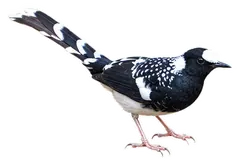 Spotted ForktailEnicurus maculatus
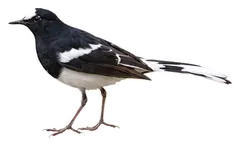 White-crowned ForktailEnicurus leschenaulti
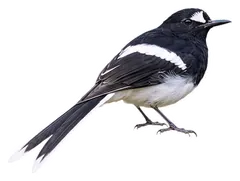 Bornean ForktailEnicurus borneensis
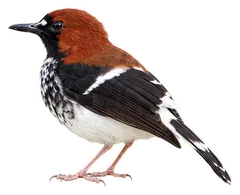 Chestnut-naped ForktailEnicurus ruficapillus
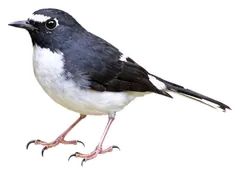 Sunda ForktailEnicurus velatus
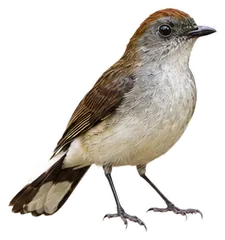 White-tailed AletheAlethe diademata
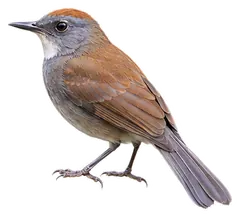 Fire-crested AletheAlethe castanea
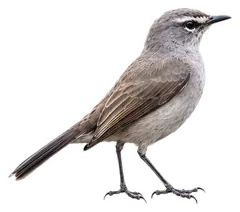 Karoo Scrub RobinTychaedon coryphoeus
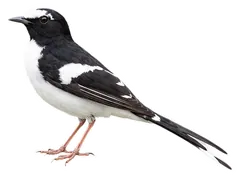
Download illustration
Free to use with credit: “Illustration: Bird Album (birdalbum.com)”. Drawn by AI from a reference photo by desertnaturalist. ↗
Heard it but can't see it? Mingji identifies birds by sound and photo, on your phone.
In other languages
- EnglishBlack-backed Forktail
- 简体中文黑背燕尾
- 繁體中文黑背燕尾
- 日本語セグロエンビシキチョウ
- DeutschSchwarzrücken-Scherenschwanz
- FrançaisÉnicure à dos noir
- EspañolTorrentero dorsinegro
- Portuguêstorrenteiro-de-dorso-preto
- ItalianoCodaforcuta dorsonero
- NederlandsZwartrugvorkstaart
- РусскийЧерноспинная вилохвостка
- Svenskasvartryggig klyvstjärt
- DanskSortrygget Kløfthale
- Polskiwidłogon czarnogrzbiety