 Bird Album
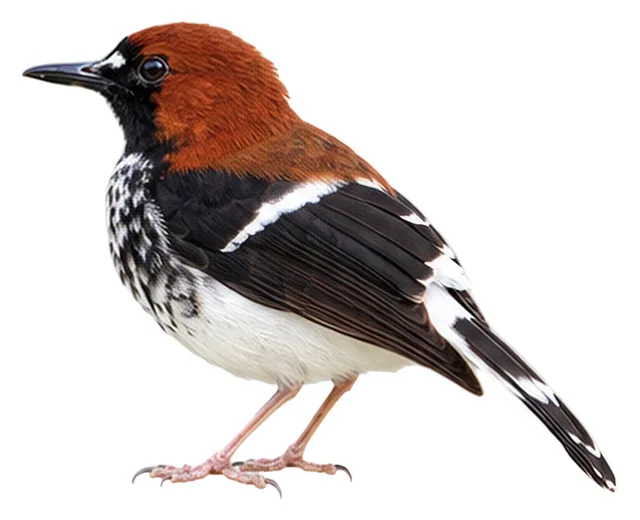
Chestnut-naped Forktail
Enicurus ruficapillus Temminck, 1832
28 gWeight
The chestnut-naped forktail (Enicurus ruficapillus) is a species of bird in the flycatcher and chat family Muscicapidae.
Busiest months: March, June and August · Most records: Malaysia, Thailand, Indonesia
Where and when it's recorded

Chestnut-naped Forktail has been recorded at 61 of the 8,171 birding hotspots we track, in 3 countries and regions.
Records by month Northern Hemisphere
Where it's recorded most
- Danum Valley Borneo Rainforest LodgeMalaysia290 records
- Khao Luang NP – Krung Ching Waterfall trail & campgroundThailand206 records
- Danum Valley Field CentreMalaysia197 records
More places
- Hala – Bala Wildlife Sanctuary – Toh Moh forest trailThailand180 records
- Sri Phang-nga NPThailand177 records
- Kubah National ParkMalaysia169 records
- Sungai Congkak Recreational ForestMalaysia124 records
- Taman Negara NP Kuala TahanMalaysia119 records
- Sri Phang-nga NP – headquarters vicinityThailand111 records
- Hala – Bala Wildlife Sanctuary – BalaThailand107 records
Countries and regions with the most records
eBird records via GBIF up to 2024-12-31. A record means someone listed it; more records partly mean more birders, not more birds.
About
The chestnut-naped forktail (Enicurus ruficapillus) is a species of bird in the flycatcher and chat family Muscicapidae. The species is monotypic, having no subspecies. It is found in Sundaland, in southern Burma and Thailand to Peninsular Malaysia, as well as Sumatra and Borneo.
Excerpt from Wikipedia, CC BY-SA 4.0 · authors · Read more on Wikipedia
Questions
How big is the Chestnut-naped Forktail?
The Chestnut-naped Forktail weighs around 28 g.
Where does the Chestnut-naped Forktail live?
Its breeding range: Oriental: Malay Peninsula, Sumatra and Borneo. It is most often recorded in Malaysia, Thailand and Indonesia.
When is the best time to see the Chestnut-naped Forktail?
At the hotspots we track, it is recorded most in March, June and August (Northern Hemisphere).
Is the Chestnut-naped Forktail endangered?
The IUCN Red List classifies the Chestnut-naped Forktail as Near Threatened.
What does the Chestnut-naped Forktail eat?
Main food: Fish, shrimp & shellfish.
What family is the Chestnut-naped Forktail in?
It belongs to the family Chats, Old World Flycatchers (Muscicapidae), order Passerines (Passeriformes).
At a glance
- Weight
- 28 g
- Habitat
- Forest
- Diet
- Fish, shrimp & shellfish
- Lifestyle
- Active on the ground
- Migration
- Resident (barely migrates)
- Conservation
- Near Threatened
More measurements
- Wing
- 89 mm
- Tail
- 72 mm
- Bill
- 22 mm
- Tarsus
- 26 mm
Averages from the AVONET dataset; length from field guides where available.
Range
Oriental: Malay Peninsula, Sumatra and Borneo
Breeding range, IOC World Bird List 15.2
Classification
- Order
- Passerines Passeriformes
- Family
- Chats, Old World Flycatchers Muscicapidae
- Genus
- Enicurus
Other birds in the genus Enicurus
 Little ForktailEnicurus scouleri
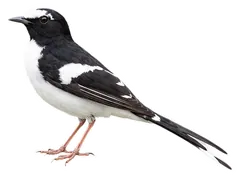 Black-backed ForktailEnicurus immaculatus
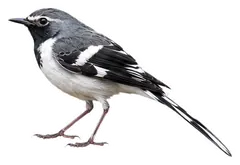 Slaty-backed ForktailEnicurus schistaceus
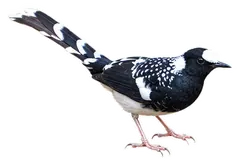 Spotted ForktailEnicurus maculatus
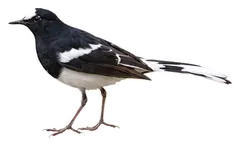 White-crowned ForktailEnicurus leschenaulti
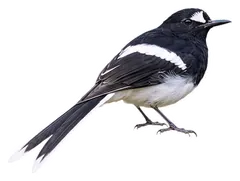 Bornean ForktailEnicurus borneensis
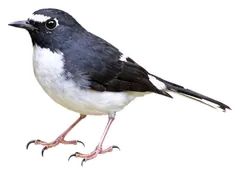 Sunda ForktailEnicurus velatus
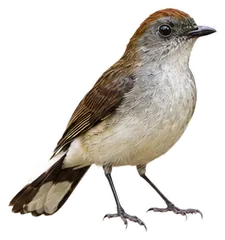 White-tailed AletheAlethe diademata
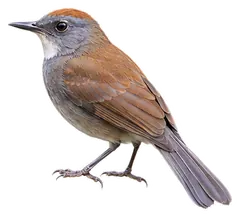 Fire-crested AletheAlethe castanea
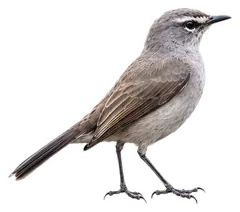 Karoo Scrub RobinTychaedon coryphoeus
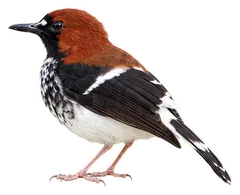
Download illustration
Free to use with credit: “Illustration: Bird Album (birdalbum.com)”. Drawn by AI from a reference photo by Yu Ching Tam. ↗
Heard it but can't see it? Mingji identifies birds by sound and photo, on your phone.
In other languages
- EnglishChestnut-naped Forktail
- 简体中文栗枕燕尾
- 繁體中文栗頸燕尾
- 日本語アカエリエンビシキチョウ
- DeutschRotkopf-Scherenschwanz
- FrançaisÉnicure rousse-cape
- EspañolTorrentero capirrufo
- Portuguêstorrenteiro-de-cabeça-castanha
- ItalianoCodaforcuta nucacastana
- NederlandsRoodkapvorkstaart
- РусскийКрасношапочная вилохвостка
- Svenskakastanjeklyvstjärt
- DanskRødnakket Kløfthale
- Polskiwidłogon łuskowany