 Bird Album
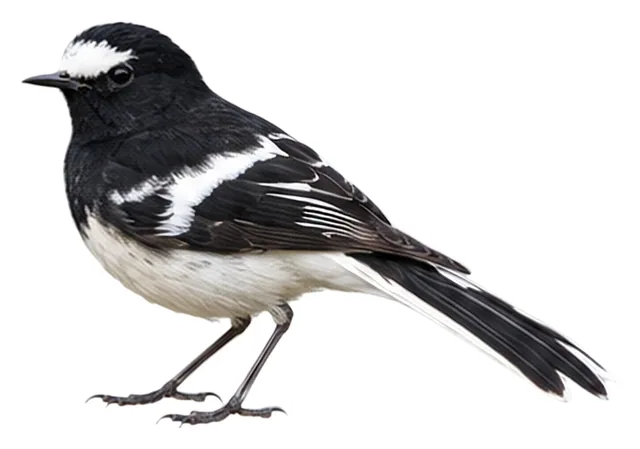
Little Forktail
Enicurus scouleri Vigors, 1832
≈13 cmLength18 gWeight
This small black-and-white bird continually wags its tail while foraging on slippery rocks in mountain streams.
Busiest months: January–February, April–May and November · Most records: China, Bhutan, India
How to identify
Field marks
- Black upperparts and white forehead
- A single white wing-bar extending to the lower back
- Black throat and white belly
- Slightly forked tail with white on the outer tail feathers
Male, female and young
Sexes have similar plumage.
Voice
Usually quiet, occasionally giving a sharp “TzitTzit”.
Where and when it's recorded

Little Forktail has been recorded at 213 of the 8,171 birding hotspots we track, in 6 countries and regions.
Records by month Northern Hemisphere
Where it's recorded most
- Nantou – Xitou Nature Education AreaTaiwan (China)231 records
- Tangjiahe NNRChina120 records
- West Tianmu Mountain NNRChina87 records
More places
- Baihualing [General Area]China86 records
- SattalIndia60 records
- Longcanggou [General Area]China50 records
- Emei Peak NNRChina46 records
- Lingmethang Rd – Namling mid-elevation forestBhutan40 records
- Langtang National Park - Syabru to Lama HotelNepal32 records
- Corbett NPIndia31 records
Countries and regions with the most records
eBird records via GBIF up to 2024-12-31. A record means someone listed it; more records partly mean more birders, not more birds.
About
The little forktail (Enicurus scouleri) is a species of bird in the family Muscicapidae. The specific name commemorates Dr. John Scouler of Glasgow.
Excerpt from Wikipedia, CC BY-SA 4.0 · authors · Read more on Wikipedia
Questions
How big is the Little Forktail?
The Little Forktail is about ≈13 cm long and weighs around 18 g.
Where does the Little Forktail live?
Its breeding range: Oriental: Himalayas to eastern China, northwestern Vietnam and Taiwan (China). It is most often recorded in China, Bhutan and India.
When is the best time to see the Little Forktail?
At the hotspots we track, it is recorded most in January, February, April, May and November (Northern Hemisphere).
Is the Little Forktail endangered?
The IUCN Red List classifies the Little Forktail as Least Concern.
What does the Little Forktail eat?
Main food: Fish, shrimp & shellfish.
What family is the Little Forktail in?
It belongs to the family Chats, Old World Flycatchers (Muscicapidae), order Passerines (Passeriformes).
At a glance
- Length
- ≈13 cm
- Weight
- 18 g
- Habitat
- Rivers & streams
- Diet
- Fish, shrimp & shellfish
- Lifestyle
- Active on the ground
- Migration
- Resident (barely migrates)
- Conservation
- Least Concern
More measurements
- Wing
- 72 mm
- Tail
- 45 mm
- Bill
- 13 mm
- Tarsus
- 24 mm
Averages from the AVONET dataset; length from field guides where available.
Range
Oriental: Himalayas to eastern China, northwestern Vietnam and Taiwan (China)
Breeding range, IOC World Bird List 15.2
Classification
- Order
- Passerines Passeriformes
- Family
- Chats, Old World Flycatchers Muscicapidae
- Genus
- Enicurus
Other birds in the genus Enicurus
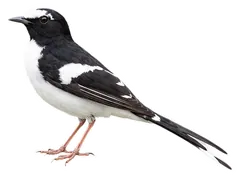 Black-backed ForktailEnicurus immaculatus
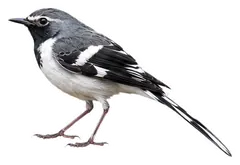 Slaty-backed ForktailEnicurus schistaceus
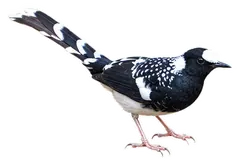 Spotted ForktailEnicurus maculatus
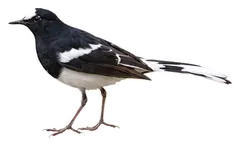 White-crowned ForktailEnicurus leschenaulti
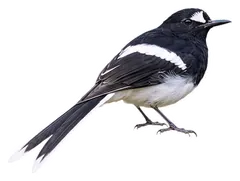 Bornean ForktailEnicurus borneensis
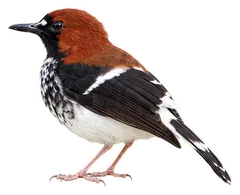 Chestnut-naped ForktailEnicurus ruficapillus
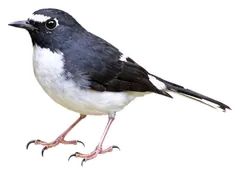 Sunda ForktailEnicurus velatus
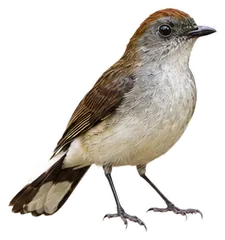 White-tailed AletheAlethe diademata
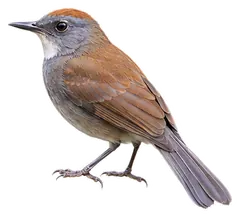 Fire-crested AletheAlethe castanea
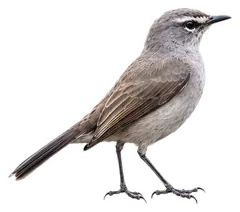 Karoo Scrub RobinTychaedon coryphoeus
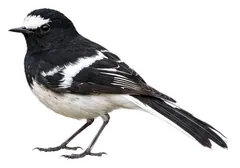
Download illustration
Free to use with credit: “Illustration: Bird Album (birdalbum.com)”. Drawn by AI from a reference photo by Robert tdc. ↗

Heard it but can't see it? Mingji identifies birds by sound and photo, on your phone.