 Bird Album
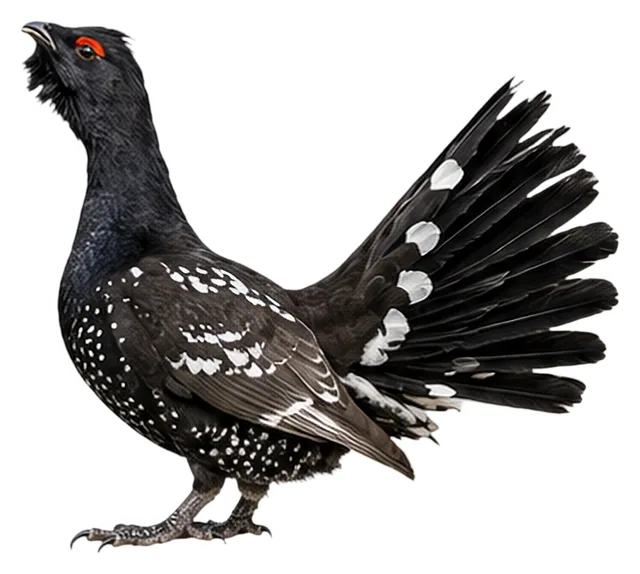
Black-billed Capercaillie
Tetrao urogalloides Middendorff, 1853
60 cmLength2.8 kgWeight
The male has mainly black body feathers, a metallic blue-green breast, and white patches on the wings and underparts.
Busiest months: May · Most records: Mongolia, China
Looks like Western Capercaillie
How to identify
Field marks
- Bill black, giving the species its name
- Male has a glossy blue-black head and neck and a metallic blue-green breast
- White spots on the tail coverts, wing coverts and flanks
- Male raises and fans its broad black tail during display
Male, female and young
Female has a creamy-white throat with fine black spots and rusty upperparts with brown barring; grayer overall than female Western Capercaillie.
Voice
Repeated castanet-like clicks grow progressively faster and can be heard from 1.5 km away.
Similar species
Where and when it's recorded

Black-billed Capercaillie has been recorded at 3 of the 8,171 birding hotspots we track, in 2 countries and regions.
Records by month Northern Hemisphere
To protect this bird from disturbance, we don't list exact sites.
Countries and regions with the most records
eBird records via GBIF up to 2024-12-31. A record means someone listed it; more records partly mean more birders, not more birds.
About
The black-billed capercaillie (Tetrao urogalloides) is a large grouse species closely related to the more widespread western capercaillie. It is a sedentary species that breeds in the larch taiga forests of eastern Siberia as well as parts of northern Mongolia and China.
Excerpt from Wikipedia, CC BY-SA 4.0 · authors · Read more on Wikipedia
Questions
How big is the Black-billed Capercaillie?
The Black-billed Capercaillie is about 60 cm long and weighs around 2.8 kg.
Where does the Black-billed Capercaillie live?
Its breeding range: Palearctic: northeastern. It is most often recorded in Mongolia and China.
When is the best time to see the Black-billed Capercaillie?
At the hotspots we track, it is recorded most in May (Northern Hemisphere).
Is the Black-billed Capercaillie endangered?
The IUCN Red List classifies the Black-billed Capercaillie as Least Concern.
What does the Black-billed Capercaillie eat?
Main food: Land plants.
What family is the Black-billed Capercaillie in?
It belongs to the family Pheasants & Allies (Phasianidae), order Galliformes.
At a glance
- Length
- 60 cm
- Weight
- 2.8 kg
- Habitat
- Forest
- Diet
- Land plants
- Lifestyle
- Varied
- Migration
- Resident (barely migrates)
- Conservation
- Least Concern
More measurements
- Wing
- 341 mm
- Tail
- 261 mm
- Bill
- 46 mm
- Tarsus
- 60 mm
Averages from the AVONET dataset; length from field guides where available.
Range
Palearctic: northeastern
Breeding range, IOC World Bird List 15.2
Classification
- Order
- Galliformes
- Family
- Pheasants & Allies Phasianidae
- Genus
- Tetrao
Other birds in the genus Tetrao
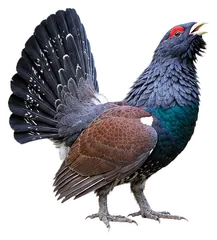 Western CapercaillieTetrao urogallus
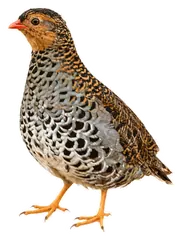 Udzungwa Forest PartridgeXenoperdix udzungwensis
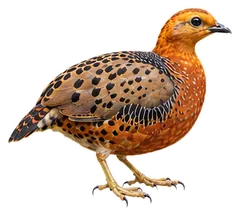 Ferruginous PartridgeCaloperdix oculeus
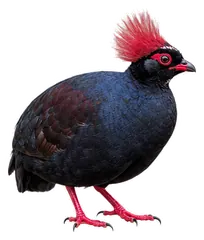 Crested PartridgeRollulus rouloul
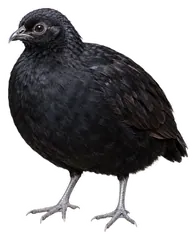 Black PartridgeMelanoperdix niger
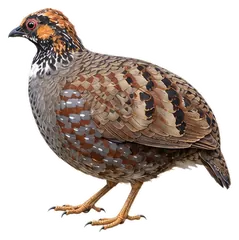 Hill PartridgeArborophila torqueola
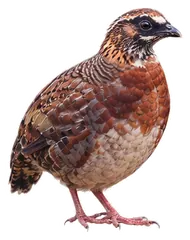 Sichuan PartridgeArborophila rufipectus
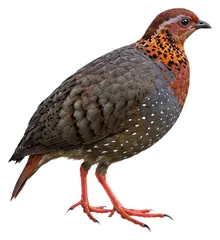 Chestnut-breasted PartridgeArborophila mandellii
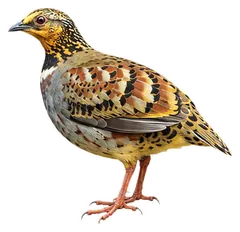 White-necklaced PartridgeArborophila gingica
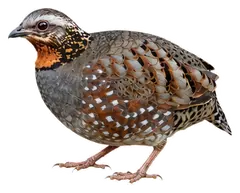 Rufous-throated PartridgeArborophila rufogularis
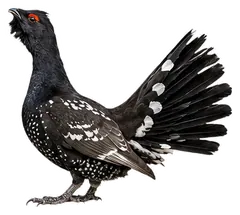
Download illustration
Free to use with credit: “Illustration: Bird Album (birdalbum.com)”. Drawn by AI from a reference photo by Benny Cottele. ↗
Heard it but can't see it? Mingji identifies birds by sound and photo, on your phone.
In other languages
- EnglishBlack-billed Capercaillie
- 简体中文黑嘴松鸡
- 繁體中文黑嘴松雞
- 日本語オオライチョウ
- DeutschSteinauerhuhn
- FrançaisTétras à bec noir
- EspañolUrogallo piquinegro
- Portuguêstetraz-de-bico-preto
- ItalianoGallo cedrone becconero
- NederlandsRotsauerhoen
- РусскийКаменный глухарь
- Svenskasvartnäbbad tjäder
- DanskSortnæbbet Tjur
- Polskigłuszec czarnodzioby