 Bird Album
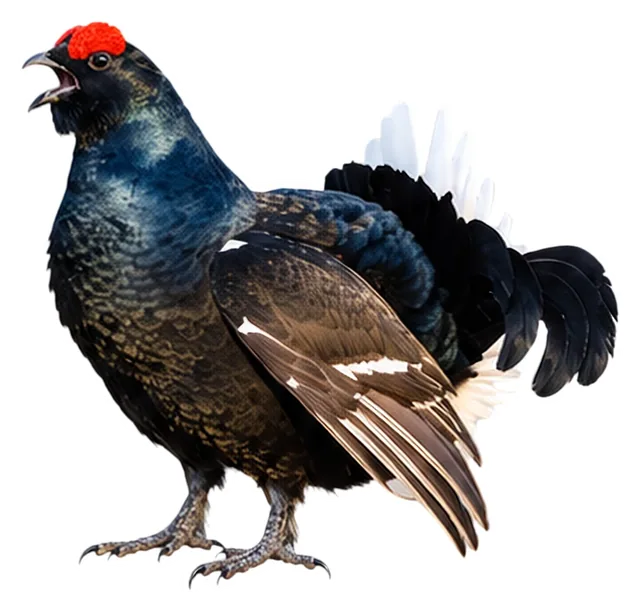
Black Grouse
Lyrurus tetrix (Linnaeus, 1758)
60 cmLength72 cmWingspan1.1 kgWeight
The male has black feathers with a blue sheen and tail feathers that curl out to either side into a lyre shape.
Busiest months: April–May · Most records: Finland, Russia, China
How to identify
Field marks
- Male has a black neck and back with a deep blue sheen
- Male has a white wing stripe and white undertail-coverts
- Male has red bare skin above the eye
- Male has long outer tail feathers that curl outwards
Male, female and young
Male mainly black; female gray-brown, with more cryptic plumage.
Voice
Male's courtship song is a low series of bubbling, cooing notes.
Where and when it's recorded

Black Grouse has been recorded at 55 of the 8,171 birding hotspots we track, in 14 countries and regions.
Records by month Northern Hemisphere
To protect this bird from disturbance, we don't list exact sites.
Countries and regions with the most records
eBird records via GBIF up to 2024-12-31. A record means someone listed it; more records partly mean more birders, not more birds.
About
The black grouse (Lyrurus tetrix), also known as northern black grouse, Eurasian black grouse, blackgame or blackcock, is a large bird in the grouse tribe. It is a sedentary species, spanning across the Palearctic in moorland and steppe habitat when breeding, often near wooded areas. They will spend the winter perched in dense forests, feeding almost exclusively on the needles of conifers.
Excerpt from Wikipedia, CC BY-SA 4.0 · authors · Read more on Wikipedia
Questions
How big is the Black Grouse?
The Black Grouse is about 60 cm long, with a wingspan of 72 cm and weighs around 1.1 kg.
Where does the Black Grouse live?
Its breeding range: Palearctic: northern. It is most often recorded in Finland, Russia and China.
When is the best time to see the Black Grouse?
At the hotspots we track, it is recorded most in April and May (Northern Hemisphere).
Is the Black Grouse endangered?
The IUCN Red List classifies the Black Grouse as Least Concern.
What does the Black Grouse eat?
Main food: Land plants.
What family is the Black Grouse in?
It belongs to the family Pheasants & Allies (Phasianidae), order Galliformes.
At a glance
- Length
- 60 cm
- Wingspan
- 72 cm
- Weight
- 1.1 kg
- Habitat
- Forest
- Diet
- Land plants
- Lifestyle
- Active on the ground
- Migration
- Resident (barely migrates)
- Conservation
- Least Concern
More measurements
- Wing
- 240 mm
- Tail
- 130 mm
- Bill
- 30 mm
- Tarsus
- 47 mm
Averages from the AVONET dataset; length from field guides where available.
Range
Palearctic: northern
Breeding range, IOC World Bird List 15.2
Subspecies · 3
- Lyrurus tetrix baikalensis se Siberia to n Mongolia and nw Manchuria (China)
- Lyrurus tetrix mongolicus e Kyrgyzstan and nw China to e Kazakhstan, sc Siberia and w Mongolia
- Lyrurus tetrix ussuriensis e Siberia and ne China to nw Korean Pen.
Classification
- Order
- Galliformes
- Family
- Pheasants & Allies Phasianidae
- Genus
- Lyrurus
Other birds in the genus Lyrurus
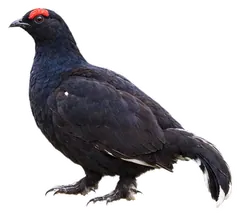 Caucasian GrouseLyrurus mlokosiewiczi
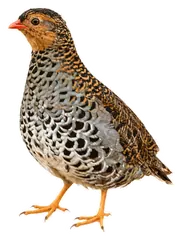 Udzungwa Forest PartridgeXenoperdix udzungwensis
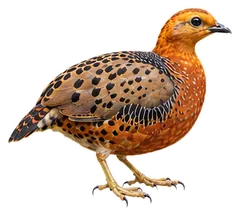 Ferruginous PartridgeCaloperdix oculeus
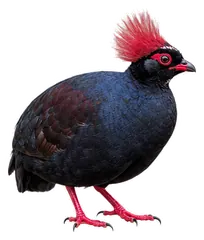 Crested PartridgeRollulus rouloul
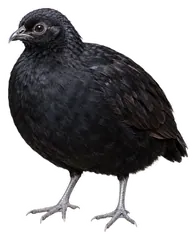 Black PartridgeMelanoperdix niger
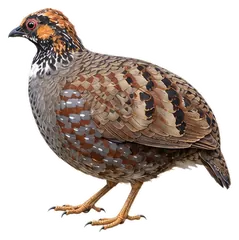 Hill PartridgeArborophila torqueola
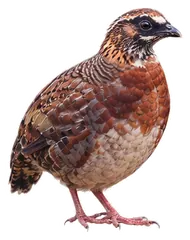 Sichuan PartridgeArborophila rufipectus
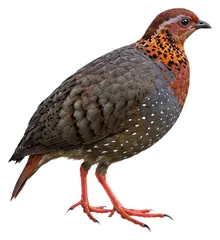 Chestnut-breasted PartridgeArborophila mandellii
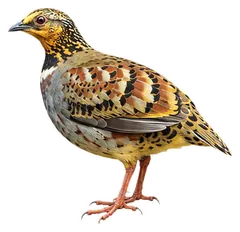 White-necklaced PartridgeArborophila gingica
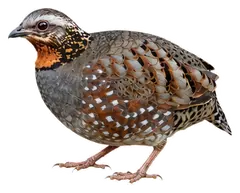 Rufous-throated PartridgeArborophila rufogularis
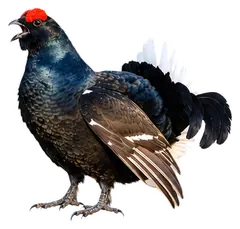
Download illustration
Free to use with credit: “Illustration: Bird Album (birdalbum.com)”. Drawn by AI from a reference photo by Stas Zakharov. ↗
Heard it but can't see it? Mingji identifies birds by sound and photo, on your phone.