 Bird Album
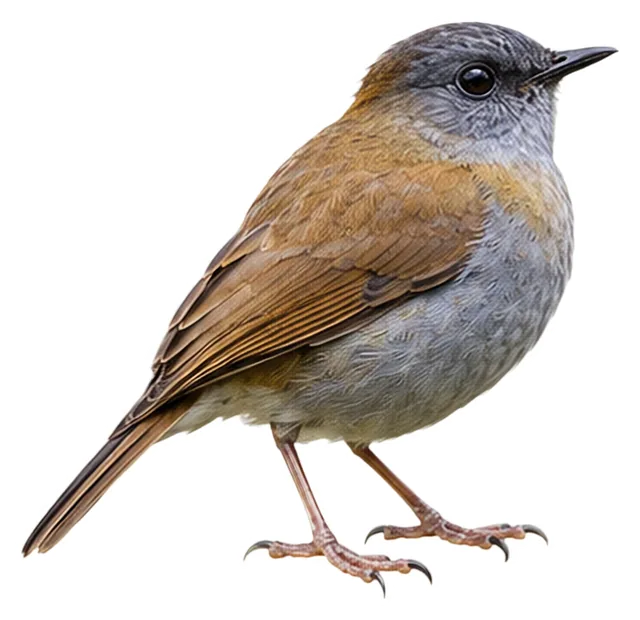
Black-billed Nightingale-Thrush
Catharus gracilirostris Salvin, 1865
21 gWeight
The black-billed nightingale-thrush (Catharus gracilirostris) is a species of bird in the family Turdidae, the thrushes and allies.
Busiest months: January and March · Most records: Costa Rica, Panama
Where and when it's recorded
Busiest months: January and March · Most records: Costa Rica, Panama

Black-billed Nightingale-Thrush has been recorded at 16 of the 8,276 birding hotspots we track, in 2 countries and regions.
Records by month Northern Hemisphere
Where it's recorded most
- Paraiso Quetzal Lodge - Km 70Costa Rica3,661 records
- Savegre HotelCosta Rica1,215 records
- Savegre Mt. Lodge – primary forest trails above lodgeCosta Rica905 records
More places
- San Gerardo de DotaCosta Rica759 records
- Savegre Valley – Miriam's RestaurantCosta Rica379 records
- La Paz Waterfall GardensCosta Rica30 records
- Finca LéridaPanama19 records
- Cloudbridge Nature ReserveCosta Rica19 records
- Pipeline TrailPanama15 records
- Mount Totumas Cloud Forest ReservePanama8 records
Countries and regions with the most records
eBird records via GBIF up to 2024-12-31. A record means someone listed it; more records partly mean more birders, not more birds.
About
The black-billed nightingale-thrush (Catharus gracilirostris) is a species of bird in the family Turdidae, the thrushes and allies. It is found in Costa Rica and Panama.
Excerpt from Wikipedia, CC BY-SA 4.0 · authors · Read more on Wikipedia
Questions
How big is the Black-billed Nightingale-Thrush?
The Black-billed Nightingale-Thrush weighs around 21 g.
Where does the Black-billed Nightingale-Thrush live?
Its breeding range: Middle America: Costa Rica and Panama. It is most often recorded in Costa Rica and Panama.
When is the best time to see the Black-billed Nightingale-Thrush?
At the hotspots we track, it is recorded most in January and March (Northern Hemisphere).
Is the Black-billed Nightingale-Thrush endangered?
The IUCN Red List classifies the Black-billed Nightingale-Thrush as Least Concern.
What does the Black-billed Nightingale-Thrush eat?
Main food: Insects & other invertebrates.
What family is the Black-billed Nightingale-Thrush in?
It belongs to the family Thrushes (Turdidae), order Passerines (Passeriformes).
At a glance
- Weight
- 21 g
- Habitat
- Forest
- Diet
- Insects & other invertebrates
- Lifestyle
- Perches in trees
- Migration
- Resident (barely migrates)
- Conservation
- Least Concern
More measurements
- Wing
- 76 mm
- Tail
- 64 mm
- Bill
- 15 mm
- Tarsus
- 31 mm
Averages from the AVONET dataset; length from field guides where available.
Range
Middle America: Costa Rica and Panama
Breeding range, IOC World Bird List 15.2
Classification
- Order
- Passerines Passeriformes
- Family
- Thrushes Turdidae
- Genus
- Catharus
Other birds in the genus Catharus
 Yellow-throated Nightingale-ThrushCatharus dryas
 Speckled Nightingale-ThrushCatharus maculatus
 Orange-billed Nightingale-ThrushCatharus aurantiirostris
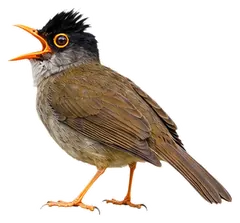 Black-headed Nightingale-ThrushCatharus mexicanus
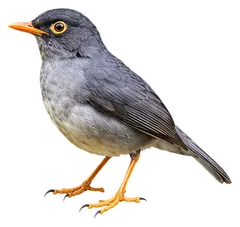 Slaty-backed Nightingale-ThrushCatharus fuscater
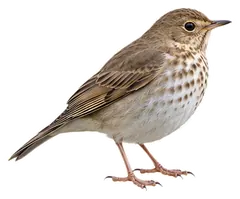 Swainson's ThrushCatharus ustulatus
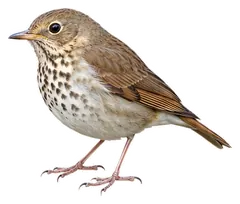 Hermit ThrushCatharus guttatus
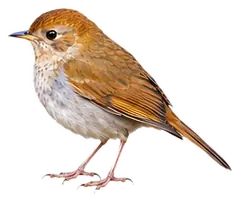 Russet Nightingale-ThrushCatharus occidentalis
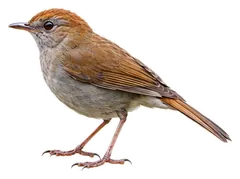 Ruddy-capped Nightingale-ThrushCatharus frantzii
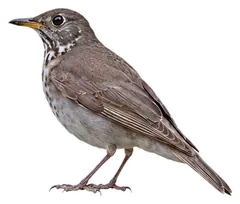 Grey-cheeked ThrushCatharus minimus
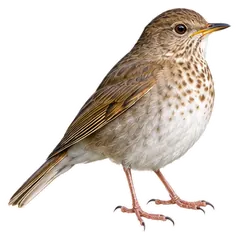 Bicknell's ThrushCatharus bicknelli
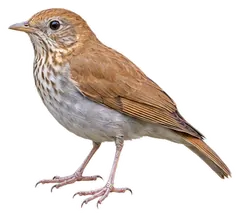 VeeryCatharus fuscescens
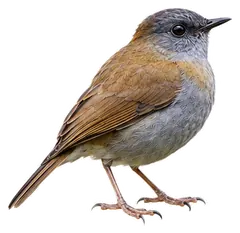
Download illustration
Free to use with credit: “Illustration: Bird Album (birdalbum.com)”. Drawn by AI from a reference photo by Carmelo López Abad. ↗
Heard it but can't see it? Mingji identifies birds by sound and photo, on your phone.
In other languages
- EnglishBlack-billed Nightingale-Thrush
- 简体中文黑嘴夜鸫
- 繁體中文黑嘴夜鶇
- 日本語ハシグロチャツグミ
- DeutschGraukehl-Musendrossel
- FrançaisGrive à bec noir
- EspañolZorzalito piquinegro
- Portuguêstordo-de-bico-preto
- ItalianoTordo usignolo becconero
- NederlandsGrijskeeldwerglijster
- РусскийСероголовый соловьиный дрозд
- Svenskasvartnäbbad skogstrast
- DanskSortnæbbet Skovdrossel
- Polskidrozdek cienkodzioby