 Bird Album
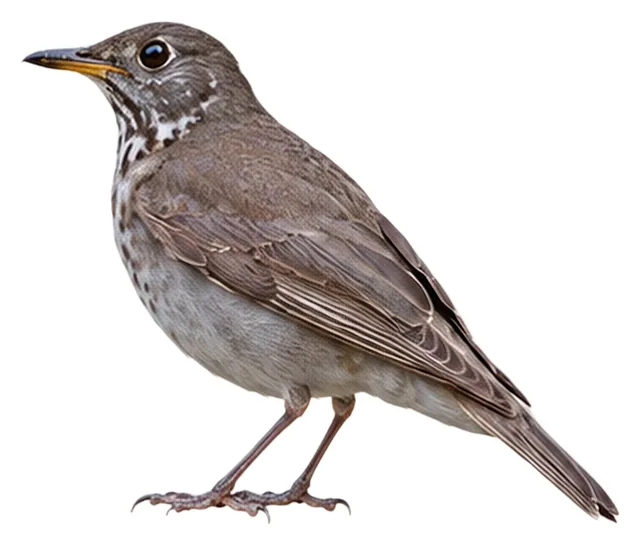
Grey-cheeked Thrush
Catharus minimus (Lafresnaye, 1848)
32 gWeight
The gray-cheeked thrush (Catharus minimus) is a medium-sized thrush.
Busiest months: May · Most records: United States, Canada, Colombia
Where and when it's recorded
Busiest months: May · Most records: United States, Canada, Colombia

Grey-cheeked Thrush has been recorded at 783 of the 8,276 birding hotspots we track, in 33 countries and regions.
Records by month Northern Hemisphere
Where it's recorded most
- Magee Marsh – BoardwalkUnited States5,384 records
- Sabine WoodsUnited States3,650 records
- Montrose Point Bird Sanctuary, Lincoln Park, ChicagoUnited States3,615 records
More places
- Point Pelee National ParkCanada3,183 records
- High Island – Smith Oaks SanctuaryUnited States2,588 records
- High Island – Boy Scout WoodsUnited States2,218 records
- South Padre Is. – WBC/Conv. Center/Laguna Madre TrailUnited States1,330 records
- Central ParkUnited States1,322 records
- GambellUnited States1,315 records
- Fort De Soto ParkUnited States1,185 records
Countries and regions with the most records
eBird records via GBIF up to 2024-12-31. A record means someone listed it; more records partly mean more birders, not more birds.
About
The gray-cheeked thrush (Catharus minimus) is a medium-sized thrush. This species is 15–17 cm (5.9–6.7 in) in length, and has the white-dark-white underwing pattern characteristic of Catharus thrushes. It is a member of a close-knit group of migrant species together with the veery and Bicknell's thrush; it forms a cryptic species pair with the latter.
Excerpt from Wikipedia, CC BY-SA 4.0 · authors · Read more on Wikipedia
Questions
How big is the Grey-cheeked Thrush?
The Grey-cheeked Thrush weighs around 32 g.
Where does the Grey-cheeked Thrush live?
Its breeding range: Palearctic, North America: northeastern Siberia and northern North America. It is most often recorded in United States, Canada and Colombia.
When is the best time to see the Grey-cheeked Thrush?
At the hotspots we track, it is recorded most in May (Northern Hemisphere).
Is the Grey-cheeked Thrush endangered?
The IUCN Red List classifies the Grey-cheeked Thrush as Least Concern.
What does the Grey-cheeked Thrush eat?
Main food: Insects & other invertebrates.
What family is the Grey-cheeked Thrush in?
It belongs to the family Thrushes (Turdidae), order Passerines (Passeriformes).
At a glance
- Weight
- 32 g
- Habitat
- Forest
- Diet
- Insects & other invertebrates
- Lifestyle
- Active on the ground
- Migration
- Migratory
- Conservation
- Least Concern
More measurements
- Wing
- 101 mm
- Tail
- 69 mm
- Bill
- 16 mm
- Tarsus
- 30 mm
Averages from the AVONET dataset; length from field guides where available.
Range
Palearctic, North America: northeastern Siberia and northern North America
Breeding range, IOC World Bird List 15.2
Classification
- Order
- Passerines Passeriformes
- Family
- Thrushes Turdidae
- Genus
- Catharus
Other birds in the genus Catharus
 Yellow-throated Nightingale-ThrushCatharus dryas
 Speckled Nightingale-ThrushCatharus maculatus
 Orange-billed Nightingale-ThrushCatharus aurantiirostris
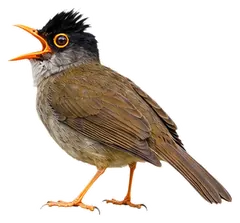 Black-headed Nightingale-ThrushCatharus mexicanus
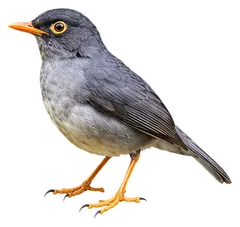 Slaty-backed Nightingale-ThrushCatharus fuscater
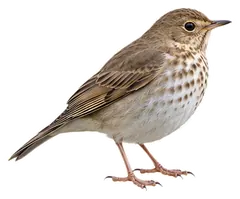 Swainson's ThrushCatharus ustulatus
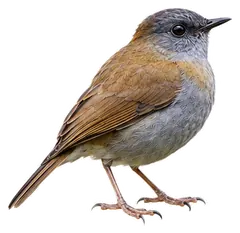 Black-billed Nightingale-ThrushCatharus gracilirostris
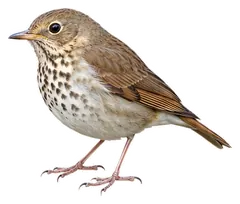 Hermit ThrushCatharus guttatus
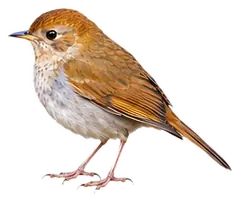 Russet Nightingale-ThrushCatharus occidentalis
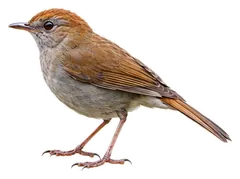 Ruddy-capped Nightingale-ThrushCatharus frantzii
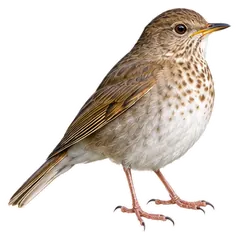 Bicknell's ThrushCatharus bicknelli
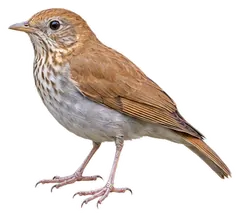 VeeryCatharus fuscescens
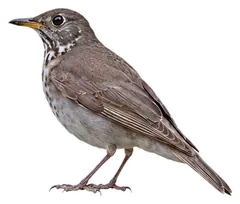
Download illustration
Free to use with credit: “Illustration: Bird Album (birdalbum.com)”. Drawn by AI from a reference photo by Mike Hannisian. ↗
Heard it but can't see it? Mingji identifies birds by sound and photo, on your phone.
In other languages
- EnglishGrey-cheeked Thrush
- 简体中文灰颊夜鸫
- 繁體中文灰頰夜鶇
- 日本語ハイイロチャツグミ
- DeutschGrauwangen-Musendrossel
- FrançaisGrive à joues grises
- EspañolZorzalito carigrís
- Portuguêstordo-de-faces-cinzentas
- ItalianoTordo di Baird
- NederlandsGrijswangdwerglijster
- РусскийМалый дрозд
- Svenskagråkindad skogstrast
- DanskGråkindet Skovdrossel
- Polskidrozdek szarolicy