 Bird Album
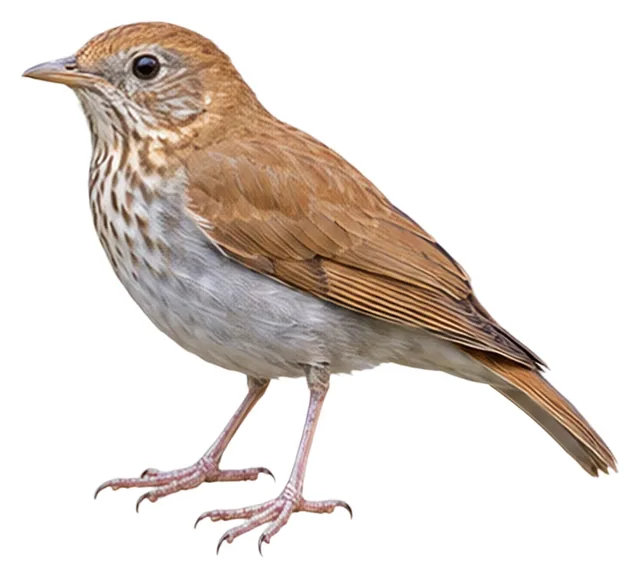
Veery
Catharus fuscescens (Stephens, 1817)
16–20 cmLength32 gWeight
Busiest months: May · Most records: United States, Canada, Panama
Where and when it's recorded

Veery has been recorded at 719 of the 8,171 birding hotspots we track, in 27 countries and regions.
Records by month Northern Hemisphere
Where it's recorded most
- Point Pelee National ParkCanada10,196 records
- Magee Marsh – BoardwalkUnited States10,162 records
- Central ParkUnited States7,086 records
More places
- Prospect ParkUnited States6,323 records
- Montrose Point Bird Sanctuary, Lincoln Park, ChicagoUnited States5,757 records
- RNF du Cap-TourmenteCanada4,916 records
- Central Park – The RambleUnited States3,887 records
- RN du Marais Léon-ProvancherCanada3,668 records
- Sabine WoodsUnited States3,499 records
- White Memorial Foundation – Little PondUnited States3,319 records
Countries and regions with the most records
eBird records via GBIF up to 2024-12-31. A record means someone listed it; more records partly mean more birders, not more birds.
About
The veery (Catharus fuscescens) is a small North American thrush species, a member of a group of closely related and similar species in the genus Catharus, also including the gray-cheeked thrush (C. minimus), Bicknell's thrush (C. bicknelli), Swainson's thrush (C. ustulatus), and hermit thrush (C. guttatus). Alternate names for this species include Wilson's thrush (named so after Alexander Wilson) and tawny thrush.
Excerpt from Wikipedia, CC BY-SA 4.0 · authors · Read more on Wikipedia
Questions
How big is the Veery?
The Veery is about 16–20 cm long and weighs around 32 g.
Where does the Veery live?
Its breeding range: North America: widespread. It is most often recorded in United States, Canada and Panama.
When is the best time to see the Veery?
At the hotspots we track, it is recorded most in May (Northern Hemisphere).
Is the Veery endangered?
The IUCN Red List classifies the Veery as Least Concern.
What does the Veery eat?
Main food: Insects & other invertebrates.
What family is the Veery in?
It belongs to the family Thrushes (Turdidae), order Passerines (Passeriformes).
At a glance
- Length
- 16–20 cm
- Weight
- 32 g
- Habitat
- Forest
- Diet
- Insects & other invertebrates
- Lifestyle
- Active on the ground
- Migration
- Migratory
- Conservation
- Least Concern
More measurements
- Wing
- 97 mm
- Tail
- 69 mm
- Bill
- 18 mm
- Tarsus
- 29 mm
Averages from the AVONET dataset; length from field guides where available.
Range
North America: widespread
Breeding range, IOC World Bird List 15.2
Classification
- Order
- Passerines Passeriformes
- Family
- Thrushes Turdidae
- Genus
- Catharus
Other birds in the genus Catharus
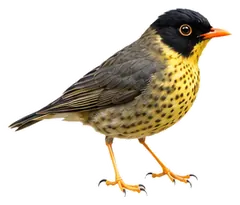 Yellow-throated Nightingale-ThrushCatharus dryas
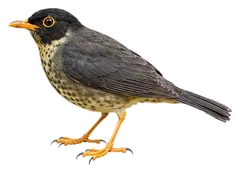 Speckled Nightingale-ThrushCatharus maculatus
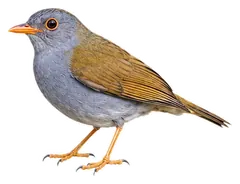 Orange-billed Nightingale-ThrushCatharus aurantiirostris
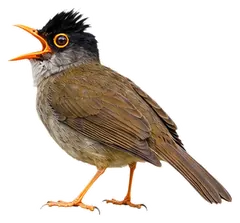 Black-headed Nightingale-ThrushCatharus mexicanus
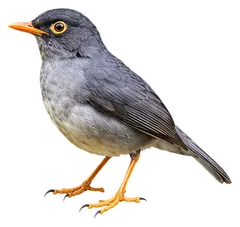 Slaty-backed Nightingale-ThrushCatharus fuscater
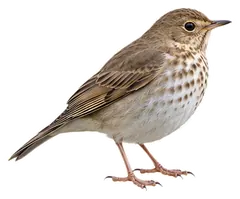 Swainson's ThrushCatharus ustulatus
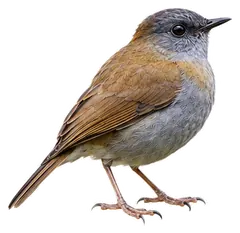 Black-billed Nightingale-ThrushCatharus gracilirostris
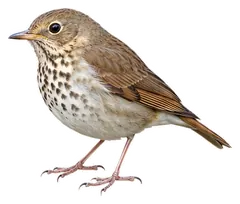 Hermit ThrushCatharus guttatus
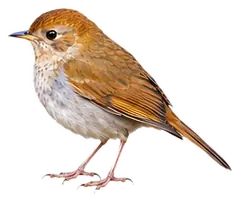 Russet Nightingale-ThrushCatharus occidentalis
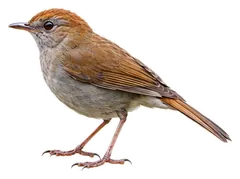 Ruddy-capped Nightingale-ThrushCatharus frantzii
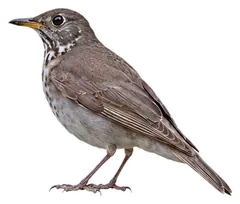 Grey-cheeked ThrushCatharus minimus
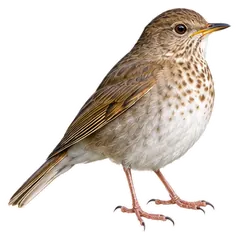 Bicknell's ThrushCatharus bicknelli
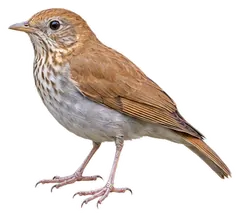
Download illustration
Free to use with credit: “Illustration: Bird Album (birdalbum.com)”. Drawn by AI from a reference photo by Jacob Collison. ↗
Heard it but can't see it? Mingji identifies birds by sound and photo, on your phone.