 Bird Album
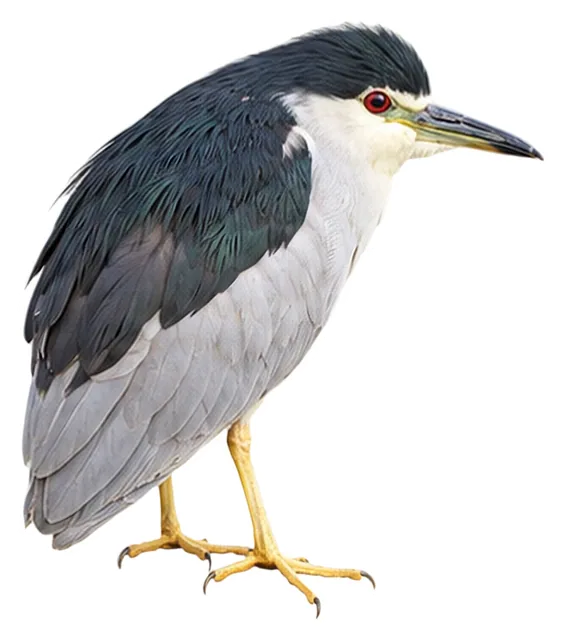
Black-crowned Night Heron
Nycticorax nycticorax (Linnaeus, 1758)
≈70 cmLength106 cmWingspan810 gWeight
This stocky heron has red eyes and several slender white feathers projecting from the back of its head.
Busiest months: May · Most records: United States, China, Canada
How to identify
Field marks
- Head and occiput dark blue-gray with a slight metallic gloss
- Usually 2–4 slender white feathers at the back of the head
- Blood-red iris, black bill and yellow legs and feet
- Black back, gray wings and white underparts
Male, female and young
Sexes similar in appearance, with the male slightly larger; immatures have gray-brown upperparts and scattered white spots on the wings.
Voice
Noisy in breeding colonies, with calls often rendered as “quok” or “woc”.
Where and when it's recorded
Busiest months: May · Most records: United States, China, Canada

Black-crowned Night Heron has been recorded at 4,816 of the 8,276 birding hotspots we track, in 184 countries and regions.
Records by month Northern Hemisphere
Where it's recorded most
- Riparian Preserve at Gilbert Water RanchUnited States15,985 records
- IRWD San Joaquin Marsh & Wildlife Sanctuary, IrvineUnited States12,448 records
- Estero Llano Grande SP WBCUnited States12,401 records
More places
- Edwin B. Forsythe NWRUnited States9,900 records
- Reifel Bird SanctuaryCanada9,797 records
- Las Gallinas Valley Sanitary DistrictUnited States8,693 records
- Arcata Marsh and Wildlife SanctuaryUnited States8,481 records
- Sweetwater Wetlands ParkUnited States7,573 records
- Lake Apopka Wildlife DriveUnited States7,427 records
- Central ParkUnited States7,068 records
Countries and regions with the most records
eBird records via GBIF up to 2024-12-31. A record means someone listed it; more records partly mean more birders, not more birds.
About
The black-crowned night heron (Nycticorax nycticorax) or black-capped night heron, commonly shortened to just night heron in Eurasia, is a medium-sized heron found throughout a large part of the world, including parts of Africa, Asia, Europe, and North and South America. In Australasia it is replaced by the closely related Nankeen night heron (N. caledonicus), with which it has hybridised in the area of contact.
Excerpt from Wikipedia, CC BY-SA 4.0 · authors · Read more on Wikipedia
Questions
How big is the Black-crowned Night Heron?
The Black-crowned Night Heron is about ≈70 cm long, with a wingspan of 106 cm and weighs around 810 g.
Where does the Black-crowned Night Heron live?
Its breeding range: Worldwide: except Australasia. It is most often recorded in United States, China and Canada.
When is the best time to see the Black-crowned Night Heron?
At the hotspots we track, it is recorded most in May (Northern Hemisphere).
Is the Black-crowned Night Heron endangered?
The IUCN Red List classifies the Black-crowned Night Heron as Least Concern.
What does the Black-crowned Night Heron eat?
Main food: Fish, shrimp & shellfish.
What family is the Black-crowned Night Heron in?
It belongs to the family Herons, Bitterns (Ardeidae), order Pelecaniformes.
At a glance
- Length
- ≈70 cm
- Wingspan
- 106 cm
- Weight
- 810 g
- Habitat
- Wetland
- Diet
- Fish, shrimp & shellfish
- Lifestyle
- Active on the ground
- Migration
- Migratory
- Conservation
- Least Concern
More measurements
- Wing
- 286 mm
- Tail
- 96 mm
- Bill
- 80 mm
- Tarsus
- 69 mm
Averages from the AVONET dataset; length from field guides where available.
Range
Worldwide: except Australasia
Breeding range, IOC World Bird List 15.2
Classification
- Order
- Pelecaniformes
- Family
- Herons, Bitterns Ardeidae
- Genus
- Nycticorax
Other birds in the genus Nycticorax
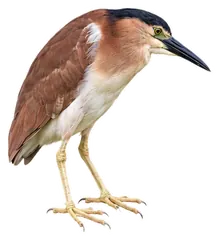 Nankeen Night HeronNycticorax caledonicus
 White-crested Tiger HeronTigriornis leucolopha
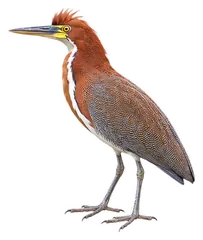 Rufescent Tiger HeronTigrisoma lineatum
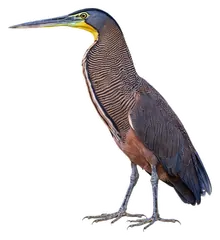 Bare-throated Tiger HeronTigrisoma mexicanum
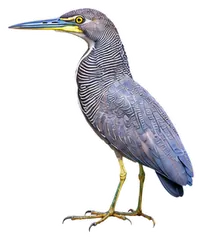 Fasciated Tiger HeronTigrisoma fasciatum
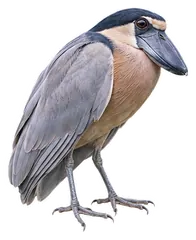 Boat-billed HeronCochlearius cochlearius
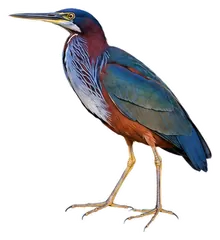 Agami HeronAgamia agami
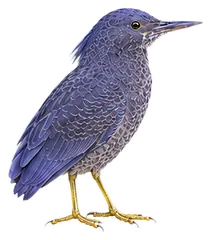 Zigzag HeronZebrilus undulatus
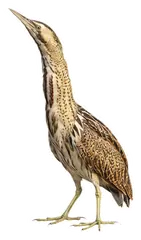 Eurasian BitternBotaurus stellaris
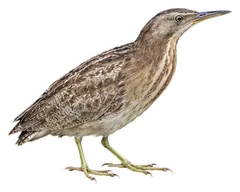 Australasian BitternBotaurus poiciloptilus
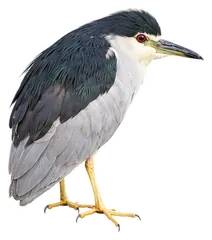
Download illustration
Free to use with credit: “Illustration: Bird Album (birdalbum.com)”. Drawn by AI from a reference photo by Laitche. ↗
Heard it but can't see it? Mingji identifies birds by sound and photo, on your phone.