 Bird Album
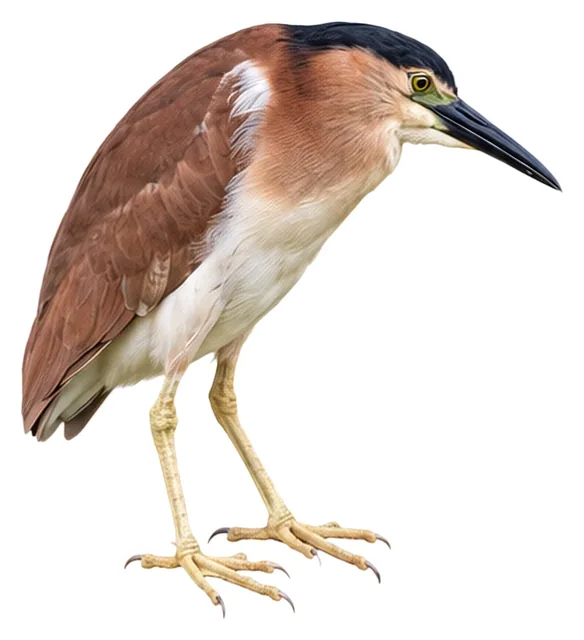
Nankeen Night Heron
Nycticorax caledonicus (Gmelin, JF, 1789)
55–65 cmLength110 cmWingspan856 gWeight
This mainly nocturnal night heron has cinnamon-chestnut upperparts and white underparts.
Busiest months: October–January · Most records: Australia, Philippines, Papua New Guinea
How to identify
Field marks
- Cinnamon-chestnut upperparts and white underparts
- Heavy black bill about as long as the head
- Breeding adults often have 2–3 long white crown feathers
- Rather short legs and feet, which can turn bright pink during courtship
Male, female and young
Sexes similar, with the female slightly smaller; juveniles have a blackish-brown crown and nape with beige stripes.
Voice
Adult males give a “qu-arck” when leaving their roost at night; the bird gives a harsh, low “quok” in flight.
Where and when it's recorded
Busiest months: October–January · Most records: Australia, Philippines, Papua New Guinea

Nankeen Night Heron has been recorded at 342 of the 8,276 birding hotspots we track, in 14 countries and regions.
Records by month Southern Hemisphere
Where it's recorded most
- Royal Botanic Gardens MelbourneAustralia2,158 records
- Herdsman LakeAustralia1,949 records
- Cairns EsplanadeAustralia1,248 records
More places
- Kakadu National Park – Yellow WaterAustralia1,180 records
- Jerrabomberra Wetlands Nature ReserveAustralia1,134 records
- Bundaberg Botanical GardensAustralia1,050 records
- Hasties Swamp National ParkAustralia789 records
- Cairns Esplanade – Southern EndAustralia703 records
- Fogg Dam Conservation ReserveAustralia691 records
- Royal ParkAustralia657 records
Countries and regions with the most records
eBird records via GBIF up to 2024-12-31. A record means someone listed it; more records partly mean more birders, not more birds.
About
The nankeen night heron (Nycticorax caledonicus) is a heron that belongs to the genus Nycticorax and the family Ardeidae. Due to its distinctive reddish-brown colour, it is also commonly referred to as the rufous night heron. It is primarily nocturnal and is observed in a broad range of habitats, including forests, meadows, shores, reefs, marshes, grasslands, and swamps.
Excerpt from Wikipedia, CC BY-SA 4.0 · authors · Read more on Wikipedia
Questions
How big is the Nankeen Night Heron?
The Nankeen Night Heron is about 55–65 cm long, with a wingspan of 110 cm and weighs around 856 g.
Where does the Nankeen Night Heron live?
Its breeding range: Australasia: widespread. It is most often recorded in Australia, Philippines and Papua New Guinea.
When is the best time to see the Nankeen Night Heron?
At the hotspots we track, it is recorded most in January, October, November and December (Southern Hemisphere).
Is the Nankeen Night Heron endangered?
The IUCN Red List classifies the Nankeen Night Heron as Least Concern.
What does the Nankeen Night Heron eat?
Main food: Fish, shrimp & shellfish.
What family is the Nankeen Night Heron in?
It belongs to the family Herons, Bitterns (Ardeidae), order Pelecaniformes.
At a glance
- Length
- 55–65 cm
- Wingspan
- 110 cm
- Weight
- 856 g
- Habitat
- Wetland
- Diet
- Fish, shrimp & shellfish
- Lifestyle
- Active on the ground
- Migration
- Partial migrant
- Conservation
- Least Concern
More measurements
- Wing
- 300 mm
- Tail
- 111 mm
- Bill
- 82 mm
- Tarsus
- 84 mm
Averages from the AVONET dataset; length from field guides where available.
Range
Australasia: widespread
Breeding range, IOC World Bird List 15.2
Classification
- Order
- Pelecaniformes
- Family
- Herons, Bitterns Ardeidae
- Genus
- Nycticorax
Other birds in the genus Nycticorax
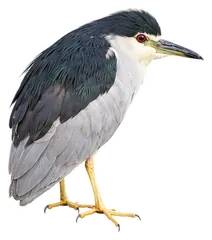 Black-crowned Night HeronNycticorax nycticorax
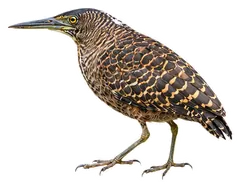 White-crested Tiger HeronTigriornis leucolopha
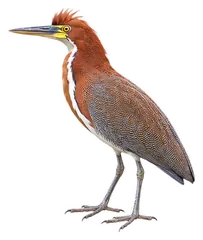 Rufescent Tiger HeronTigrisoma lineatum
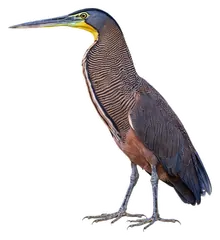 Bare-throated Tiger HeronTigrisoma mexicanum
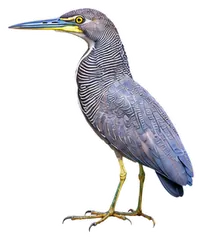 Fasciated Tiger HeronTigrisoma fasciatum
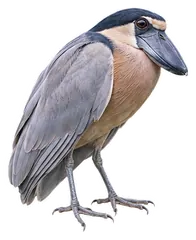 Boat-billed HeronCochlearius cochlearius
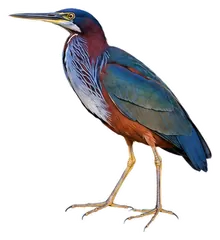 Agami HeronAgamia agami
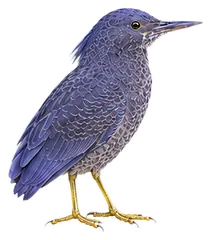 Zigzag HeronZebrilus undulatus
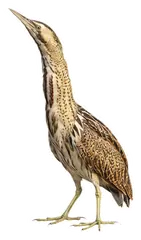 Eurasian BitternBotaurus stellaris
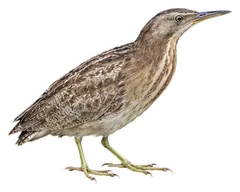 Australasian BitternBotaurus poiciloptilus
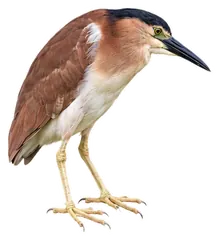
Download illustration
Free to use with credit: “Illustration: Bird Album (birdalbum.com)”. Drawn by AI from a reference photo by Ian Becker. ↗
Heard it but can't see it? Mingji identifies birds by sound and photo, on your phone.