 Bird Album
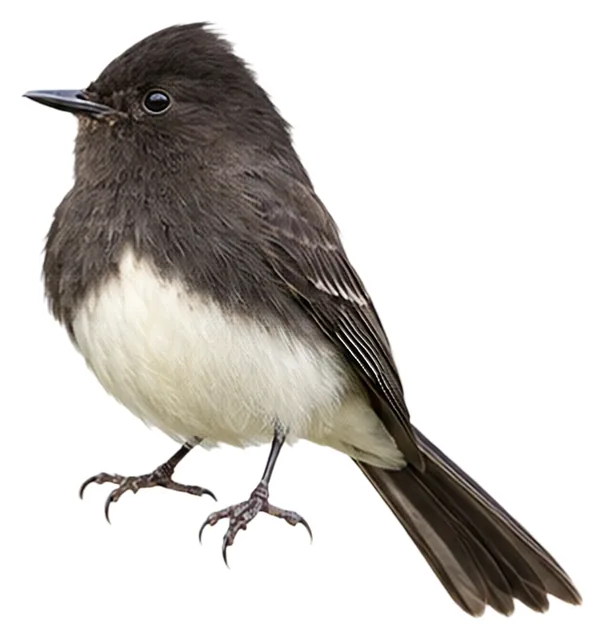
Black Phoebe
Sayornis nigricans (Swainson, 1827)
16 cmLength19 gWeight
The black phoebe (Sayornis nigricans) is a passerine bird in the tyrant-flycatcher family.
Busiest months: January and October–November · Most records: United States, Colombia, Costa Rica
Where and when it's recorded

Black Phoebe has been recorded at 663 of the 8,276 birding hotspots we track, in 16 countries and regions.
Records by month Northern Hemisphere
Where it's recorded most
- Sweetwater WetlandsUnited States20,555 records
- Riparian Preserve at Gilbert Water RanchUnited States19,122 records
- IRWD San Joaquin Marsh & Wildlife Sanctuary, IrvineUnited States17,658 records
More places
- Frank G. Bonelli RP/Puddingstone Reservoir and vicinityUnited States12,230 records
- Southeast Farallon IslandUnited States11,354 records
- Madrona MarshUnited States9,684 records
- Rio Grande Nature Center SPUnited States9,657 records
- Las Gallinas Valley Sanitary DistrictUnited States9,596 records
- Arcata Marsh and Wildlife SanctuaryUnited States9,536 records
- Huntington Central Park – EastUnited States8,710 records
Countries and regions with the most records
eBird records via GBIF up to 2024-12-31. A record means someone listed it; more records partly mean more birders, not more birds.
About
The black phoebe (Sayornis nigricans) is a passerine bird in the tyrant-flycatcher family. It breeds from southwest Oregon and California south through Central and South America. It occurs year-round throughout most of its range and migrates less than the other birds in its genus though its northern populations are partially migratory.
Excerpt from Wikipedia, CC BY-SA 4.0 · authors · Read more on Wikipedia
Questions
How big is the Black Phoebe?
The Black Phoebe is about 16 cm long and weighs around 19 g.
Where does the Black Phoebe live?
Its breeding range: North America, Middle America, South America: western USA to northwestern Argentina. It is most often recorded in United States, Colombia and Costa Rica.
When is the best time to see the Black Phoebe?
At the hotspots we track, it is recorded most in January, October and November (Northern Hemisphere).
Is the Black Phoebe endangered?
The IUCN Red List classifies the Black Phoebe as Least Concern.
What does the Black Phoebe eat?
Main food: Insects & other invertebrates.
What family is the Black Phoebe in?
It belongs to the family Tyrant Flycatchers, Calyptura (Tyrannidae), order Passerines (Passeriformes).
At a glance
- Length
- 16 cm
- Weight
- 19 g
- Habitat
- Rocky terrain
- Diet
- Insects & other invertebrates
- Lifestyle
- Perches in trees
- Migration
- Resident (barely migrates)
- Conservation
- Least Concern
More measurements
- Wing
- 86 mm
- Tail
- 77 mm
- Bill
- 18 mm
- Tarsus
- 17 mm
Averages from the AVONET dataset; length from field guides where available.
Range
North America, Middle America, South America: western USA to northwestern Argentina
Breeding range, IOC World Bird List 15.2
Classification
- Order
- Passerines Passeriformes
- Family
- Tyrant Flycatchers, Calyptura Tyrannidae
- Genus
- Sayornis
Other birds in the genus Sayornis
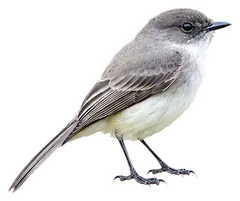 Eastern PhoebeSayornis phoebe
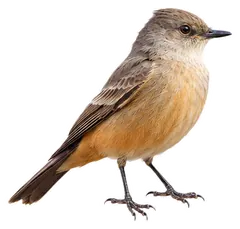 Say's PhoebeSayornis saya
 Grey-headed PipritesPiprites griseiceps
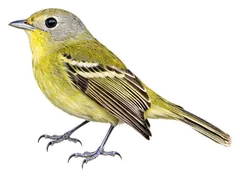 Wing-barred PipritesPiprites chloris
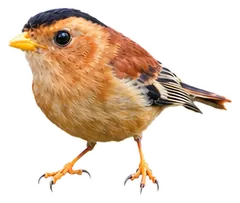 Black-capped PipritesPiprites pileata
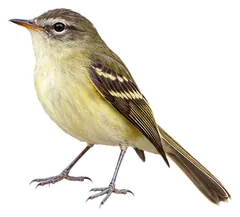 Greenish TyrannuletPhyllomyias virescens
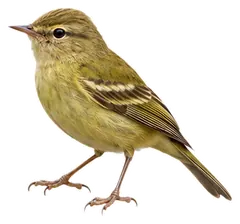 Reiser's TyrannuletPhyllomyias reiseri
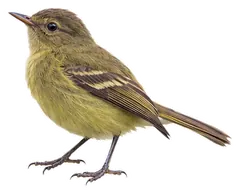 Urich's TyrannuletPhyllomyias urichi
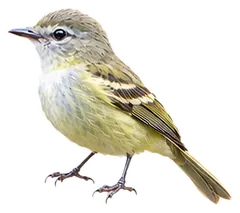 Sclater's TyrannuletPhyllomyias sclateri
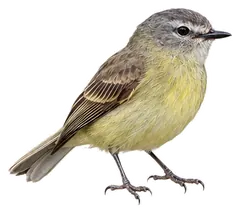 Yungas TyrannuletPhyllomyias weedeni
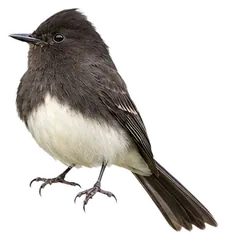
Download illustration
Free to use with credit: “Illustration: Bird Album (birdalbum.com)”. Drawn by AI from a reference photo by Robyn Waayers. ↗
Heard it but can't see it? Mingji identifies birds by sound and photo, on your phone.