 Bird Album
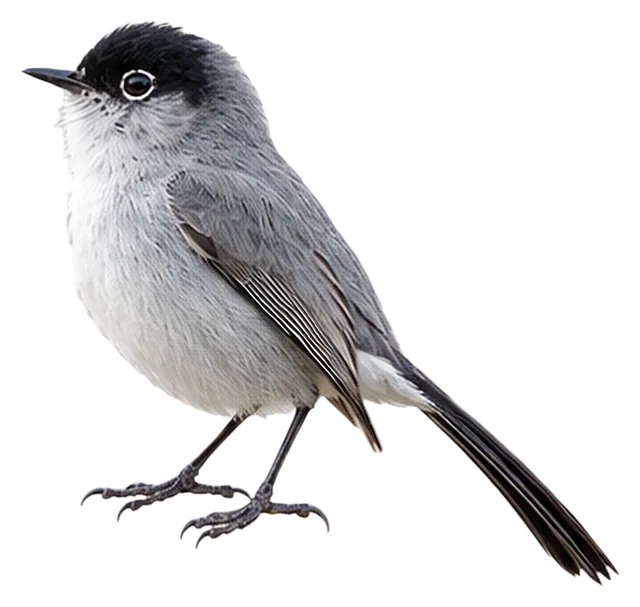
Black-tailed Gnatcatcher
Polioptila melanura Lawrence, 1857
5.2 gWeight
The black-tailed gnatcatcher (Polioptila melanura) is a small, insectivorous bird which ranges throughout the Sonoran and Chihuahuan Deserts of the southwestern United States and northern Mexico.
Busiest months: December–January and March · Most records: United States, Mexico
Where and when it's recorded

Black-tailed Gnatcatcher has been recorded at 56 of the 8,171 birding hotspots we track, in 2 countries and regions.
Records by month Northern Hemisphere
Where it's recorded most
- Henderson Bird Viewing PreserveUnited States7,887 records
- Sweetwater WetlandsUnited States5,394 records
- Sabino Dam and downstream riparianUnited States3,746 records
More places
- Catalina SPUnited States2,542 records
- Sonny Bono Salton Sea NWR – Union Tract / Visitor CenterUnited States2,180 records
- Tres Rios Overbank WetlandsUnited States2,012 records
- Desert Botanical GardenUnited States1,994 records
- Veterans Oasis ParkUnited States1,987 records
- El Rio Open Space PreserveUnited States1,984 records
- Riparian Preserve at Gilbert Water RanchUnited States1,984 records
Countries and regions with the most records
eBird records via GBIF up to 2024-12-31. A record means someone listed it; more records partly mean more birders, not more birds.
About
The black-tailed gnatcatcher (Polioptila melanura) is a small, insectivorous bird which ranges throughout the Sonoran and Chihuahuan Deserts of the southwestern United States and northern Mexico. It is nonmigratory and found in arid desert areas year-round.
Excerpt from Wikipedia, CC BY-SA 4.0 · authors · Read more on Wikipedia
Questions
How big is the Black-tailed Gnatcatcher?
The Black-tailed Gnatcatcher weighs around 5.2 g.
Where does the Black-tailed Gnatcatcher live?
Its breeding range: North America, Middle America: southwestern USA and northern Mexico. It is most often recorded in United States and Mexico.
When is the best time to see the Black-tailed Gnatcatcher?
At the hotspots we track, it is recorded most in January, March and December (Northern Hemisphere).
Is the Black-tailed Gnatcatcher endangered?
The IUCN Red List classifies the Black-tailed Gnatcatcher as Least Concern.
What does the Black-tailed Gnatcatcher eat?
Main food: Insects & other invertebrates.
What family is the Black-tailed Gnatcatcher in?
It belongs to the family Gnatcatchers (Polioptilidae), order Passerines (Passeriformes).
At a glance
- Weight
- 5.2 g
- Habitat
- Shrubland
- Diet
- Insects & other invertebrates
- Lifestyle
- Perches in trees
- Migration
- Resident (barely migrates)
- Conservation
- Least Concern
More measurements
- Wing
- 48 mm
- Tail
- 55 mm
- Bill
- 11 mm
- Tarsus
- 16 mm
Averages from the AVONET dataset; length from field guides where available.
Range
North America, Middle America: southwestern USA and northern Mexico
Breeding range, IOC World Bird List 15.2
Classification
- Order
- Passerines Passeriformes
- Family
- Gnatcatchers Polioptilidae
- Genus
- Polioptila
Other birds in the genus Polioptila
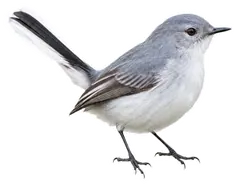 Rio Negro GnatcatcherPolioptila facilis
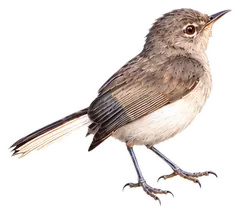 Guianan GnatcatcherPolioptila guianensis
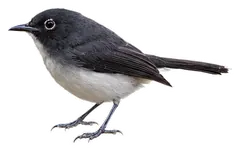 Slate-throated GnatcatcherPolioptila schistaceigula
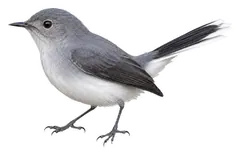 Para GnatcatcherPolioptila paraensis
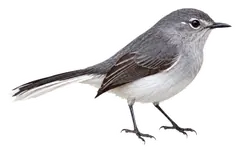 Iquitos GnatcatcherPolioptila clementsi
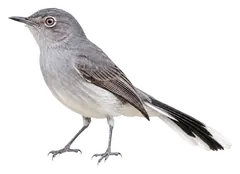 Inambari GnatcatcherPolioptila attenboroughi
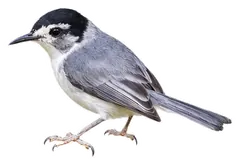 Tropical GnatcatcherPolioptila plumbea
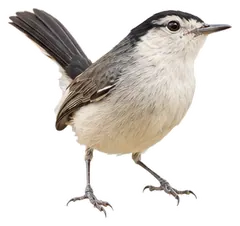 Maranon GnatcatcherPolioptila maior
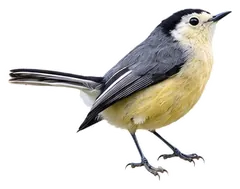 Creamy-bellied GnatcatcherPolioptila lactea
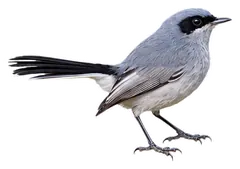 Masked GnatcatcherPolioptila dumicola
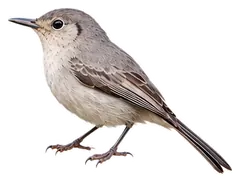 Cuban GnatcatcherPolioptila lembeyei
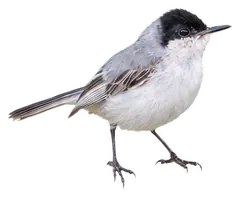 Yucatan GnatcatcherPolioptila albiventris
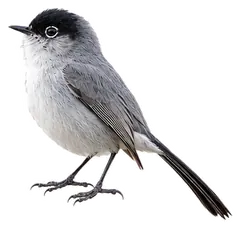
Download illustration
Free to use with credit: “Illustration: Bird Album (birdalbum.com)”. Drawn by AI from a reference photo by samzhang. ↗
Heard it but can't see it? Mingji identifies birds by sound and photo, on your phone.
In other languages
- EnglishBlack-tailed Gnatcatcher
- 简体中文黑尾蚋莺
- 繁體中文黑尾蚋鶯
- 日本語オグロブユムシクイ
- DeutschSchwarzschwanz-Mückenfänger
- FrançaisGobemoucheron à queue noire
- EspañolPerlita colinegra
- Portuguêsbalança-rabo-do-deserto
- ItalianoPigliamoschini codanera
- NederlandsZwartstaartmuggenvanger
- РусскийЧернохвостая комароловка
- Svenskaökenmyggsnappare
- DanskSorthalet Snerresmutte
- Polskisiwuszka czarnosterna