 Bird Album
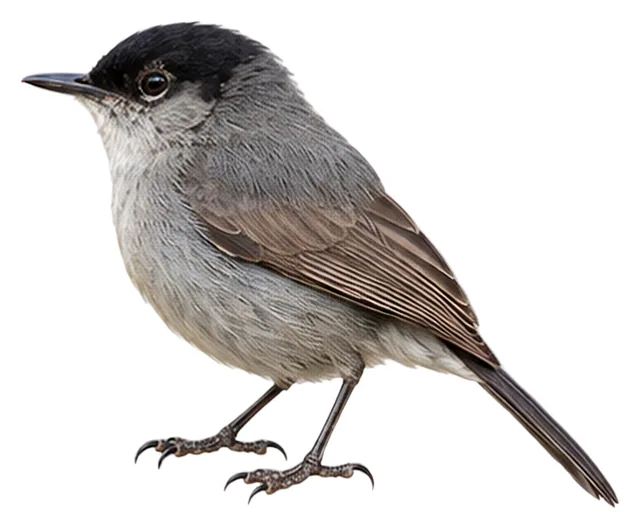
California Gnatcatcher
Polioptila californica Brewster, 1881
5.8 gWeight
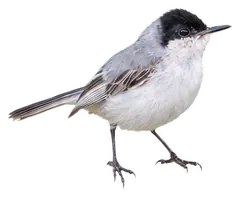
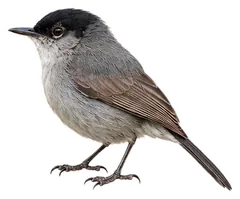
The California gnatcatcher (Polioptila californica) is a small, 10.8-centimetre-long (4.3 in) insectivorous bird which frequents dense coastal sage scrub growth.
Busiest months: December–January and March · Most records: United States, Mexico
Where and when it's recorded

California Gnatcatcher has been recorded at 25 of the 8,171 birding hotspots we track, in 2 countries and regions.
Records by month Northern Hemisphere
Where it's recorded most
- Frank G. Bonelli RP/Puddingstone Reservoir and vicinityUnited States2,371 records
- San Elijo Lagoon – westUnited States1,937 records
- Bolsa Chica Ecological ReserveUnited States855 records
More places
- Bahía de San QuintínMexico825 records
- IRWD San Joaquin Marsh & Wildlife Sanctuary, IrvineUnited States440 records
- Irvine Regional ParkUnited States341 records
- Ballona Freshwater MarshUnited States236 records
- Planta de Tratamiento de Aguas Residuales de La PazMexico70 records
- Bolsa Chica – walkbridge/inner bayUnited States70 records
- Reserva Ecológica Estero de San José del CaboMexico59 records
Countries and regions with the most records
eBird records via GBIF up to 2024-12-31. A record means someone listed it; more records partly mean more birders, not more birds.
About
The California gnatcatcher (Polioptila californica) is a small, 10.8-centimetre-long (4.3 in) insectivorous bird which frequents dense coastal sage scrub growth. This species was recently split from the similar black-tailed gnatcatcher of the Sonoran and Chihuahuan deserts. This bird is often solitary, but joins with other birds in winter flocks.
Excerpt from Wikipedia, CC BY-SA 4.0 · authors · Read more on Wikipedia
Questions
How big is the California Gnatcatcher?
The California Gnatcatcher weighs around 5.8 g.
Where does the California Gnatcatcher live?
Its breeding range: North America, Middle America: southwestern USA and northwestern Mexico. It is most often recorded in United States and Mexico.
When is the best time to see the California Gnatcatcher?
At the hotspots we track, it is recorded most in January, March and December (Northern Hemisphere).
Is the California Gnatcatcher endangered?
The IUCN Red List classifies the California Gnatcatcher as Least Concern.
What does the California Gnatcatcher eat?
Main food: Insects & other invertebrates.
What family is the California Gnatcatcher in?
It belongs to the family Gnatcatchers (Polioptilidae), order Passerines (Passeriformes).
At a glance
- Weight
- 5.8 g
- Habitat
- Shrubland
- Diet
- Insects & other invertebrates
- Lifestyle
- Perches in trees
- Migration
- Resident (barely migrates)
- Conservation
- Least Concern
More measurements
- Wing
- 47 mm
- Tail
- 50 mm
- Bill
- 11 mm
- Tarsus
- 17 mm
Averages from the AVONET dataset; length from field guides where available.
Range
North America, Middle America: southwestern USA and northwestern Mexico
Breeding range, IOC World Bird List 15.2
Classification
- Order
- Passerines Passeriformes
- Family
- Gnatcatchers Polioptilidae
- Genus
- Polioptila
Other birds in the genus Polioptila
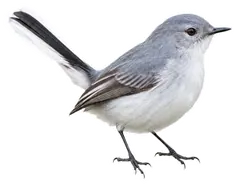 Rio Negro GnatcatcherPolioptila facilis
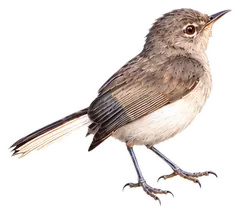 Guianan GnatcatcherPolioptila guianensis
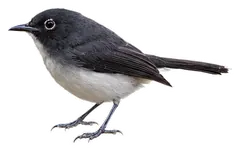 Slate-throated GnatcatcherPolioptila schistaceigula
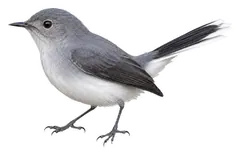 Para GnatcatcherPolioptila paraensis
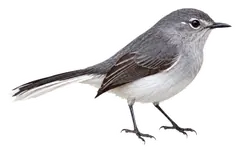 Iquitos GnatcatcherPolioptila clementsi
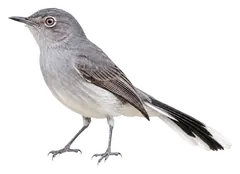 Inambari GnatcatcherPolioptila attenboroughi
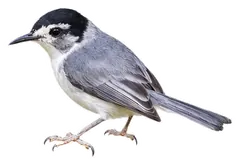 Tropical GnatcatcherPolioptila plumbea
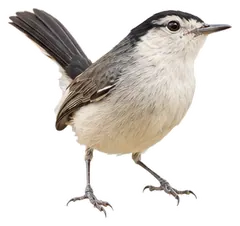 Maranon GnatcatcherPolioptila maior
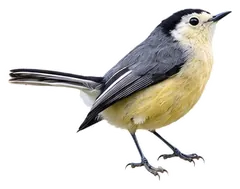 Creamy-bellied GnatcatcherPolioptila lactea
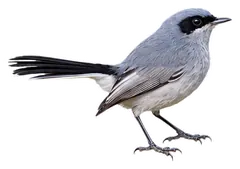 Masked GnatcatcherPolioptila dumicola
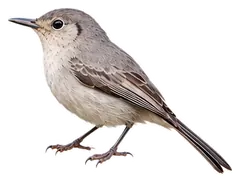 Cuban GnatcatcherPolioptila lembeyei
 Yucatan GnatcatcherPolioptila albiventris
Download illustration
Free to use with credit: “Illustration: Bird Album (birdalbum.com)”. Drawn by AI from a reference photo by Travis Cooper. ↗
Heard it but can't see it? Mingji identifies birds by sound and photo, on your phone.
In other languages
- EnglishCalifornia Gnatcatcher
- 简体中文加州蚋莺
- 繁體中文加利福尼亞蚋鶯
- 日本語カリフォルニアブユムシクイ
- DeutschKalifornienmückenfänger
- FrançaisGobemoucheron de Californie
- EspañolPerlita californiana
- Portuguêsbalança-rabo-da-califórnia
- ItalianoPigliamoschini della California
- NederlandsCalifornische Muggenvanger
- РусскийКалифорнийская комароловка
- Svenskacaliforniamyggsnappare
- DanskBaja Snerresmutte
- Polskisiwuszka kalifornijska