 Bird Album
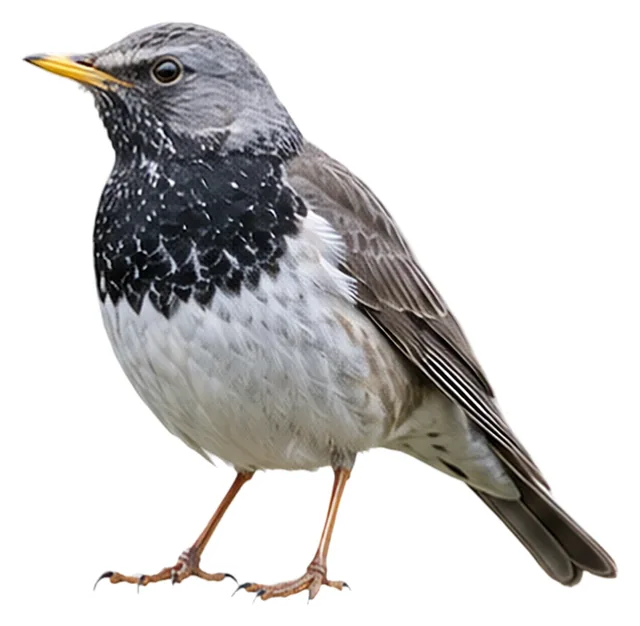
Black-throated Thrush
Turdus atrogularis Jarocki, 1819
≈27 cmLength106 gWeight
This large thrush has gray upperparts and whitish underparts, with black extending from chin to breast in the male.
Busiest months: February · Most records: India, Nepal, China
How to identify
Field marks
- Male is black from chin to breast
- Gray upperparts and gray-black tail
- Whitish underparts
- Orange-red underwing coverts
Male, female and young
Female and juvenile are similar, but the black on the throat and breast is replaced by dark streaks.
Where and when it's recorded

Black-throated Thrush has been recorded at 344 of the 8,171 birding hotspots we track, in 31 countries and regions.
Records by month Northern Hemisphere
Where it's recorded most
- Khovd Bird Ringing Station, Khovd, MNMongolia284 records
- [Dushanbe Botanical Garden]Tajikistan172 records
- Wildlife Institute of IndiaIndia168 records
More places
- Lingshan Scenic AreaChina168 records
- Sangla and AreaNepal155 records
- Corbett NP – DhikalaIndia152 records
- SattalIndia144 records
- Forest Research Institute (FRI), New Forest CampusIndia121 records
- PangotIndia105 records
- [Ozornoe - Eastern Ponds]Kyrgyzstan92 records
Countries and regions with the most records
eBird records via GBIF up to 2024-12-31. A record means someone listed it; more records partly mean more birders, not more birds.
About
The black-throated thrush (Turdus atrogularis) is a passerine bird in the thrush family. It is sometimes regarded as one subspecies of a polytypic species, "dark-throated thrush", red-throated thrush then being the other subspecies. More recent treatments regard the two as separate species.
Excerpt from Wikipedia, CC BY-SA 4.0 · authors · Read more on Wikipedia
Questions
How big is the Black-throated Thrush?
The Black-throated Thrush is about ≈27 cm long and weighs around 106 g.
Where does the Black-throated Thrush live?
Its breeding range: Palearctic: west-central Russia to north-central Siberia and northwestern Mongolia. It is most often recorded in India, Nepal and China.
When is the best time to see the Black-throated Thrush?
At the hotspots we track, it is recorded most in February (Northern Hemisphere).
Is the Black-throated Thrush endangered?
The IUCN Red List classifies the Black-throated Thrush as Least Concern.
What does the Black-throated Thrush eat?
Main food: Insects & other invertebrates.
What family is the Black-throated Thrush in?
It belongs to the family Thrushes (Turdidae), order Passerines (Passeriformes).
At a glance
- Length
- ≈27 cm
- Weight
- 106 g
- Habitat
- Forest
- Diet
- Insects & other invertebrates
- Lifestyle
- Perches in trees
- Migration
- Migratory
- Conservation
- Least Concern
More measurements
- Wing
- 133 mm
- Tail
- 98 mm
- Bill
- 24 mm
- Tarsus
- 32 mm
Averages from the AVONET dataset; length from field guides where available.
Range
Palearctic: west-central Russia to north-central Siberia and northwestern Mongolia
Breeding range, IOC World Bird List 15.2
Classification
- Order
- Passerines Passeriformes
- Family
- Thrushes Turdidae
- Genus
- Turdus
Other birds in the genus Turdus
 Ethiopian ThrushTurdus simensis
 Groundscraper ThrushTurdus litsitsirupa
 Chinese ThrushTurdus mupinensis
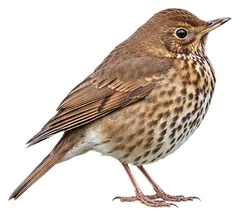 Song ThrushTurdus philomelos
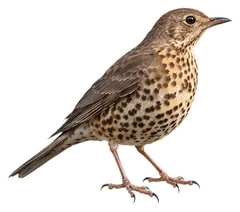 Mistle ThrushTurdus viscivorus
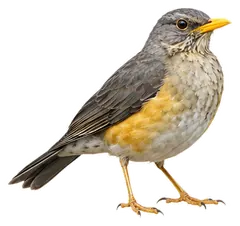 African ThrushTurdus pelios
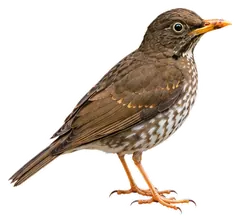 Principe ThrushTurdus xanthorhynchus
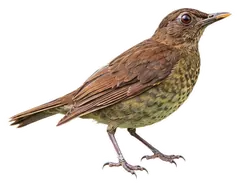 Sao Tome ThrushTurdus olivaceofuscus
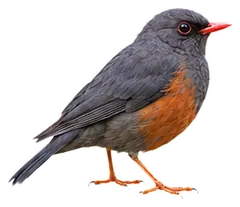 Abyssinian ThrushTurdus abyssinicus
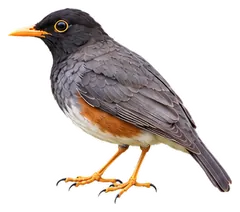 Taita ThrushTurdus helleri
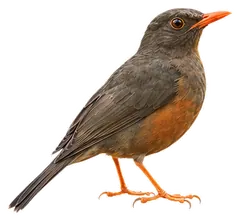 Usambara ThrushTurdus roehli
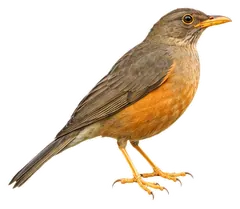 Olive ThrushTurdus olivaceus
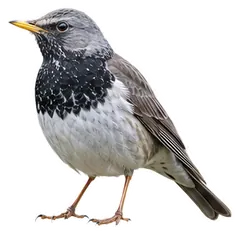
Download illustration
Free to use with credit: “Illustration: Bird Album (birdalbum.com)”. Drawn by AI from a reference photo by Hans Norelius. ↗

Heard it but can't see it? Mingji identifies birds by sound and photo, on your phone.
In other languages
- EnglishBlack-throated Thrush
- 简体中文黑喉鸫
- 繁體中文黑喉鶇
- 日本語ノドグロツグミ
- 한국어검은목지빠귀
- DeutschSchwarzkehldrossel
- FrançaisGrive à gorge noire
- EspañolZorzal papinegro
- Portuguêstordo-de-garganta-negra
- ItalianoTordo golanera
- NederlandsZwartkeellijster
- РусскийЧернозобый дрозд
- Svenskasvarthalsad trast
- DanskSortstrubet Drossel
- Polskidrozd czarnogardły