 Bird Album
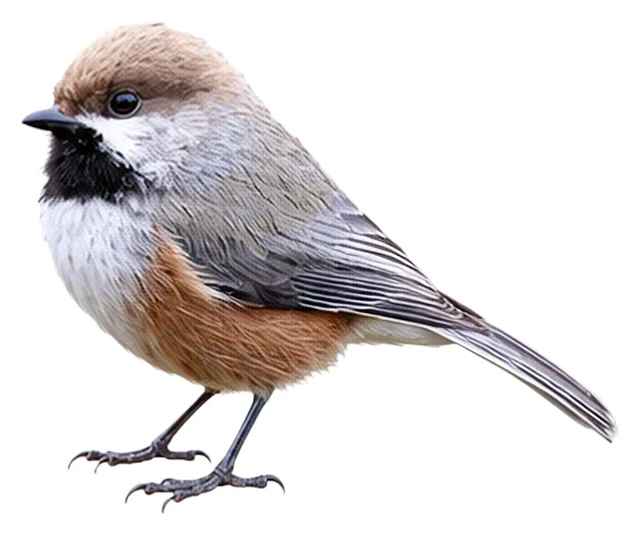
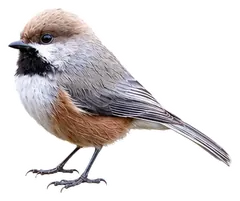
Boreal Chickadee
Poecile hudsonicus (Forster, JR, 1772)
12–14 cmLength9.8 gWeight
The boreal chickadee (Poecile hudsonicus) is a small passerine songbird in the tit family Paridae.
Busiest months: September–October · Most records: Canada, United States, St. Pierre & Miquelon
Where and when it's recorded

Boreal Chickadee has been recorded at 109 of the 8,171 birding hotspots we track, in 3 countries and regions.
Records by month Northern Hemisphere
Where it's recorded most
- Calgary – Griffith Woods ParkCanada2,983 records
- Fish Creek PP – Bebo GroveCanada2,378 records
- Longridge PointCanada1,634 records
More places
- Bon Portage IslandCanada1,442 records
- Teslin Lake – Teslin Lake Bird ObservatoryCanada1,297 records
- Pointe-au-PèreCanada1,233 records
- Dunes de TadoussacCanada1,163 records
- Seal IslandCanada996 records
- Calgary – Weaselhead Natural AreaCanada944 records
- TadoussacCanada743 records
Countries and regions with the most records
eBird records via GBIF up to 2024-12-31. A record means someone listed it; more records partly mean more birders, not more birds.
About
The boreal chickadee (Poecile hudsonicus) is a small passerine songbird in the tit family Paridae. It is found in the boreal forests of Alaska, Canada and the northern United States and remains within this range all year. This bird is known for its high pitched trill patterns used in communication with other birds and food storage habits in preparation for winter months.
Excerpt from Wikipedia, CC BY-SA 4.0 · authors · Read more on Wikipedia
Questions
How big is the Boreal Chickadee?
The Boreal Chickadee is about 12–14 cm long and weighs around 9.8 g.
Where does the Boreal Chickadee live?
Its breeding range: North America: northern. It is most often recorded in Canada, United States and St. Pierre & Miquelon.
When is the best time to see the Boreal Chickadee?
At the hotspots we track, it is recorded most in September and October (Northern Hemisphere).
Is the Boreal Chickadee endangered?
The IUCN Red List classifies the Boreal Chickadee as Least Concern.
What does the Boreal Chickadee eat?
Main food: Insects & other invertebrates.
What family is the Boreal Chickadee in?
It belongs to the family Tits, Chickadees (Paridae), order Passerines (Passeriformes).
At a glance
- Length
- 12–14 cm
- Weight
- 9.8 g
- Habitat
- Forest
- Diet
- Insects & other invertebrates
- Lifestyle
- Perches in trees
- Migration
- Resident (barely migrates)
- Conservation
- Least Concern
More measurements
- Wing
- 65 mm
- Tail
- 58 mm
- Bill
- 10 mm
- Tarsus
- 16 mm
Averages from the AVONET dataset; length from field guides where available.
Range
North America: northern
Breeding range, IOC World Bird List 15.2
Classification
- Order
- Passerines Passeriformes
- Family
- Tits, Chickadees Paridae
- Genus
- Poecile
Other birds in the genus Poecile
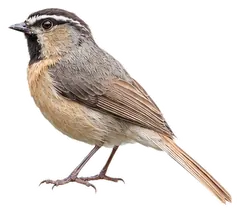 White-browed TitPoecile superciliosus
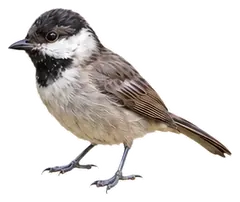 Sombre TitPoecile lugubris
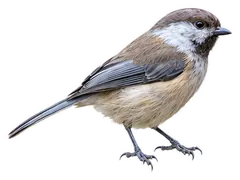 Grey-headed ChickadeePoecile cinctus
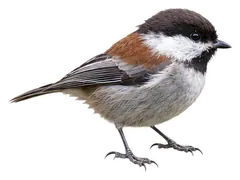 Chestnut-backed ChickadeePoecile rufescens
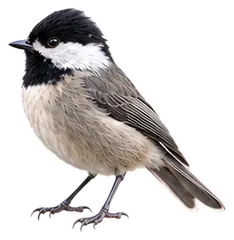 Mexican ChickadeePoecile sclateri
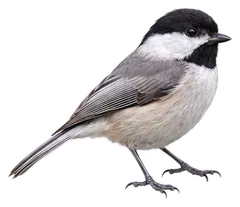 Carolina ChickadeePoecile carolinensis
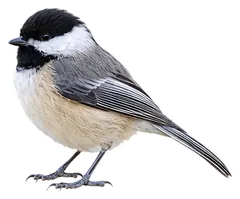 Black-capped ChickadeePoecile atricapillus
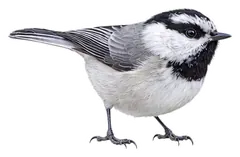 Mountain ChickadeePoecile gambeli
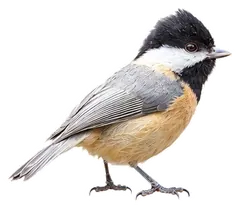 Pere David's TitPoecile davidi
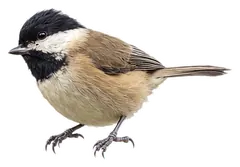 Black-bibbed TitPoecile hypermelaenus
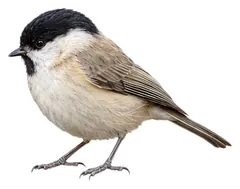 Marsh TitPoecile palustris
 Sichuan TitPoecile weigoldicus
Download illustration
Free to use with credit: “Illustration: Bird Album (birdalbum.com)”. Drawn by AI from a reference photo by Mark Dennis. ↗
Heard it but can't see it? Mingji identifies birds by sound and photo, on your phone.