 Bird Album
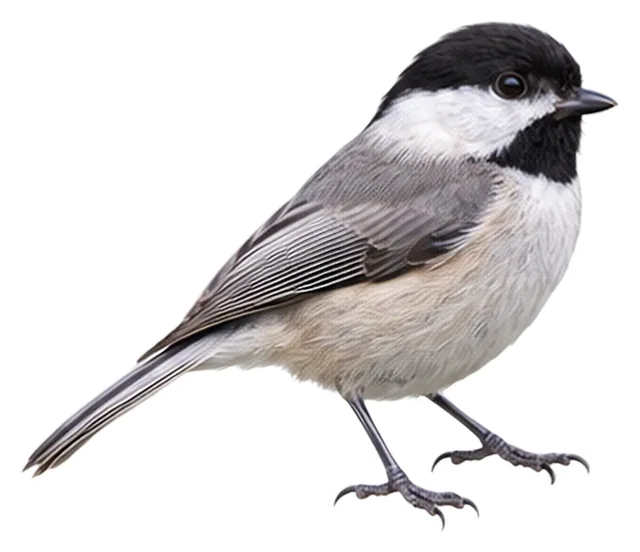
Carolina Chickadee
Poecile carolinensis (Audubon, 1834)
10 gWeight
The Carolina chickadee (Poecile carolinensis) is a small, non-migratory passerine bird in the tit family Paridae.
Busiest months: April–May and September · Most records: United States, Canada
Where and when it's recorded

Carolina Chickadee has been recorded at 180 of the 8,276 birding hotspots we track, in 2 countries and regions.
Records by month Northern Hemisphere
Where it's recorded most
- Cape Island – Cape May Point SPUnited States15,873 records
- HUNTLEY MEADOWS PARKUnited States15,721 records
- John Heinz NWR – impoundmentUnited States14,394 records
More places
- Edwin B. Forsythe NWRUnited States13,035 records
- Cape Island – Higbee Beach WMAUnited States12,472 records
- Huntington Beach SPUnited States11,551 records
- Hornsby BendUnited States10,796 records
- Caw Caw Interpretive CenterUnited States10,558 records
- Radnor Lake SPUnited States10,512 records
- Warbler Woods Bird SanctuaryUnited States10,364 records
Countries and regions with the most records
eBird records via GBIF up to 2024-12-31. A record means someone listed it; more records partly mean more birders, not more birds.
About
The Carolina chickadee (Poecile carolinensis) is a small, non-migratory passerine bird in the tit family Paridae. It has a black cap and bib, and distinctive white cheeks. The bird looks extremely similar to the black-capped chickadee.
Excerpt from Wikipedia, CC BY-SA 4.0 · authors · Read more on Wikipedia
Questions
How big is the Carolina Chickadee?
The Carolina Chickadee weighs around 10 g.
Where does the Carolina Chickadee live?
Its breeding range: North America: southeastern USA. It is most often recorded in United States and Canada.
When is the best time to see the Carolina Chickadee?
At the hotspots we track, it is recorded most in April, May and September (Northern Hemisphere).
Is the Carolina Chickadee endangered?
The IUCN Red List classifies the Carolina Chickadee as Least Concern.
What does the Carolina Chickadee eat?
Main food: Insects & other invertebrates.
What family is the Carolina Chickadee in?
It belongs to the family Tits, Chickadees (Paridae), order Passerines (Passeriformes).
At a glance
- Weight
- 10 g
- Habitat
- Forest
- Diet
- Insects & other invertebrates
- Lifestyle
- Perches in trees
- Migration
- Resident (barely migrates)
- Conservation
- Least Concern
More measurements
- Wing
- 59 mm
- Tail
- 50 mm
- Bill
- 9 mm
- Tarsus
- 15 mm
Averages from the AVONET dataset; length from field guides where available.
Range
North America: southeastern USA
Breeding range, IOC World Bird List 15.2
Classification
- Order
- Passerines Passeriformes
- Family
- Tits, Chickadees Paridae
- Genus
- Poecile
Other birds in the genus Poecile
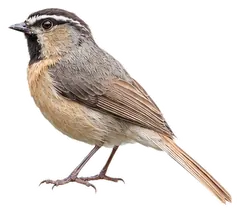 White-browed TitPoecile superciliosus
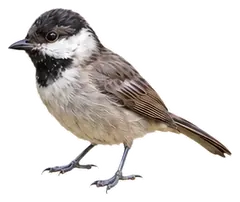 Sombre TitPoecile lugubris
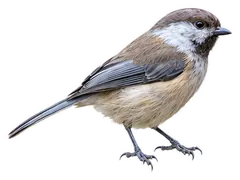 Grey-headed ChickadeePoecile cinctus
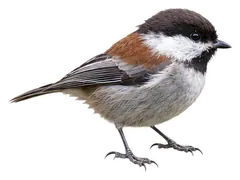 Chestnut-backed ChickadeePoecile rufescens
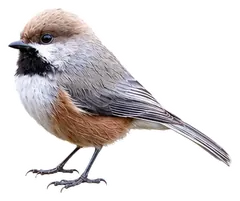 Boreal ChickadeePoecile hudsonicus
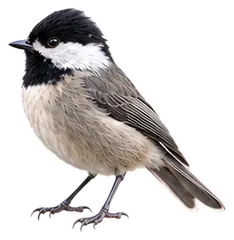 Mexican ChickadeePoecile sclateri
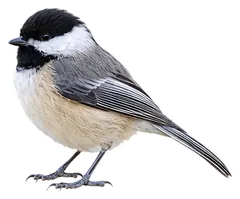 Black-capped ChickadeePoecile atricapillus
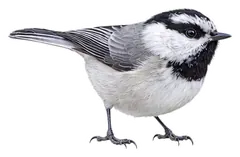 Mountain ChickadeePoecile gambeli
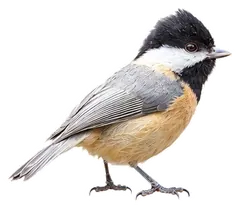 Pere David's TitPoecile davidi
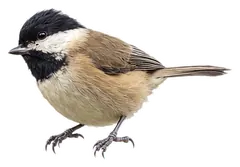 Black-bibbed TitPoecile hypermelaenus
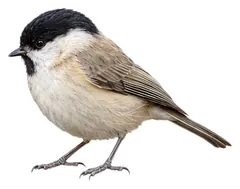 Marsh TitPoecile palustris
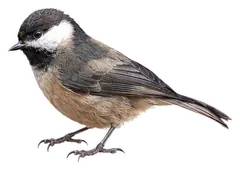 Sichuan TitPoecile weigoldicus
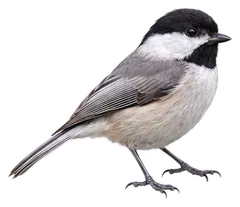
Download illustration
Free to use with credit: “Illustration: Bird Album (birdalbum.com)”. Drawn by AI from a reference photo by Dan Pancamo. ↗
Heard it but can't see it? Mingji identifies birds by sound and photo, on your phone.