 Bird Album
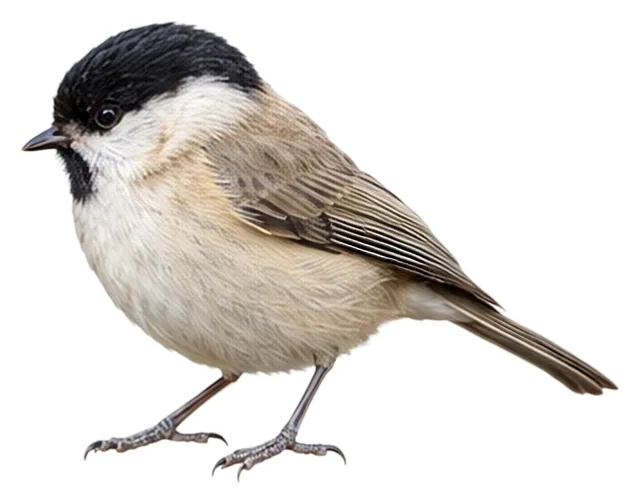
Marsh Tit
Poecile palustris (Linnaeus, 1758)
≈12 cmLength19 cmWingspan11 gWeight
It has a black cap, white cheeks and a small patch of black feathers below the bill like a goatee.
Busiest months: October–April · Most records: China, South Korea, United Kingdom
Looks like Willow Tit
How to identify
Field marks
- Crown and nape black
- A small patch of black feathers below base of the bill, like a goatee
- Cheeks and throat white, with white extending to the back of the neck
- Upperparts gray-brown; underparts dirty white
Male, female and young
Sexes alike in shape and color; juveniles resemble adults but have a duller black crown and black chin patch, grayer upperparts and paler underparts.
Voice
Calls resemble those of Cinereous Tit but are higher and more piercing; when excited, it bursts into a “pitchou”.
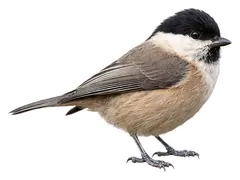
Similar species
Where and when it's recorded

Marsh Tit has been recorded at 904 of the 8,171 birding hotspots we track, in 44 countries and regions.
Records by month Northern Hemisphere
Where it's recorded most
- Minsmere RSPB ReserveUnited Kingdom1,792 records
- Leighton Moss RSPB ReserveUnited Kingdom1,185 records
- Hoces Ebro Rudrón PNat – Molino del CantoSpain1,077 records
More places
- Lynford ArboretumUnited Kingdom1,050 records
- Olympic Forest Park SouthChina1,043 records
- Rutland WaterUnited Kingdom838 records
- Peking UniversityChina800 records
- Seoul – Olympic ParkSouth Korea757 records
- Seoul – ChanggyeonggungSouth Korea699 records
- Beijing Botanical GardenChina696 records
Countries and regions with the most records
eBird records via GBIF up to 2024-12-31. A record means someone listed it; more records partly mean more birders, not more birds.
About
The marsh tit (Poecile palustris) is a Eurasian passerine bird in the tit family Paridae and genus Poecile, closely related to the willow tit, Père David's and Songar tits. Between 8 and 11 subspecies are recognised. Its close resemblance to the willow tit can cause identification problems, especially in the United Kingdom where the local subspecies of the two are very similar; they were not recognised as separate species until 1897.
Excerpt from Wikipedia, CC BY-SA 4.0 · authors · Read more on Wikipedia
Questions
How big is the Marsh Tit?
The Marsh Tit is about ≈12 cm long, with a wingspan of 19 cm and weighs around 11 g.
Where does the Marsh Tit live?
Its breeding range: Palearctic: widespread. It is most often recorded in China, South Korea and United Kingdom.
When is the best time to see the Marsh Tit?
At the hotspots we track, it is recorded most in January, February, March, April, October, November and December (Northern Hemisphere).
Is the Marsh Tit endangered?
The IUCN Red List classifies the Marsh Tit as Least Concern.
What does the Marsh Tit eat?
Main food: Insects & other invertebrates.
What family is the Marsh Tit in?
It belongs to the family Tits, Chickadees (Paridae), order Passerines (Passeriformes).
At a glance
- Length
- ≈12 cm
- Wingspan
- 19 cm
- Weight
- 11 g
- Habitat
- Forest
- Diet
- Insects & other invertebrates
- Lifestyle
- Perches in trees
- Migration
- Resident (barely migrates)
- Conservation
- Least Concern
More measurements
- Wing
- 64 mm
- Tail
- 55 mm
- Bill
- 9 mm
- Tarsus
- 16 mm
Averages from the AVONET dataset; length from field guides where available.
Range
Palearctic: widespread
Breeding range, IOC World Bird List 15.2
Subspecies · 3
- Poecile palustris brevirostris sc, se Siberia, n Mongolia, Manchuria and Liaoning (ne China) and extreme n Korea
- Poecile palustris jeholicus n Hebei (ne China) and n Korea
- Poecile palustris hellmayri e China and s Korea
Classification
- Order
- Passerines Passeriformes
- Family
- Tits, Chickadees Paridae
- Genus
- Poecile
Other birds in the genus Poecile
 White-browed TitPoecile superciliosus
 Sombre TitPoecile lugubris
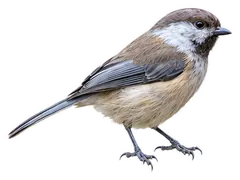 Grey-headed ChickadeePoecile cinctus
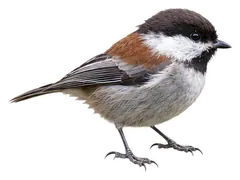 Chestnut-backed ChickadeePoecile rufescens
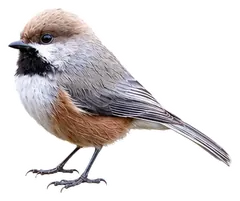 Boreal ChickadeePoecile hudsonicus
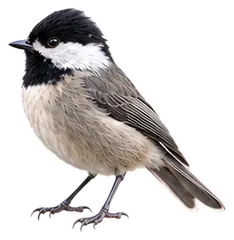 Mexican ChickadeePoecile sclateri
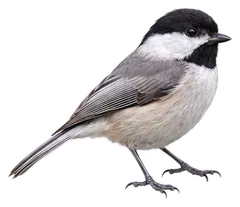 Carolina ChickadeePoecile carolinensis
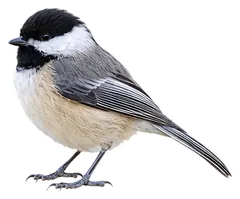 Black-capped ChickadeePoecile atricapillus
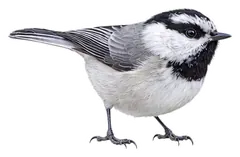 Mountain ChickadeePoecile gambeli
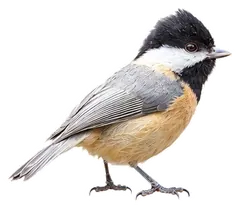 Pere David's TitPoecile davidi
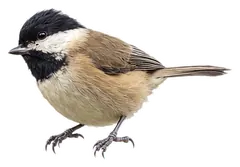 Black-bibbed TitPoecile hypermelaenus
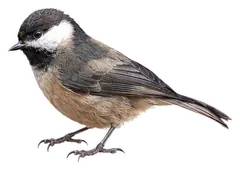 Sichuan TitPoecile weigoldicus
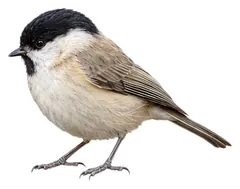
Download illustration
Free to use with credit: “Illustration: Bird Album (birdalbum.com)”. Drawn by AI from a reference photo by Stephan Sprinz. ↗

Heard it but can't see it? Mingji identifies birds by sound and photo, on your phone.