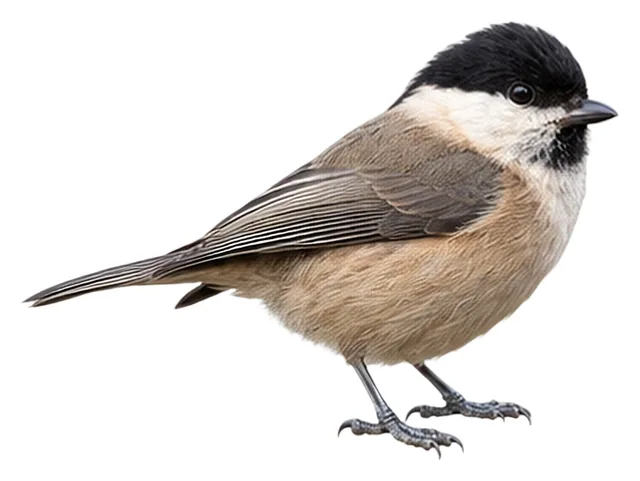
Willow Tit
Poecile montanus (Conrad von Baldenstein, 1827)
12 cmLength19 cmWingspan11 gWeight
This tit occurs across temperate Eurasia, mainly in coniferous or mixed coniferous and broadleaf forest.
Busiest months: September–October · Most records: United Kingdom, China, Poland
How to identify
Where and when it's recorded
Busiest months: September–October · Most records: United Kingdom, China, Poland

Willow Tit has been recorded at 622 of the 8,276 birding hotspots we track, in 41 countries and regions.
Records by month Northern Hemisphere
Where it's recorded most
- Elton ReservoirUnited Kingdom864 records
- Sale Water ParkUnited Kingdom588 records
- Hel – CypelPoland576 records
More places
- Pennington Flash LNRUnited Kingdom571 records
- Woolston Eyes NRUnited Kingdom561 records
- Lingshan Scenic AreaChina541 records
- Karuizawa – Karuizawa Wild Bird SanctuaryJapan490 records
- Fairburn Ings RSPB ReserveUnited Kingdom397 records
- Sapieginės miškasLithuania315 records
- Lotoshino Fish FarmRussia294 records
Countries and regions with the most records
eBird records via GBIF up to 2024-12-31. A record means someone listed it; more records partly mean more birders, not more birds.
About
The willow tit (Poecile montanus) is a passerine bird in the tit family, Paridae. It is a widespread and common resident breeder throughout temperate and subarctic Europe and across the Palearctic. The plumage is grey-brown and off-white with a black cap and bib.
Excerpt from Wikipedia, CC BY-SA 4.0 · authors · Read more on Wikipedia
Questions
How big is the Willow Tit?
The Willow Tit is about 12 cm long, with a wingspan of 19 cm and weighs around 11 g.
Where does the Willow Tit live?
Its breeding range: Palearctic: widespread. It is most often recorded in United Kingdom, China and Poland.
When is the best time to see the Willow Tit?
At the hotspots we track, it is recorded most in September and October (Northern Hemisphere).
Is the Willow Tit endangered?
The IUCN Red List classifies the Willow Tit as Least Concern.
What does the Willow Tit eat?
Main food: Insects & other invertebrates.
What family is the Willow Tit in?
It belongs to the family Tits, Chickadees (Paridae), order Passerines (Passeriformes).
At a glance
- Length
- 12 cm
- Wingspan
- 19 cm
- Weight
- 11 g
- Habitat
- Forest
- Diet
- Insects & other invertebrates
- Lifestyle
- Perches in trees
- Migration
- Resident (barely migrates)
- Conservation
- Least Concern
More measurements
- Wing
- 66 mm
- Tail
- 59 mm
- Bill
- 11 mm
- Tarsus
- 16 mm
Averages from the AVONET dataset; length from field guides where available.
Range
Palearctic: widespread
Breeding range, IOC World Bird List 15.2
Subspecies · 4
- Poecile montanus baicalensis ec, e Siberia, n Mongolia, n China and n Korea
- Poecile montanus songarus se Kazakhstan to Kyrgyzstan and nw China
- Poecile montanus affinis nc China
- Poecile montanus stoetzneri ne China
Classification
- Order
- Passerines Passeriformes
- Family
- Tits, Chickadees Paridae
- Genus
- Poecile
Other birds in the genus Poecile
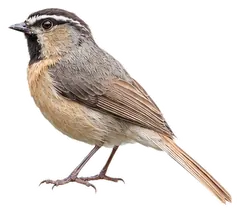 White-browed TitPoecile superciliosus
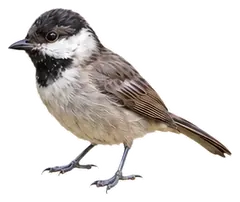 Sombre TitPoecile lugubris
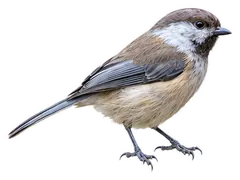 Grey-headed ChickadeePoecile cinctus
 Chestnut-backed ChickadeePoecile rufescens
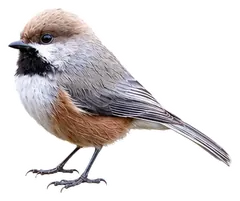 Boreal ChickadeePoecile hudsonicus
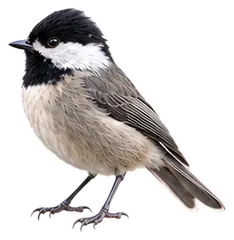 Mexican ChickadeePoecile sclateri
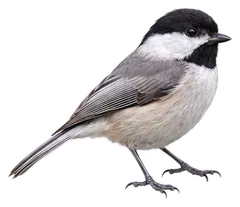 Carolina ChickadeePoecile carolinensis
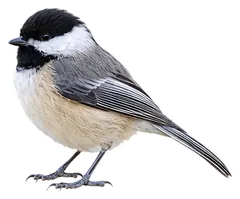 Black-capped ChickadeePoecile atricapillus
 Mountain ChickadeePoecile gambeli
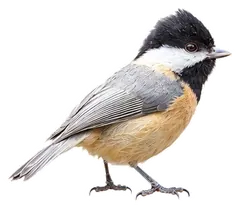 Pere David's TitPoecile davidi
 Black-bibbed TitPoecile hypermelaenus
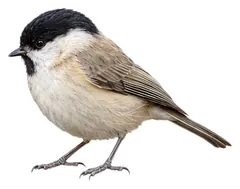 Marsh TitPoecile palustris
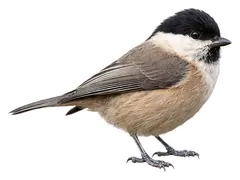
Download illustration
Free to use with credit: “Illustration: Bird Album (birdalbum.com)”. Drawn by AI from a reference photo by Francis C. Franklin. ↗

Heard it but can't see it? Mingji identifies birds by sound and photo, on your phone.